
Panasonic vs Daikin: Which Heat Pump Is Better?
Panasonic’s Aquarea M Series and Daikin’s Altherma 4 H are both R290 heat pumps built for replacing boilers in older homes, with flow temperatures up to 75°C and operation down to -28°C. Here is how they compare on efficiency, noise, sizes, indoor units and warranty.
- Manufacturer datasheets checked 25 October 2026
- Published data, not paid placement
- Independent UK research

Quick verdict
See the specificationsOn published data, Daikin’s Altherma 4 H has the edge: higher seasonal efficiency at both 35°C and 55°C and a noticeably lower sound power rating for the sizes we compared. Panasonic’s strengths are its All-in-One indoor unit and a 7-year parts and labour warranty through its PRO Partners at no extra cost.
Choose Panasonic Aquarea M Series if…
- You want an All-in-One indoor unit with a 185-litre cylinder built in
- A local Aquarea PRO Partner can fit it, giving 7 years parts and labour
- Your home needs 9kW or more
- You want two heating zones run from the main controller
Choose Daikin Altherma 4 H if…
- You want the higher published efficiency, especially with radiators at 55°C
- Noise is a concern: the 8kW unit is rated at 45 dB(A) sound power
- Your home needs a smaller size: Daikin added 4, 6 and 7kW versions in 2026
- You want to link a large cylinder to solar thermal panels (ECH2O tank options)
Panasonic Aquarea vs Daikin Altherma side by side
Both keep the R290 refrigerant sealed in the outdoor unit, with water pipes running to the indoor unit.
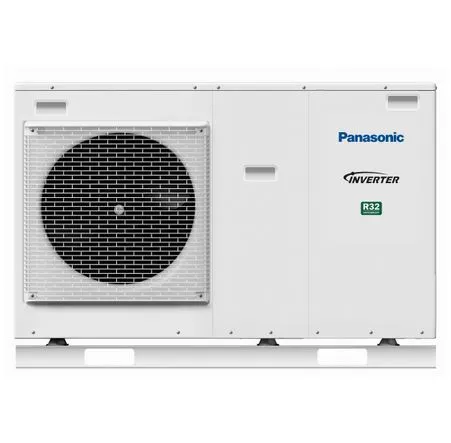
Panasonic
Panasonic Aquarea M Series (R290)
- 9, 12 and 16kW domestic models, single or three phase
- Up to 75°C water, down to -15°C outside
- Runs down to -28°C; keeps full rated output to -20°C without a back-up heater
- All-in-One, Hydro Box or stand-alone indoor options
Best suited to: larger homes and homes without an airing cupboard that suit an All-in-One unit.

Daikin
Daikin Altherma 4 H (R290)
- 8, 10, 12 and 14kW, plus 4, 6 and 7kW versions added in 2026
- 70–75°C leaving water down to -15°C outside
- Runs down to -28°C
- Wall-mounted unit, integrated cylinder or ECH2O tank options
Best suited to: older homes keeping their radiators, homes where the outdoor unit sits close to neighbours, and smaller homes needing under 8kW.
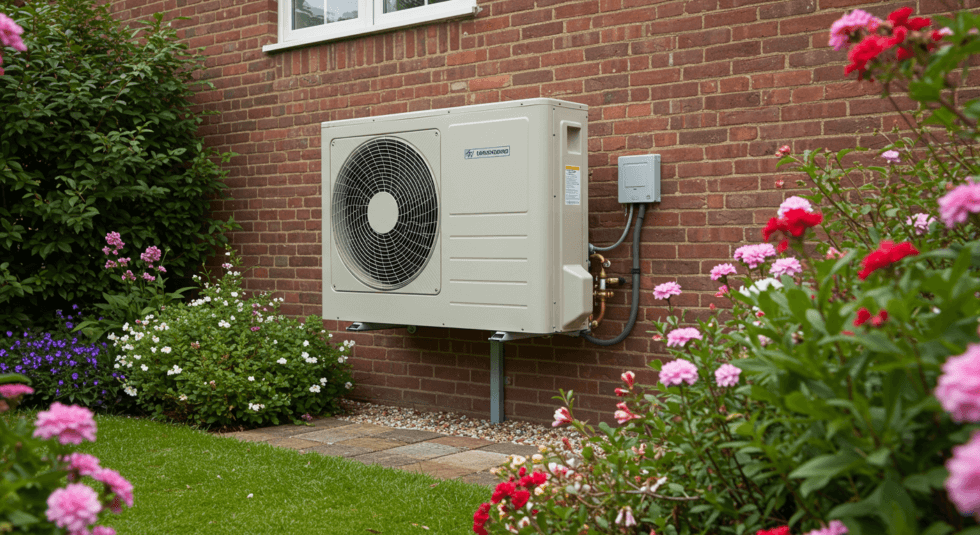
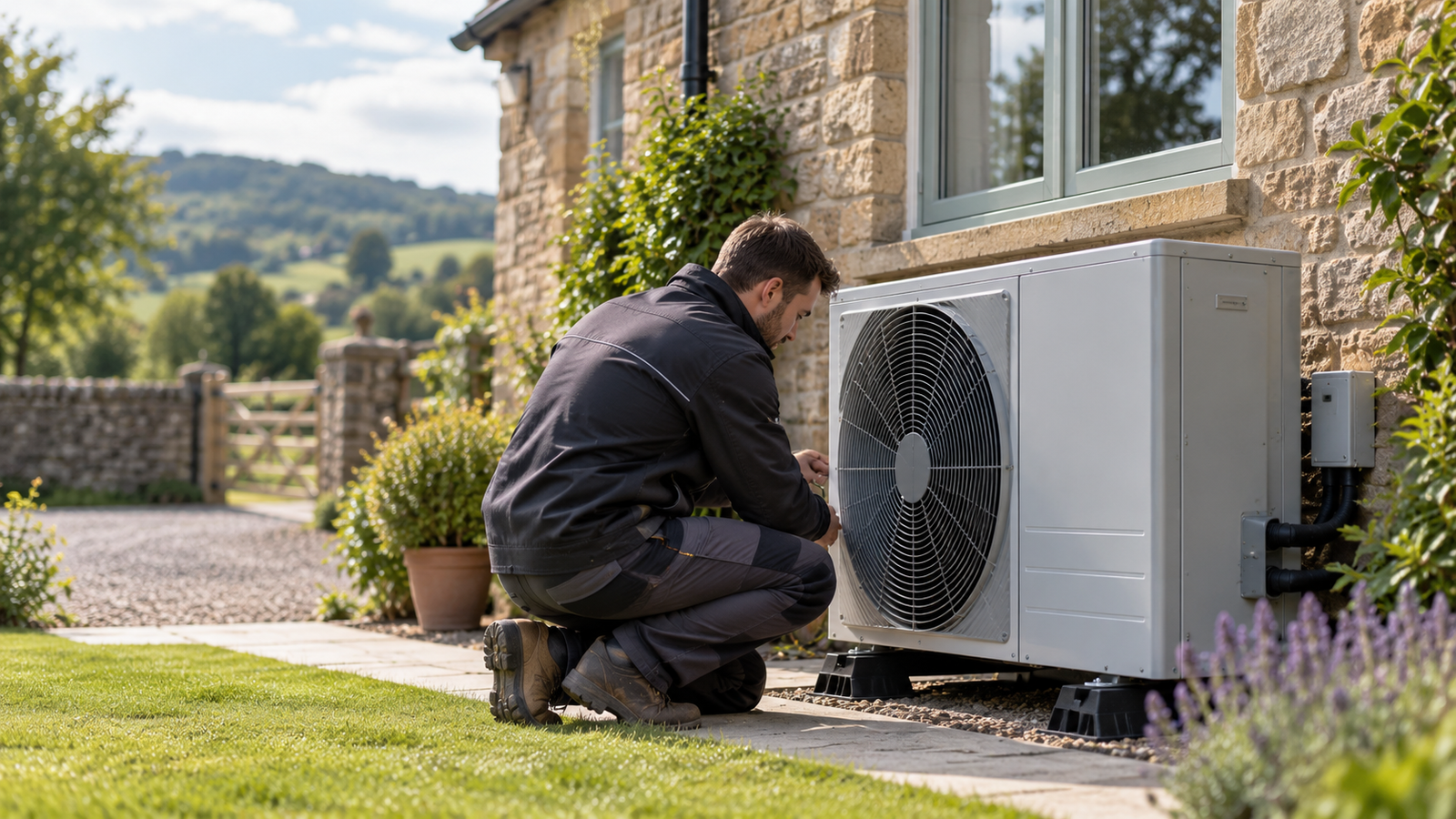
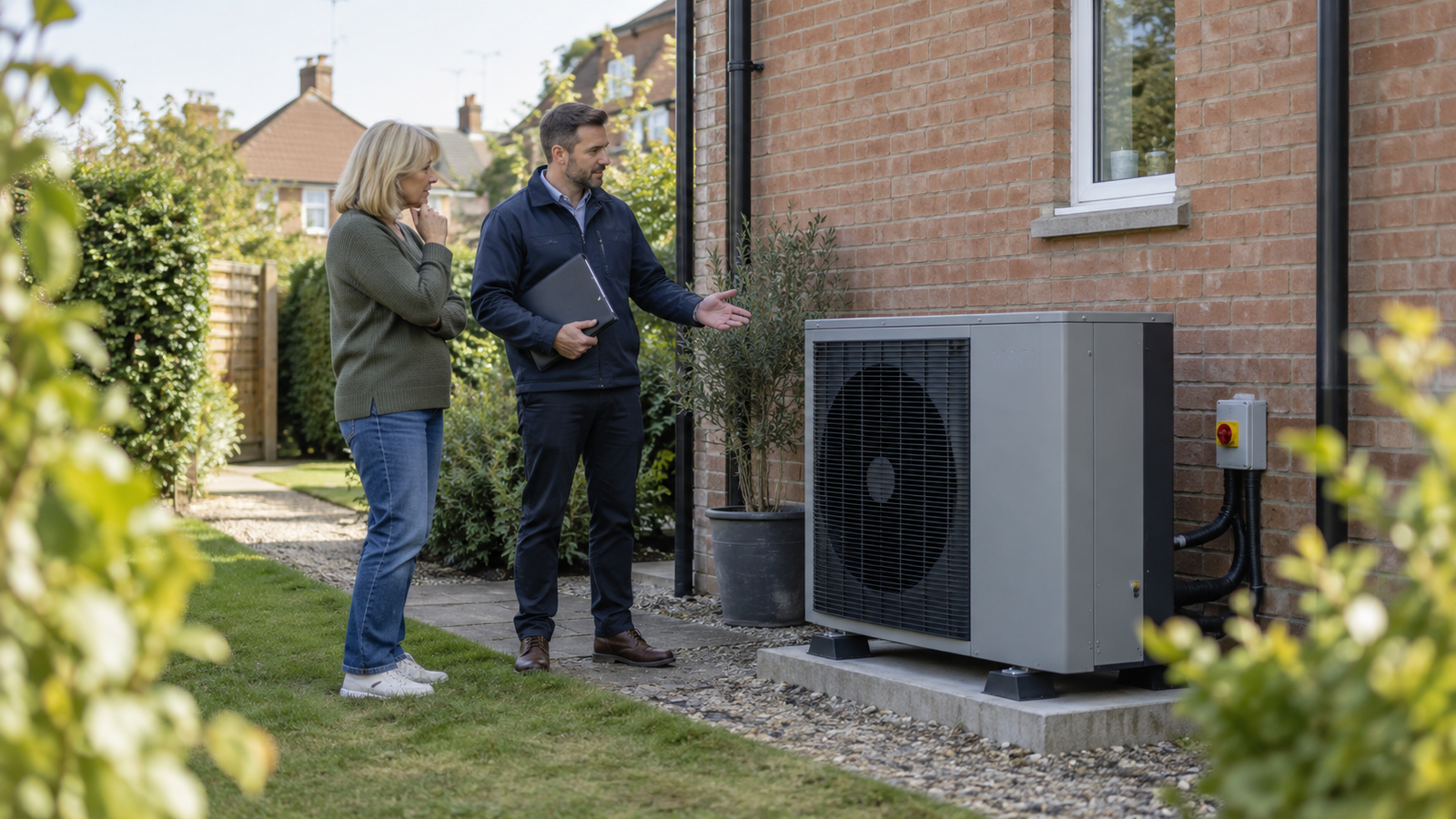
Product photos are for illustration and may not show the exact model compared.
Specifications compared
We compared the closest sizes: Panasonic’s 9kW M Series (WH-WXG09ME5) and Daikin’s 8kW Altherma 4 H (EPSK08). Figures come from each manufacturer’s technical data, checked 25 October 2026. We have not tested these heat pumps ourselves.
| Specification | Panasonic Aquarea M Series | Daikin Altherma 4 H |
|---|---|---|
| Model compared | 9kW (WH-WXG09ME5) | 8kW (EPSK08) |
| Refrigerant | R290 (propane) | R290 (propane) |
| Range of sizes | 9, 12 and 16kW (larger commercial sizes too) | 4kW to 14kW |
| SCOP at 35°C (underfloor) | 4.96 (A+++) | 5.14 (A+++) |
| SCOP at 55°C (radiators) | 3.57 (A++) | 3.94 (A+++) |
| Maximum flow temperature | 75°C (down to -15°C outside) | 70–75°C (down to -15°C outside) |
| Lowest outdoor temperature | -28°C | -28°C |
| Sound power (heating) | 52 dB(A) | 45 dB(A) |
| App | Panasonic Comfort Cloud (Aquarea Smart Cloud) | Daikin Onecta |
| Longest manufacturer warranty | 7 years parts and labour through an Aquarea PRO Partner (details) | 5 years free through Stand By Me; up to 7 with a Sustainable Home Expert, last 2 paid (details) |
Ask installers which of these brands they fit, and get both quoted if you can. A good installer will size the heat pump from a room-by-room heat loss calculation, not from the size of your old boiler.
Compare Up to 3 Heat Pump Installers Near You
Tell us a little about your property to see installer options available in your area.
Free to use with no obligation
Efficiency and winter performance
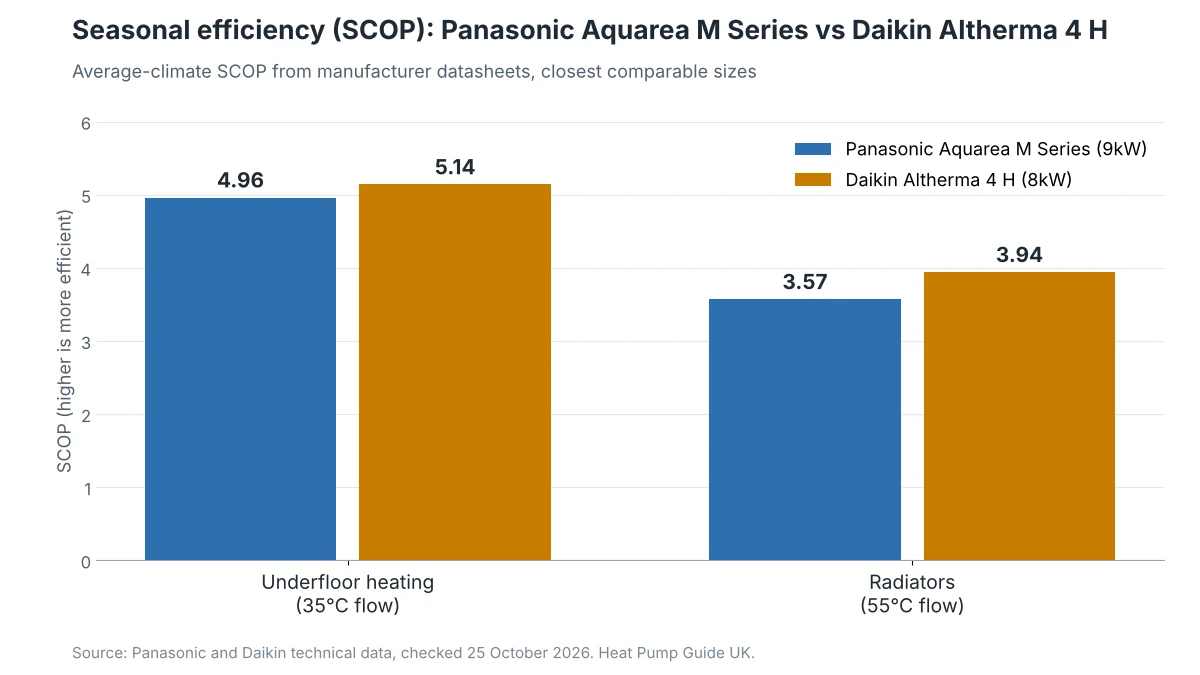
Daikin’s 8kW Altherma 4 H is rated at a SCOP of 3.94 at 55°C, against 3.57 for Panasonic’s 9kW M Series. At 55°C that is roughly a 10% difference in published seasonal efficiency, and it is the figure that matters most if you are keeping your existing radiators.
At 35°C, the flow temperature typical of underfloor heating, the gap narrows: 5.14 for Daikin against 4.96 for Panasonic. These are lab ratings for an average European climate on slightly different sizes. Real-world efficiency depends far more on good design, correctly sized radiators and weather compensation than on a few tenths of SCOP.
Both are rated to run down to -28°C and to produce 70–75°C water when it is -15°C outside, so cold UK winters are not a reason to pick one over the other. Panasonic adds that the M Series holds its rated output down to -20°C without the back-up heater. More on cold-weather running in do heat pumps work in winter.
Noise
This is Daikin’s clearest advantage: its 8kW unit is rated at 45 dB(A) sound power, against 52 dB(A) for Panasonic’s 9kW. A 7 dB difference is noticeable, and it can make it easier to find a spot that passes the noise check on a tight plot.
Daikin’s bigger 12 and 14kW units are rated at 52 dB(A), so the advantage applies most to smaller sizes. Sound power is measured at the unit; what neighbours hear depends on distance, walls and fences. Your installer must check the position against the MCS noise assessment for permitted development.
Hot water and indoor units
Both brands offer an indoor unit with the cylinder built in. Panasonic’s All-in-One has a 185-litre cylinder. Daikin’s integrated version has a 180 or 230-litre stainless steel cylinder on a 595 × 625mm footprint.
Daikin also offers a wall-mounted unit with a separate cylinder, and ECH2O versions with 300 or 500-litre tanks that can link to solar thermal panels. Panasonic offers a wall-hung Hydro Box with a separate cylinder or a stand-alone setup. If you are coming from a combi boiler, our combi to heat pump guide explains how to find space for a cylinder.
Daikin rates hot water efficiency at A+ for typical household tapping patterns. Both will run a regular legionella cycle.
Controls and apps
Daikin uses the Onecta app, with voice control through Google Assistant and Amazon Alexa. Panasonic uses its Comfort Cloud app with Aquarea Smart Cloud.
Daikin’s indoor unit has a 5-inch colour touchscreen with block-based scheduling. Panasonic’s controller can run two heating zones independently and supports optional smart grid and 0–10V control. Both apps let you change temperatures and schedules remotely. See our best heat pump apps guide for how they compare day to day.
Warranty and installer network
Panasonic offers 7 years parts and labour when an Aquarea PRO Partner supplies and installs the heat pump. Daikin gives 2 years as standard, 5 years free through its Stand By Me scheme, and up to 7 years with a Daikin Sustainable Home Expert, with the last 2 years paid.
So the longest free cover is with Panasonic, if you can find a PRO Partner near you. Both brands require registration and annual servicing to keep the extended cover. Full details are in our heat pump warranties guide.
Cost: what changes the price
Neither brand publishes UK installed prices, and the brand is rarely the biggest factor in what you pay. The Energy Saving Trust puts a typical air source heat pump installation at around £12,000 before grants, and the Boiler Upgrade Scheme takes £7,500 off for most eligible homes in England and Wales.
What actually moves the quote is the heat pump size your heat loss survey calls for, the cylinder, how many radiators need upgrading, pipework and electrical work. Installers also get different trade prices from different brands, so the same home can be quoted very differently for Panasonic and Daikin. The only reliable way to compare is to get quotes for both from MCS-certified installers, using the same heat loss figures. Our air source heat pump cost guide and grants guide cover the detail.
Which suits your home?
Older home keeping radiators
Daikin has the higher published SCOP at 55°C. Both reach 70–75°C if some rooms need hotter radiators.
Small or well-insulated home
Daikin’s 4, 6 and 7kW versions suit homes that need less than 9kW, which is Panasonic’s smallest M Series size.
Terrace or tight outdoor space
Daikin’s lower sound power at 8kW makes it easier to place near boundaries. Check the noise assessment for your exact spot.
Larger, older rural homes often need 12kW or more, where the two ranges are closer on noise. Read our sizing guide and get a proper heat loss survey first.
Questions to ask installers
- Which of these two brands do you fit, and are you accredited with either one?
- What output does my heat loss calculation call for, and which model size would you fit?
- What is the SCOP at the flow temperature you are designing for, not just at 35°C?
- Where will the outdoor unit go, and does it pass the MCS noise assessment for that spot?
- Which cylinder or indoor unit would you use, and how much floor space does it need?
- How many years of manufacturer warranty will I actually get, and who registers it?
- Will you set up weather compensation and show me how to use the app before you leave?
Frequently asked questions
Is Daikin better than Panasonic?
On published data for the sizes we compared, Daikin’s Altherma 4 H is more efficient and quieter. Panasonic offers a longer free warranty through its PRO Partners and an All-in-One indoor unit. Which is better for you depends on your home and the installers available.
Which is quieter, Panasonic or Daikin?
Daikin’s 8kW Altherma 4 H is rated at 45 dB(A) sound power, against 52 dB(A) for Panasonic’s 9kW M Series. At larger sizes the gap closes: Daikin’s 12 and 14kW units are also rated at 52 dB(A).
Do both work in very cold weather?
Yes. Both are rated to run down to -28°C and to produce 70–75°C water at -15°C outside, well beyond typical UK winter conditions.
Do I need new radiators with either?
Not necessarily. Both can run at high flow temperatures, but they are more efficient at lower ones, so your installer may suggest upgrading a few radiators. See our radiators guide.
Can I get the Boiler Upgrade Scheme grant with either brand?
Yes, as long as an MCS-certified installer fits it and your home meets the scheme rules. The grant does not depend on the brand.
Related guides
 All brand comparisonsEvery head-to-head in one place
 Panasonic vs MitsubishiAquarea vs Ecodan compared
 Samsung vs DaikinEHS vs Altherma compared
 Vaillant vs DaikinaroTHERM plus vs Altherma compared
 Daikin vs MitsubishiAltherma vs Ecodan compared
 Best Air Source Heat Pumps UKSeven leading ranges reviewed
Sources and further reading
All sources checked on 25 October 2026. Specifications can change between model updates, so ask your installer for the datasheet of the exact model they quote.
- Panasonic: Aquarea M Series R290 now available (UK)
- Panasonic: Aquarea T-CAP M Series R290 catalogue (technical data)
- Panasonic UK: 7-year Aquarea warranty
- Daikin: Daikin Altherma 4 H product page
- Daikin: EPSK08-10AW1 technical data
- Daikin: Daikin Altherma 4 EPSKS smaller models (January 2026)
- Daikin UK: Warranty
- Energy Saving Trust: Air source heat pumps
- GOV.UK: Apply for the Boiler Upgrade Scheme