
UPDATED OCTOBER 2026
Air Source Heat Pump Cost UK: 2026 Prices & Grants
Our planning range for typical 3- and 4-bed homes is £9,000–£18,000 before grants. The Energy Saving Trust puts a typical installation at around £12,000, and MCS data shows an average of about £13,300 in 2025.
around £12,000
BUS grant
eligible oil/LPG homes

QUICK ANSWER
How Much Does an Air Source Heat Pump Cost?
Energy Saving Trust currently puts the typical cost of installing an air source heat pump at around £12,000. In practice, quotations can vary substantially because the heat pump itself is only one part of the heating system. MCS Data Dashboard figures put the 2025 average at around £13,300.
Typical Installation
Around £12,000
A useful national benchmark before grants, although individual
projects can be materially lower or higher.
Standard Grant
£7,500
Available towards eligible air-to-water heat-pump installations
through the Boiler Upgrade Scheme in England and Wales.
Oil & LPG Homes
Up to £9,000
Available until 31 March 2027 for qualifying off-gas-grid homes
replacing oil or LPG heating.
What could you actually pay?
A £12,000 installation could leave around £4,500 to pay after the standard £7,500 grant, or around £3,000 where the £9,000 oil/LPG grant applies.
These figures are examples rather than quotations. Radiator upgrades, electrical work, pipework, a hot-water cylinder and other system changes can alter the final cost.
Compare Up to 3 Heat Pump Installers Near You
Tell us a little about your property to see installer options available in your area.
Free to use with no obligation
Heat Pump Cost After the Boiler Upgrade Scheme
The headline installation price is not necessarily what an eligible homeowner ultimately pays. The Boiler Upgrade Scheme can reduce the upfront cost significantly.
| Example Installed Cost | After £7,500 Grant | After £9,000 Oil/LPG Grant |
|---|---|---|
| £9,000 | £1,500 | £0 before non-eligible extras |
| £10,500 | £3,000 | £1,500 |
| £12,000 | £4,500 | £3,000 |
| £15,000 | £7,500 | £6,000 |
Typical Heat Pump Costs by Type of Home
Property size gives a useful starting point, but heat loss and the amount of work required are more important than bedroom count alone.
| Property | Indicative Installed Cost | What Usually Affects the Price |
|---|---|---|
| 2-bed house | Often lower end of the market | Smaller heat load and potentially fewer radiator changes |
| 3-bed house | £9,000–£14,000 (3-bed guide) | Radiators, cylinder, controls and system design |
| 4-bed house | £10,000–£18,000 (4-bed guide) | Larger heat load and greater likelihood of system upgrades |
| Large / complex property | Can be substantially higher | Heat loss, multiple zones, pipework and installation complexity |
For more detailed examples, see our guides to heat pump costs for a 3-bed house and heat pump costs for a 4-bed house.
WHY QUOTES CAN DIFFER SO MUCH
The Heat Pump Is Only Part of the Installation Cost
Two installers can recommend similar outdoor units and still produce quotations thousands of pounds apart.
The difference may be legitimate if one design includes more work to the heating system, better controls, larger radiators or a more complete hot-water solution.
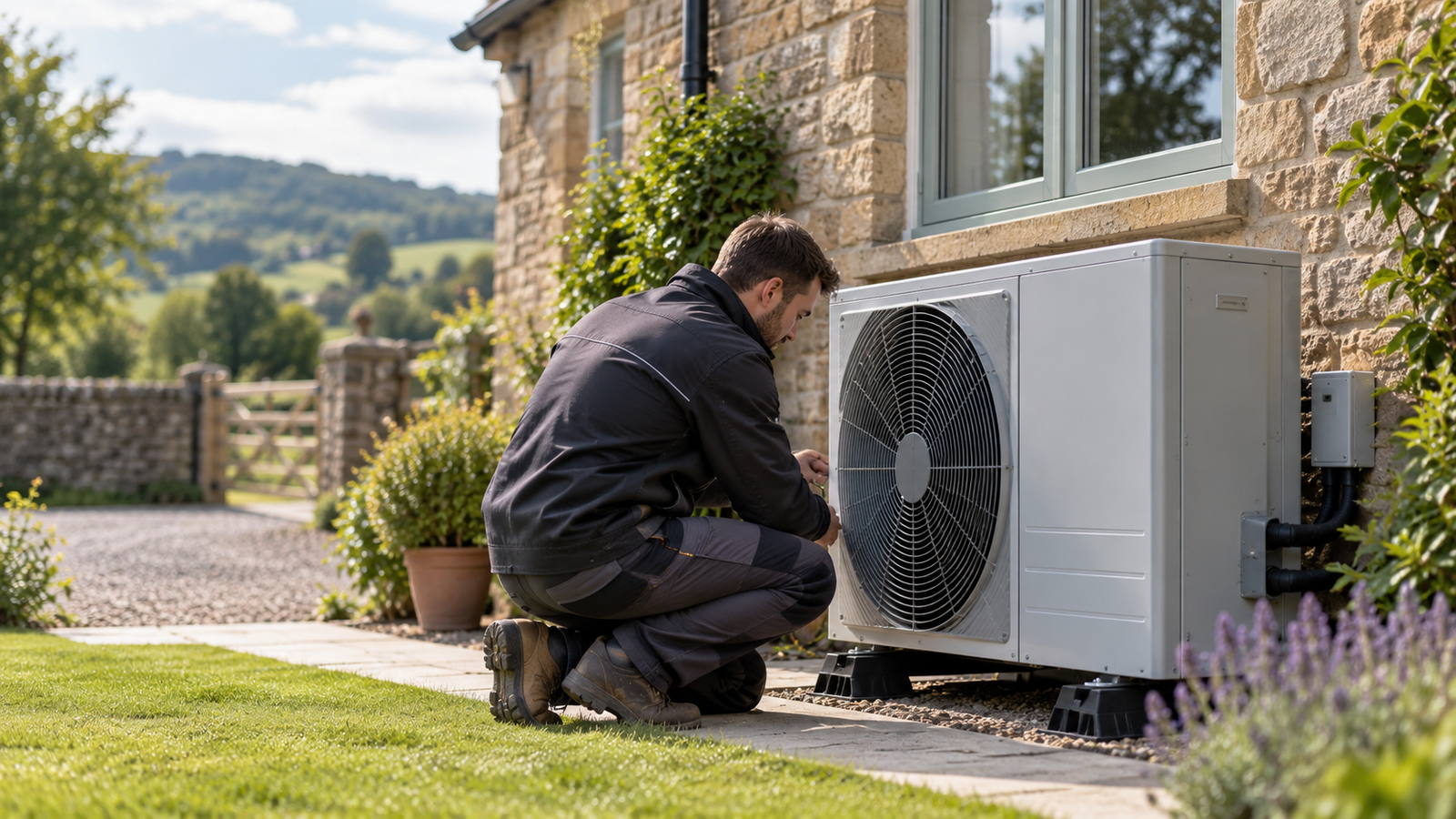
What Is Usually Included in a Heat Pump Installation?
For a step-by-step look at what happens from survey to handover, see our air source heat pump installation process guide.
Heat Pump & Core Equipment
Outdoor heat-pump unit, indoor hydraulic equipment, valves, controls and associated system components.
System Design
Heat-loss calculations, heat-pump sizing, radiator assessment and specification of the heating system.
Installation Labour
Plumbing, mounting, electrical connections, controls, system flushing and installation of new components.
Commissioning & Handover
System setup, weather compensation where applicable, testing and explanation of how to operate the system.
What Can Increase the Cost?
These are some of the most common reasons a real installation costs more than a simple advertised headline price.
Radiator Upgrades
Larger or additional radiators may be required so rooms can stay warm while the heat pump operates at efficient flow temperatures.
Radiator guide →Hot-Water Cylinder
Homes replacing a combi boiler will normally need to make provision for stored hot water.
Combi to heat pump guide →Electrical Work
The existing consumer unit, isolators, cabling or electrical supply may require work depending on the installation.
Pipework & System Changes
Older or more complicated heating systems may require larger pipework, altered layouts or additional components.
Controls
Weather compensation, smart controls and zoning can influence both the quotation and how the finished system performs.
Smart thermostat guide →Insulation Improvements
Insulation is not automatically required for every heat pump, but reducing heat loss can lower the output the system needs to provide.
OFF-GAS HOMES
The £9,000 Heat Pump Grant for Oil and LPG Properties
Until 31 March 2027, qualifying off-gas-grid properties in England and Wales replacing oil or LPG heating can receive £9,000 towards an eligible air-to-water or ground source heat pump.
This is £1,500 more than the standard £7,500 BUS grant and can make a significant difference to the remaining installation cost.
Replacing Heating Oil?
Rural oil-heated properties can vary significantly in age, insulation and radiator design, so grant value should be considered alongside the full system specification.
Oil to Heat Pump Guide →Replacing LPG?
Eligible off-grid LPG properties can also receive the temporary £9,000 grant where the Boiler Upgrade Scheme conditions are met.
LPG to Heat Pump Guide →Heat Pump Costs and Grants in England, Wales, Scotland and Northern Ireland
Installation prices vary by property more than by country, but the support available to bring the cost down depends on where you live.
| Nation | Main heat pump support | Key points |
|---|---|---|
| England | Boiler Upgrade Scheme: £7,500 towards an air source or ground source heat pump, or £2,500 towards an air-to-air heat pump | Until March 2027, an extra £1,500 for eligible properties heated by oil or LPG with no mains gas connection. |
| Wales | Boiler Upgrade Scheme, as in England | Eligible households may also get free energy efficiency improvements, including heat pumps, through the Welsh Government’s Nest scheme. |
| Scotland | Home Energy Scotland Grant and Loan: grant of up to £7,500, plus an optional interest-free loan of up to £7,500 | A £1,500 uplift for rural and island homes. The heat pump must provide all heating and hot water, and the installer and product must be MCS certified. |
| Northern Ireland | The Boiler Upgrade Scheme does not apply | GOV.UK states that Northern Ireland’s Boiler Replacement Scheme is now closed. Check current local schemes before budgeting. |
Grant rules and amounts change. Check the GOV.UK Boiler Upgrade Scheme pages, Home Energy Scotland or Nest before you apply. Our heat pump grants guide covers eligibility in more detail.
Compare Up to 3 Heat Pump Installers Near You
Tell us a little about your property to see installer options available in your area.
Free to use with no obligation
Heat Pump Cost vs a Gas Boiler
Gas Boiler
- Usually lower replacement cost
- Familiar installation for many UK homes
- No Boiler Upgrade Scheme heat-pump grant
- Lower fuel price per kWh than standard-rate electricity
Air Source Heat Pump
- Higher gross installation cost
- Eligible installations can receive substantial grant support
- Uses electricity very efficiently when designed well
- Performance is particularly sensitive to flow temperature and system design
Upfront price is only one part of the comparison. Read our gas boiler to heat pump guide and compare expected heat pump running costs before deciding.
How to Compare Heat Pump Installation Quotes
A lower quotation is not automatically poor value and a higher quotation is not automatically better. Compare what each installer has actually designed and included. Our 15 questions to ask when comparing heat-pump quotes give you a more detailed checklist for this assessment.
Do Not Judge a Heat Pump on Installation Cost Alone
A cheap installation can become poor value if the finished system needs unnecessarily high flow temperatures, has badly sized emitters or is commissioned poorly.
Equally, spending more does not guarantee lower bills. The aim is a properly designed system that suits the property and can operate efficiently.
Does the Heat Pump Brand Affect Installation Cost?
Equipment price does vary between manufacturers and product ranges, but the heat pump itself is only one component of the total project.
System design, labour, emitters, hot-water equipment, controls and electrical work can have as much or more influence on the final quotation.
That is why choosing a heat pump solely because one outdoor unit is cheaper can be misleading.
Compare Up to 3 Heat Pump Installers Near You
Tell us a little about your property to see installer options available in your area.
Free to use with no obligation
HEAT PUMP COST QUESTIONS
Frequently Asked Questions
How much does an air source heat pump cost in the UK?
Energy Saving Trust currently gives a typical air source heat-pump installation cost of around £12,000. Your actual price can be lower or higher depending on the property, heating system and work required.
How much is a heat pump after the £7,500 grant?
If an eligible installation costs £12,000, subtracting the standard £7,500 Boiler Upgrade Scheme grant would leave £4,500 before any non-eligible work or extras.
Who can get the £9,000 heat pump grant?
Until 31 March 2027, qualifying off-gas-grid properties in England and Wales replacing oil or LPG heating can receive £9,000 towards an eligible air-to-water or ground source heat pump.
What makes a heat pump installation more expensive?
Common factors include radiator upgrades, a new hot-water cylinder, electrical work, pipework changes, controls, property heat loss and general installation complexity.
Do I need new radiators?
Not necessarily. The installer should calculate the heat required in each room and check whether the existing radiators can deliver enough output at the proposed flow temperature.
Is the cheapest heat pump quote usually the best?
Not automatically. Compare sizing, heat-loss calculations, radiators, cylinder specification, controls, electrical work, commissioning, warranty and aftercare as well as the headline price.
How much does it cost to service an air source heat pump?
Daikin UK puts a typical annual service at £150 to £300, depending on the system and local labour rates. Some manufacturer guarantees require a yearly service. See our heat pump servicing guide.
INDEPENDENT GUIDANCE
About the Author
Practical independent guidance for UK homeowners comparing heat-pump costs, grants, equipment and installers.
Related Heat Pump Guides
Running Costs
Compare likely annual heating costs and the factors that affect efficiency.
Heat Pump Running Costs →Best Heat Pumps
Compare current UK air source heat-pump ranges and their strengths.
Best Air Source Heat Pumps →Replacing a Gas Boiler
See what changes when moving from a conventional gas-heating system.
Gas Boiler to Heat Pump →