
Best Smart Thermostat for Older Homes UK (2026 Guide)
Older UK homes can be difficult to heat evenly. Victorian terraces, Edwardian semis, stone cottages and solid-wall properties often have rooms that warm at very different rates, making room-by-room control more useful than simply replacing one thermostat with another.
We compare tado°, Honeywell Home evohome, Drayton Wiser, Hive and Google Nest, with a particular focus on zoning, smart radiator control and managing uneven temperatures.
- Independent research
- Older UK homes focus
- Affiliate links disclosed

Quick answer: what is the best smart thermostat for an older house?
See full recommendationsFor most older UK homes, tado° Smart Thermostat X (2nd gen) is our best overall choice because it combines good central heating control with one of the strongest routes into room-by-room heating. That matters in older properties because one thermostat rarely tells the whole story: a hallway may reach temperature while a front bedroom is still cold, or an upstairs room may overheat while a larger downstairs space is still warming.
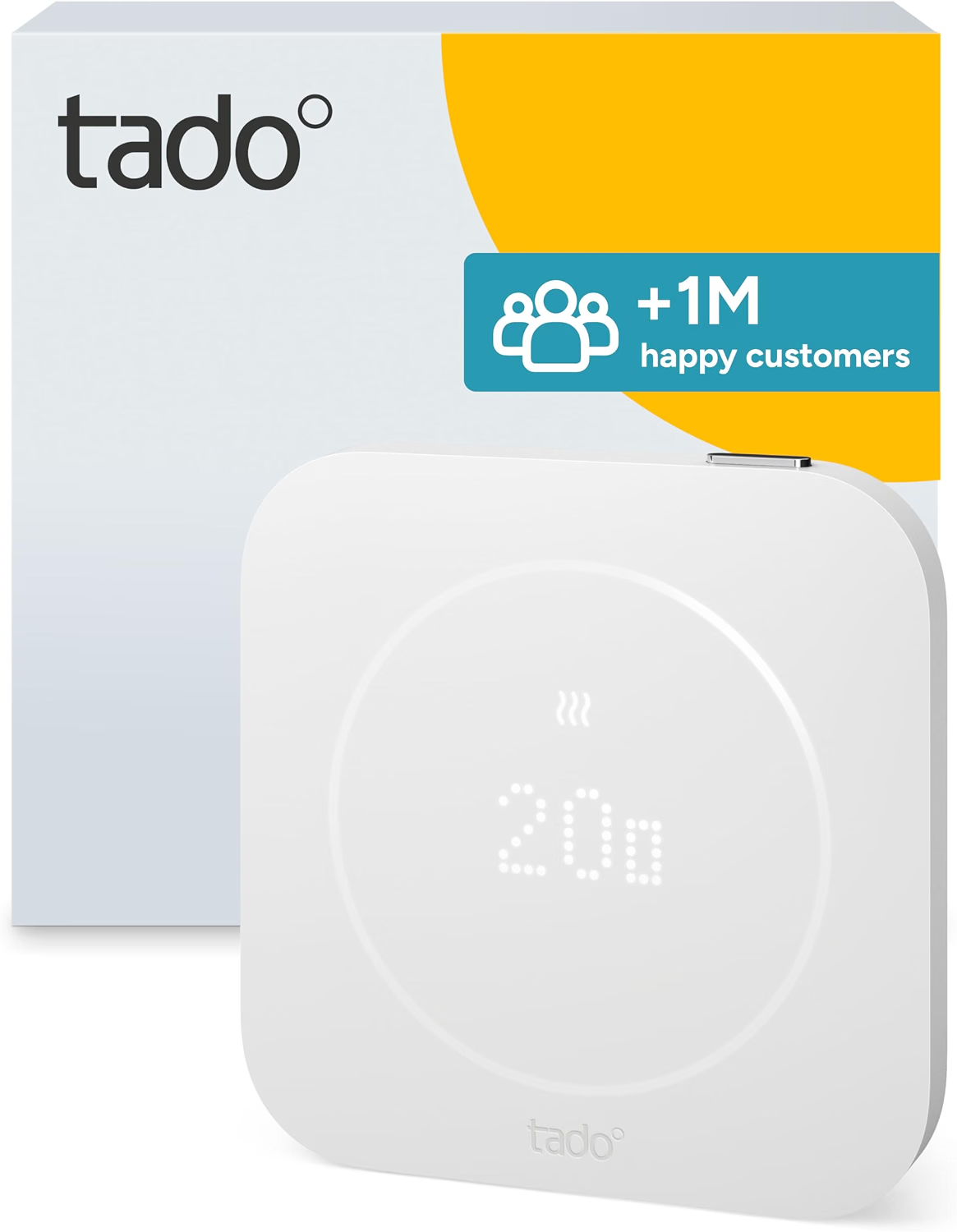
tado° Smart Thermostat X (2nd gen)
Best balance of smart control and expandable zoning.
Read our notes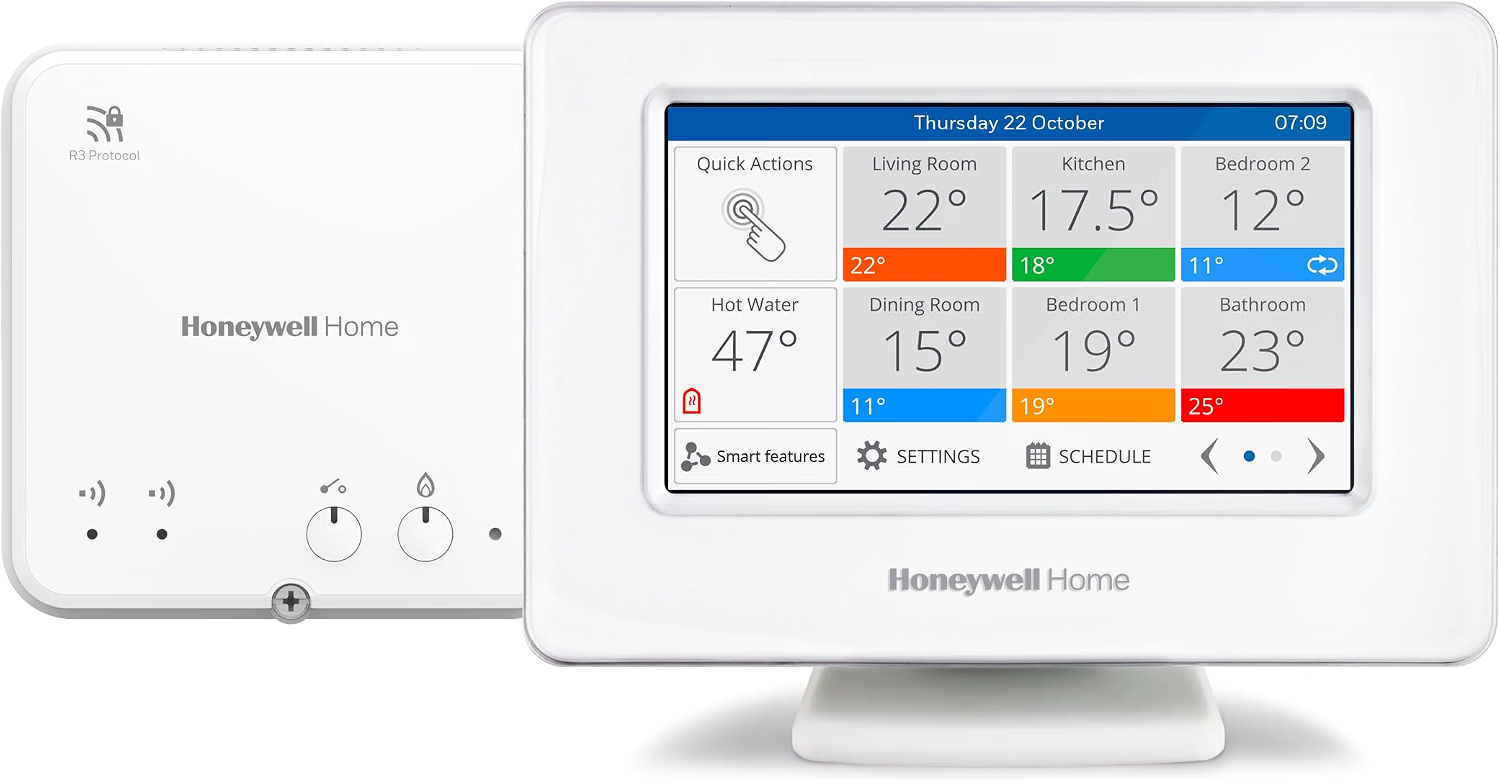
Honeywell Home evohome
Up to 12 zones. Best for larger or more complex older homes.
Read our notes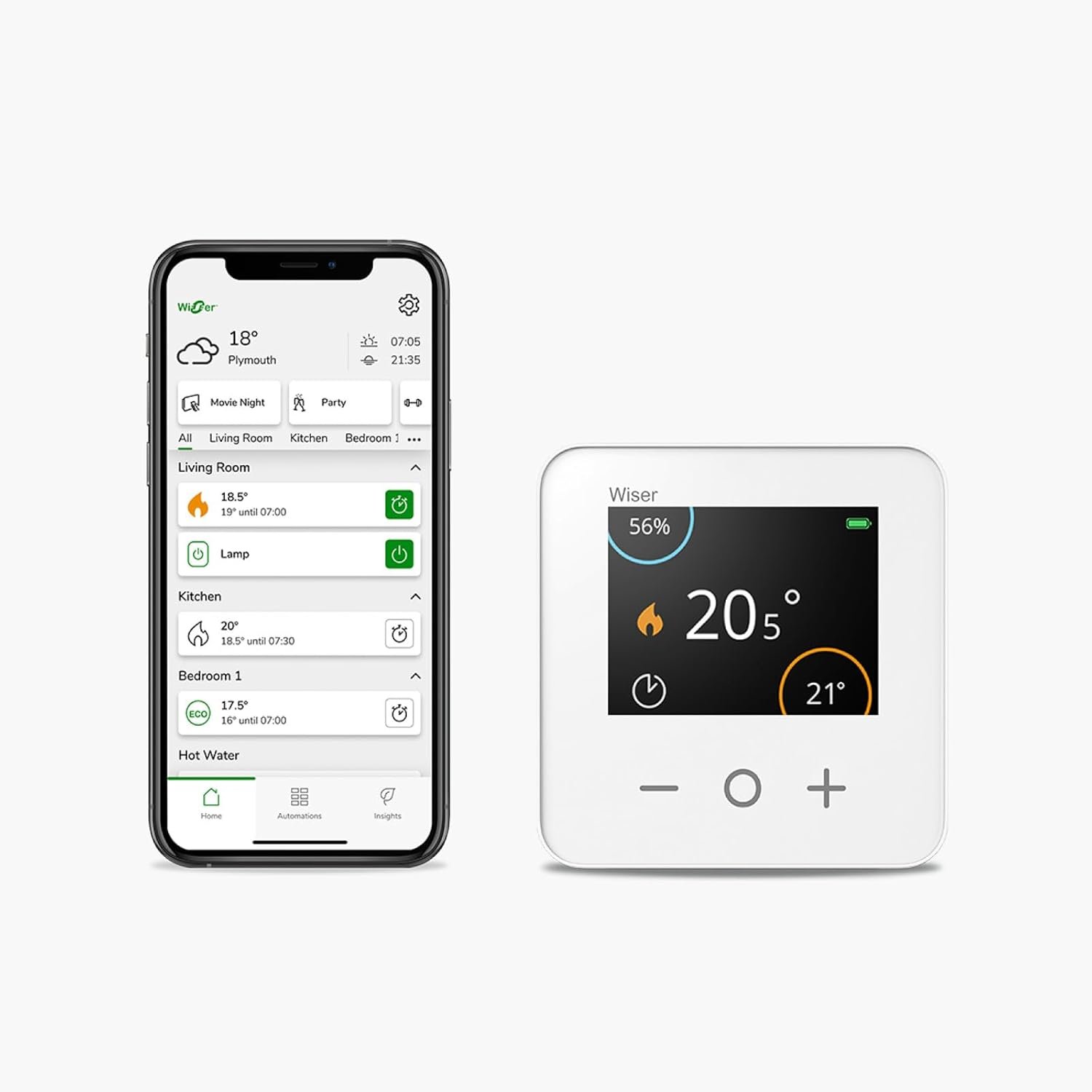
Drayton Wiser
Best-value route into room-by-room heating.
Read our notes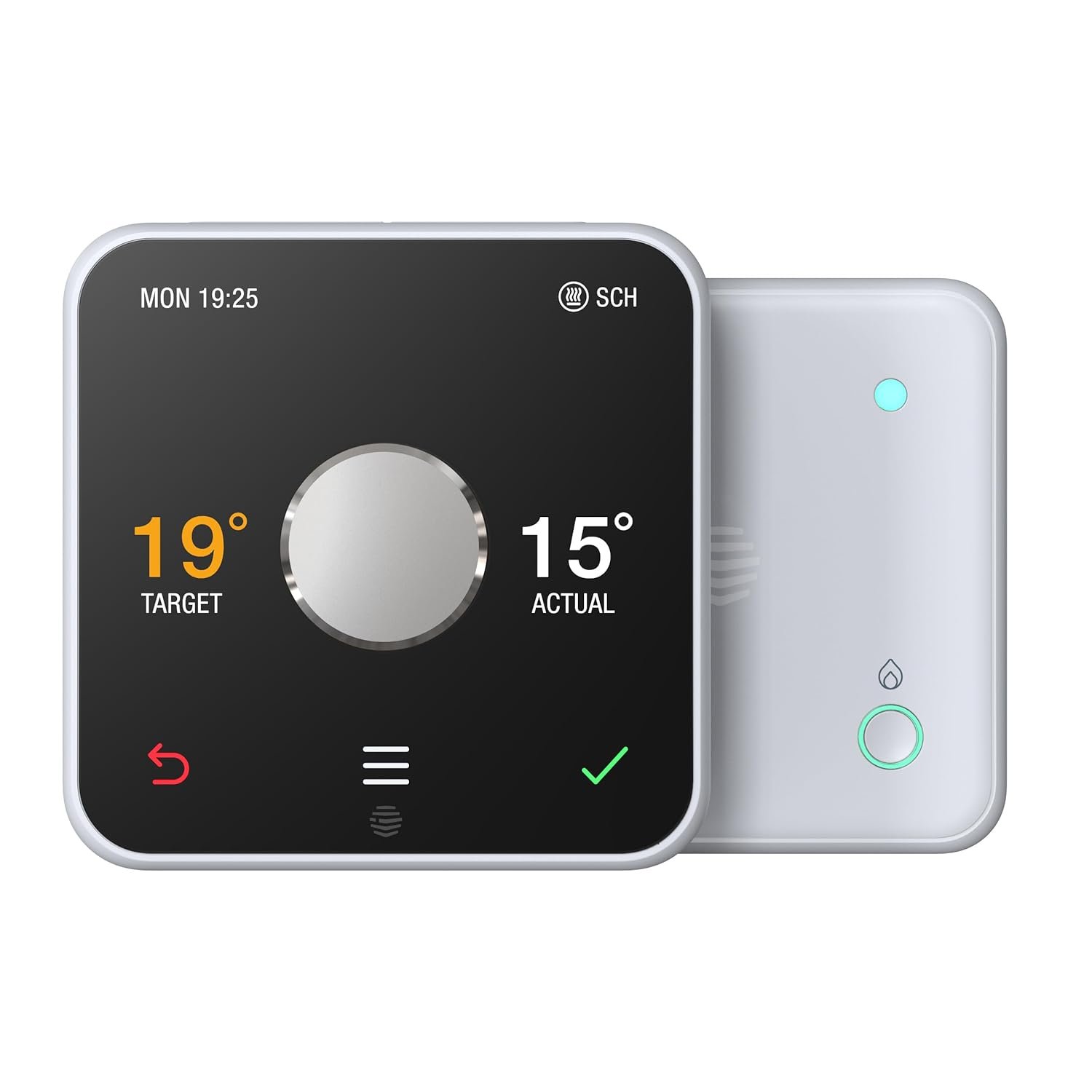
Hive Thermostat
Best simple upgrade from older controls.
Read our notes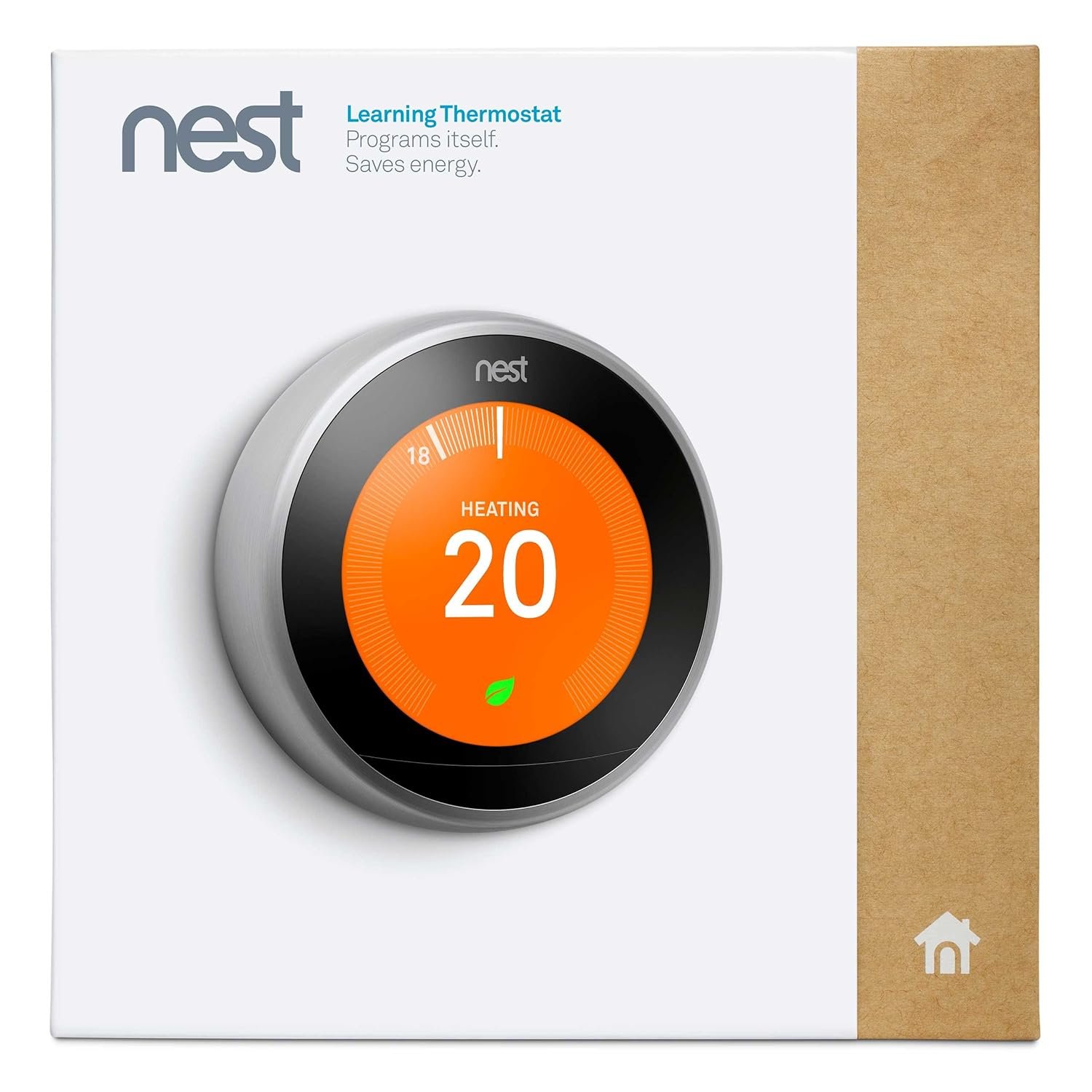
Google Nest Learning Thermostat
Best if automation matters more than detailed zoning.
Read our notesGood to know: In an older home, adding smart controls does not fix draughts, insufficient radiator output or poor insulation. The strongest results often come from combining better controls with radiator balancing and sensible fabric improvements.
Affiliate disclosure: This page contains Amazon affiliate links. If you buy through one of these links, Heat Pump Guide UK may earn a commission at no extra cost to you. Affiliate relationships do not determine our recommendations.
How we chose these thermostats
This guide was written to help homeowners in older UK properties choose smart heating controls based on practical factors including boiler compatibility, zoning, radiator control, usability and the way different rooms are actually occupied. Product features and compatibility were checked against current manufacturer information.
- Boiler compatibility
- Room-by-room zoning options
- Smart radiator control ecosystem
- Ease of use day to day
- How rooms are actually occupied
Why older homes need different heating controls
Older UK homes often behave very differently from modern new-build properties. Victorian terraces, Edwardian semis, stone cottages, solid-wall houses and older detached homes can lose heat quickly and warm unevenly.
They may also have heating systems that have evolved over decades, with radiators of different sizes, extensions added later, older pipework and thermostats positioned where they no longer represent the rooms people actually use.
A smart thermostat cannot correct the underlying heat loss, but better scheduling and zoning can stop one central temperature reading from controlling every room in exactly the same way.
Common heating problems in older homes
- One room staying noticeably colder than the rest of the house
- Bedrooms overheating while downstairs remains cool
- Cold front rooms or bay-window rooms
- Draughts around floors, doors and windows
- Radiators heating different rooms at very different speeds
- Basic timers that do not match current routines
- Heating unused bedrooms and spare rooms unnecessarily
- A hallway thermostat shutting the heating off before other rooms are comfortable
Best smart thermostats for older homes in detail
Each pick below suits a different kind of older property. Always confirm compatibility with your exact heating system before buying.
1. tado° Smart Thermostat X (2nd gen)
Best for: older homes with uneven temperatures, spare rooms, home offices and homeowners who want the option of room-by-room control.
tado° Smart Thermostat X (2nd gen) is our strongest all-round recommendation because it works well as a central smart thermostat but can also form the basis of a much more detailed heating-control system.
That is particularly useful in an older property. You may want the living room warm in the evening, a home office heated during working hours and spare bedrooms kept lower most of the week. Adding compatible Smart Radiator Thermostats X lets those rooms follow different schedules.
Why tado° works well in older homes
- Strong app control and scheduling
- Excellent Smart Radiator Thermostat X ecosystem
- Good route into room-by-room heating
- Relay and OpenTherm capability on compatible heating systems
- Matter and Thread connectivity
- Built-in rechargeable battery charged via USB-C
- Can be expanded gradually rather than all at once
Potential downside
- Choosing the correct tado° version matters. The standalone thermostat, wired Starter Kit and wireless Starter Kit are intended for different existing control setups
- tado° X cannot be mixed with older V3+ devices within the same tado° Home
Why we recommend it: tado° gives older homes a strong balance between simple everyday control and the ability to solve more complicated room-usage problems later.
Best for you if: your home heats unevenly and you want a system that can grow into room-by-room control over time.
Choose the right tado° X version
Already have tado° X or suitable Thread connectivity?
Wired Thermostat OnlyFirst tado° X setup with an existing wired thermostat?
Wired Starter KitReplacing a wireless thermostat or need a boiler-side receiver?
Wireless Starter KitBefore buying: check the exact boiler, current thermostat wiring and whether your heating system uses relay, OpenTherm or a manufacturer-specific digital control.
2. Honeywell Home evohome
Best for: larger older homes where several rooms or areas need genuinely independent heating schedules.
Honeywell Home evohome is particularly relevant to older properties because it is designed around zoned heating rather than one central thermostat. The system can manage up to 12 heating zones, allowing different bedrooms, living areas, extensions and home offices to have separate target temperatures and schedules.
In a large Victorian, Edwardian or detached property, that can be more useful than relying on one thermostat in a hallway to represent the temperature throughout the entire house.
Why evohome works well in older homes
- Up to 12 individual heating zones
- Excellent for larger radiator-based properties
- Strong room-by-room heating control
- Works with compatible Honeywell Home radiator controllers
- Suitable for compatible on/off boiler configurations
- OpenTherm boiler control available with suitable hardware
- Can accommodate more complex heating layouts
Potential downside
- A complete evohome setup requires more hardware and is more involved than a simple thermostat replacement
- It may be excessive for a small terrace or flat
Why we recommend it: evohome is the strongest option here when sophisticated zoning is the actual objective rather than simply adding app control.
Best for you if: you have a larger older property and different parts of the house are occupied at very different times.
3. Drayton Wiser
Best for: older homes that would benefit from room-by-room control without moving to a more advanced system such as evohome.
Drayton Wiser is one of the strongest value options for an older property because you can start with the main heating controls and add smart radiator thermostats only where they are useful. That works well where some bedrooms are used occasionally, one person works from home or parts of the house take much longer to warm than others.
Why Drayton Wiser works well in older homes
- Strong value for room-by-room heating
- Good smart radiator thermostat ecosystem
- Useful individual room schedules
- Good app control
- Can be expanded gradually
- Strong alternative to tado° if value is a priority
Potential downside
- If you only want a simple whole-house thermostat, its room-control potential may be more than you need
Why we recommend it: Wiser gives you much of the practical benefit of smart zoning without necessarily requiring the investment of a more sophisticated multi-zone system.
Best for you if: you want better control over specific rooms but still want to keep the overall system relatively straightforward.
4. Hive Thermostat
Best for: homeowners who mainly want to replace an old thermostat, programmer or timer with straightforward app control.
Hive remains one of the easier smart-heating systems to understand. If the main problem with your older home is simply outdated controls rather than difficult room-to-room temperature differences, it can be a very sensible upgrade. You get app-based scheduling and remote temperature control without having to build a sophisticated zoned heating system.
Why Hive works well in older homes
- Simple app control
- Easy heating schedules
- Good replacement for basic timers and thermostats
- Familiar UK heating-control system
- Can be expanded with compatible Hive radiator valves
Potential downside
- If uneven rooms are the main problem, tado°, Wiser or evohome provide a stronger zoning proposition
Why we recommend it: Hive is easy to understand and well suited to homeowners who want better control without adding unnecessary complexity.
Best for you if: your existing heating controls are dated or awkward and you mainly want an easier way to manage the system.
5. Google Nest Learning Thermostat
Best for: homeowners who value automatic scheduling, premium design and Google smart-home integration.
The Google Nest Learning Thermostat remains appealing if you want the thermostat to adapt around how the household uses its heating rather than manually managing every schedule. It can work perfectly well in an older home, but its weakness compared with tado°, Wiser and evohome is room-by-room heating control.
Why Nest can work well in older homes
- Learning and automatic scheduling features
- Strong Google smart-home integration
- Good app control
- Premium physical thermostat
- OpenTherm capability on compatible boiler installations
Potential downside
- It is not our first choice if your main challenge is several rooms that need independent heating schedules
Why we recommend it: Nest is a strong alternative where automation matters more than detailed radiator zoning.
Best for you if: you already use Google smart-home products and prefer automated whole-house control to detailed zoning.
Which smart thermostat is best for your type of older home?
These are general recommendations rather than rules. The existing boiler, wiring, radiator layout and how the rooms are actually used matter more than the age label of the property.
| Older home type | Common heating issue | Our suggested approach |
|---|---|---|
| Victorian terrace | Cold front rooms, warm upstairs rooms, draughts | tado° or Wiser with smart TRVs in problem rooms |
| Edwardian semi | Larger rooms, uneven heating, varied room use | tado° or Wiser; evohome if extensive zoning is needed |
| Large older detached house | Many rooms, different occupancy patterns, several heating areas | evohome for advanced zoning or tado° for a simpler expandable system |
| Cottage or stone property | Slow warm-up, high heat loss and local cold spots | tado° or Wiser plus carefully targeted smart TRVs |
| Small older flat | Basic controls and relatively few radiators | Hive or tado° depending on whether zoning is required |
Can a smart thermostat fix cold rooms?
Sometimes, but not if the controls are not the actual cause.
If a room is cold because it is being heated at the wrong time, the central thermostat is satisfied too early or another part of the house dominates the temperature reading, better controls may help.
If the room is cold because of excessive heat loss, draughts, poor insulation, an undersized radiator or a hydraulic problem, a smart thermostat will not fix the underlying issue.
Older-home reality
Smart controls work best as part of a properly functioning heating system. Radiator balancing, adequate emitter sizing, draught-proofing and sensible insulation improvements can be just as important.
Will a smart thermostat save money in an older home?
It can reduce wasted heating, particularly where the existing controls are basic or the heating currently runs when rooms are unoccupied. The main opportunity is usually better control of heat, not making the building or boiler inherently more efficient. Smart controls may help by:
- Improving heating schedules
- Reducing heating when nobody is home
- Avoiding unnecessary heating of unused rooms
- Reducing overheating
- Making temperature changes easier
- Using compatible modulating control where available
Results vary significantly. Property heat loss, system design, radiator sizing, boiler controls, temperature settings and household behaviour all affect energy use.
Smart thermostat or smart TRVs for an older house?
For many older homes, the strongest setup uses both, but that does not mean every radiator needs a smart valve. A central smart thermostat improves whole-house scheduling and controls the overall heating demand. Smart TRVs are useful where particular rooms need different temperatures or schedules.
Start with a smart thermostat if…
- Your current controls are old or basic
- You want app control
- You want better whole-house schedules
- Your home already heats reasonably evenly
- You want one simple first upgrade
Add smart TRVs if…
- Some bedrooms overheat
- You have rarely used spare rooms
- You work from home in one room
- Different rooms are occupied at different times
- You specifically want independent room schedules
Best setup for most older UK homes
There is no need to put smart hardware on every radiator immediately. Start with tado° X if you want a flexible system that can grow. Choose evohome if your property genuinely needs extensive multi-zone control. Choose Wiser if you want a lower-cost route into room-by-room heating.
- Start with a compatible smart thermostat
- Make sure the radiators and system are properly balanced
- Add smart radiator controls only where separate scheduling is useful
- Keep heating schedules simple
- Investigate unusually cold rooms rather than assuming controls are the cause
- Address obvious draughts and insulation weaknesses where practical
What to check before buying
Six checks that matter most in an older property.
Your exact boiler and heating system
An older house does not necessarily mean an older boiler. Check the exact boiler model and existing controls before choosing any thermostat.
Wired or wireless controls
Check how your existing thermostat communicates with the boiler. This is particularly important with the different tado° Starter Kits.
Relay, OpenTherm or manufacturer controls
Do not assume every third-party thermostat will retain the same boiler modulation features as the existing manufacturer controls.
Whether zoning will actually help
Smart zoning is most valuable when rooms genuinely have different occupancy schedules or temperature requirements.
Radiator condition and sizing
A smart TRV cannot make an undersized radiator provide more heat. If a room never reaches temperature, investigate the emitter and heat loss as well as the controls.
Thermostat position
Older houses frequently have thermostats in hallways that are unusually cold, warm or draughty. That can influence how the whole system behaves.
Common mistakes when buying a smart thermostat for an older home
Buying based on brand name alone
The best-known thermostat is not automatically the most useful for an unevenly heated property. Look at zoning capability, boiler compatibility and the wider radiator-control ecosystem.
Fitting smart TRVs everywhere without a reason
Room-by-room control is useful, but there is little benefit in creating complicated schedules for rooms that are always occupied together.
Expecting controls to fix heat loss
Smart controls cannot stop heat escaping through an uninsulated wall, draughty floor or poorly performing window.
Ignoring radiator balancing
If some radiators receive hot water much more quickly than others, balancing the system may improve comfort regardless of which thermostat you buy.
Choosing the wrong tado° kit
The standalone wired thermostat, wired Starter Kit and wireless Starter Kit have different installation requirements. Choose according to your existing heating controls rather than price alone.
Assuming smart automatically means cheaper
A badly configured smart heating system can still waste energy. The technology only helps if the schedules and temperatures are appropriate.
Our verdict: best smart thermostat for older homes
For most older UK homes, tado° Smart Thermostat X (2nd gen) is our best overall choice because it combines strong everyday controls with an excellent route into room-by-room heating.
Honeywell Home evohome is the stronger specialist option for a large older property where advanced zoning is genuinely needed. Drayton Wiser is our best-value alternative for room-by-room heating, while Hive is the easiest recommendation if the main aim is simply to modernise old heating controls. Google Nest remains attractive if automation and Google smart-home integration are more important than detailed zoning.
Simple recommendation: choose tado° X for the best overall balance, evohome for advanced zoning, Wiser for value zoning, Hive for simplicity and Nest for automation. Start with the right central controls, then add room-by-room control only where it solves a genuine heating or occupancy problem.
Frequently asked questions
What is the best smart thermostat for an older house?
For most older UK homes, tado° Smart Thermostat X (2nd gen) is our best overall choice because it combines good central control with strong support for room-by-room heating through compatible smart radiator thermostats.
Do smart thermostats work in Victorian houses?
Yes. The age of the building does not prevent a smart thermostat from working. Compatibility depends mainly on the heating system and boiler. Smart radiator control can be particularly useful where different rooms in a Victorian property heat unevenly.
Can a smart thermostat fix a cold room?
Only if the problem is primarily related to heating control. A cold room caused by high heat loss, draughts, an undersized radiator or system problems needs those underlying issues addressed as well.
Are smart TRVs worth it in old houses?
They can be particularly useful where rooms have different occupancy patterns or temperature requirements. They are less useful if every room is normally heated at the same time.
Is Honeywell evohome good for an older house?
Yes, particularly in a larger older property where several rooms need separate heating zones. evohome can manage up to 12 heating zones, although a complete system is more involved than a standard smart thermostat installation.
Is Hive good for older homes?
Hive is a good choice if the priority is replacing old heating controls with straightforward app control and better scheduling. tado°, Wiser or evohome are generally stronger when room-by-room zoning is the main requirement.
Is Nest good for older homes?
Nest can work well where automation and smart-home integration matter, but it is not our first choice for a property where detailed room-by-room heating control is the priority.
Related guides
 Best Smart Thermostats for Heat PumpsControls that suit low-temperature heating
 Best Smart Thermostat for Gas BoilersSystem and regular boilers with cylinders
 Best Smart Thermostat for Combi BoilersHeating-only control for on-demand hot water
 Smart Thermostat vs Smart TRVWhich upgrade solves your problem
 Are Smart Thermostats Worth It?What you actually gain from an upgrade
 Are Smart TRVs Worth It?When room-by-room control pays off
 Do Smart Thermostats Save Money?What affects any savings on your bills
 Why Is One Room Colder Than the Rest?Common causes and practical fixes
 Heating Upgrades Before Replacing Your BoilerImprovements worth making first
 Hive vs tado°Two popular smart heating systems compared
Sources and further reading
Product features and compatibility information were checked against current manufacturer information. Always confirm compatibility with your exact heating system before purchasing.