
Do Smart Thermostats Save Money?
Smart thermostats can reduce wasted heating, but they do not automatically cut every household’s energy bill. The biggest benefits usually come when they replace basic controls, poor schedules or heating habits that regularly use more energy than necessary.
This guide explains where the savings can come from, which homes have the most potential to benefit, and when room-by-room control may be more valuable than changing the main thermostat alone.
- Independent research
- No guaranteed savings claims
- Affiliate links disclosed

Quick answer: do smart thermostats save money?
See the best options for reducing wasteThey can, but only if they help you use less unnecessary heating. A smart thermostat does not make fuel cheaper and does not automatically make a boiler or heat pump more efficient. The savings usually come from better schedules, easier temperature adjustments, remote control and, on suitable systems, room-by-room heating or improved boiler modulation.
Homes with old timers, basic thermostats, irregular routines or heating that is often left running unnecessarily generally have more opportunity to reduce waste than homes where the heating is already carefully controlled.
The most useful way to think about it: a smart thermostat is a control upgrade first and a potential money-saving upgrade second. The more wasted heating your current setup creates, the greater the opportunity for better controls to reduce it.
Affiliate disclosure: This page contains Amazon affiliate links. If you buy through one of these links, Heat Pump Guide UK may earn a commission at no extra cost to you. Affiliate relationships do not determine our recommendations.
How can a smart thermostat reduce heating costs?
The thermostat itself does not generate a saving. The saving comes from what the controls enable you to do differently.
| Saving method | How it can help | Most relevant for |
|---|---|---|
| Better schedules | Reduces heating at times when the home does not need to be as warm | Homes with old timers or poor schedules |
| Remote app control | Makes it easier to turn heating down when plans change | Busy or irregular households |
| Lower target temperatures | Makes small, deliberate temperature reductions easier to maintain | Homes that regularly overheat |
| Geofencing | Can adjust heating according to whether people are home | Households with changing routines |
| Room-by-room control | Reduces unnecessary heating in rooms that are not being used | Larger homes or varied occupancy |
| Modulating boiler control | Can allow a compatible boiler to respond more closely to heating demand | Suitable OpenTherm installations |
How much money can a smart thermostat save?
There is no reliable universal percentage.
Energy Saving Trust currently says that fitting effective heating controls helps ensure the home is heated only when needed. Its 2026 guidance estimates that installing a programmer, thermostat and thermostatic radiator valves where these controls are absent can save around £100 a year in Great Britain. That figure relates to a package of heating controls rather than to a smart thermostat specifically, so it should not be treated as an expected smart-thermostat saving.
Your actual result depends on what the smart control replaces.
| Current situation | Savings opportunity | Why |
|---|---|---|
| Heating regularly left running unnecessarily | Higher | There is obvious heating waste to remove |
| Basic timer and manual thermostat | Potentially meaningful | Schedules and adjustments become much easier |
| Irregular work or family routines | Potentially meaningful | Remote control and flexible schedules can help |
| Modern programmable controls already used well | Lower | There may be relatively little wasted heating to remove |
| Very energy-conscious household | Lower | You may already be doing the useful actions manually |
Important: Avoid choosing a smart thermostat because of a headline savings percentage. Manufacturer figures often depend on the baseline controls, property and behaviour used in the comparison.
When do smart thermostats usually have the highest savings potential?
Higher potential
- Old manual thermostat
- Basic or awkward programmer
- Heating regularly left on too long
- Irregular working patterns
- Frequent changes to household routine
- Rooms regularly overheating
- Several rooms used at very different times
Lower potential
- Modern programmable thermostat already installed
- Schedules already carefully optimised
- Very consistent daily routine
- Minimal heating use
- Little existing overheating
- Heat loss rather than control is the main problem
Do smart thermostats save money with gas boilers?
Gas-boiler homes often have the clearest opportunity for smart controls to reduce unnecessary heating, particularly where the existing controls are basic. A smart thermostat can help if:
- Your timer no longer matches your routine
- The heating is frequently left running
- You regularly change plans during the day
- You want to control heating remotely
- Different rooms are occupied at different times
- Your compatible boiler can use a more sophisticated control such as OpenTherm
That does not mean every gas boiler will benefit equally. Boiler compatibility, existing controls and household behaviour still determine the result.
Do smart thermostats save money with heat pumps?
The answer is less straightforward than it is with a gas boiler.
Heat pumps usually work best with steadier operation, correctly configured weather compensation and relatively small changes in indoor temperature. Large setbacks followed by rapid reheating can work against that strategy.
A third-party smart thermostat may still be useful, but it should not automatically replace the heat pump manufacturer’s controls just because it offers more app features.
Heat pump advice
Focus first on system design, flow temperature, weather compensation, emitter sizing and suitable manufacturer controls. A smart thermostat should support the heat pump’s control strategy rather than repeatedly forcing it into stop-start operation.
Can lowering the thermostat save more than making it smart?
Potentially, yes. Energy Saving Trust currently recommends setting the room thermostat to the lowest comfortable temperature, normally somewhere within the 18–21°C range.
If a home is routinely heated warmer than necessary, reducing the target temperature may matter more financially than whether the thermostat itself is smart.
Where smart helps
The advantage of a smart thermostat is that it may make those lower settings and more sensible schedules easier to maintain consistently.
Best smart thermostats for reducing heating waste
If reducing unnecessary heating is your main reason for upgrading, the best product depends on where the waste is occurring.
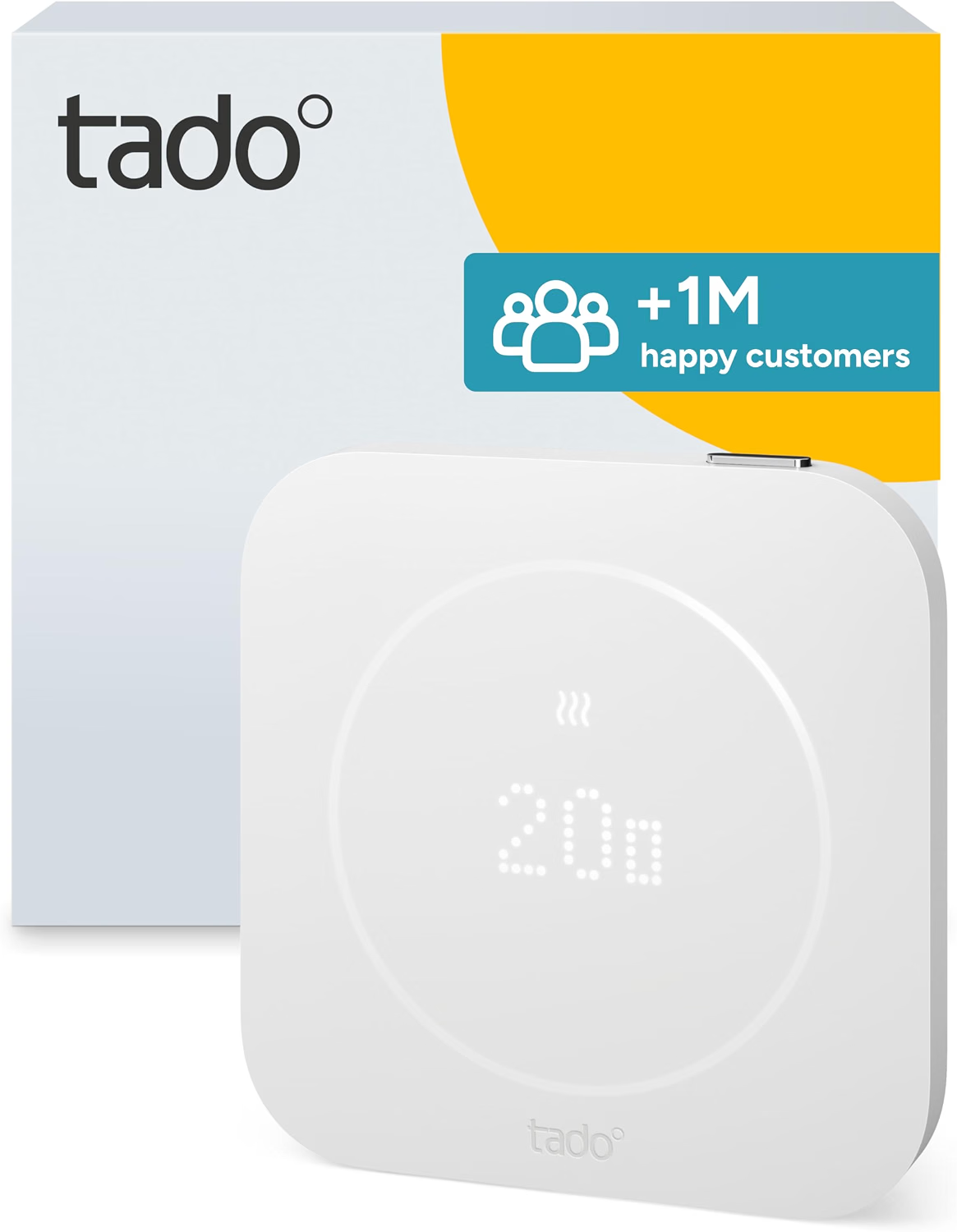
tado° Smart Thermostat X (2nd gen)
Flexible schedules plus strong room-by-room expansion.
Read our notes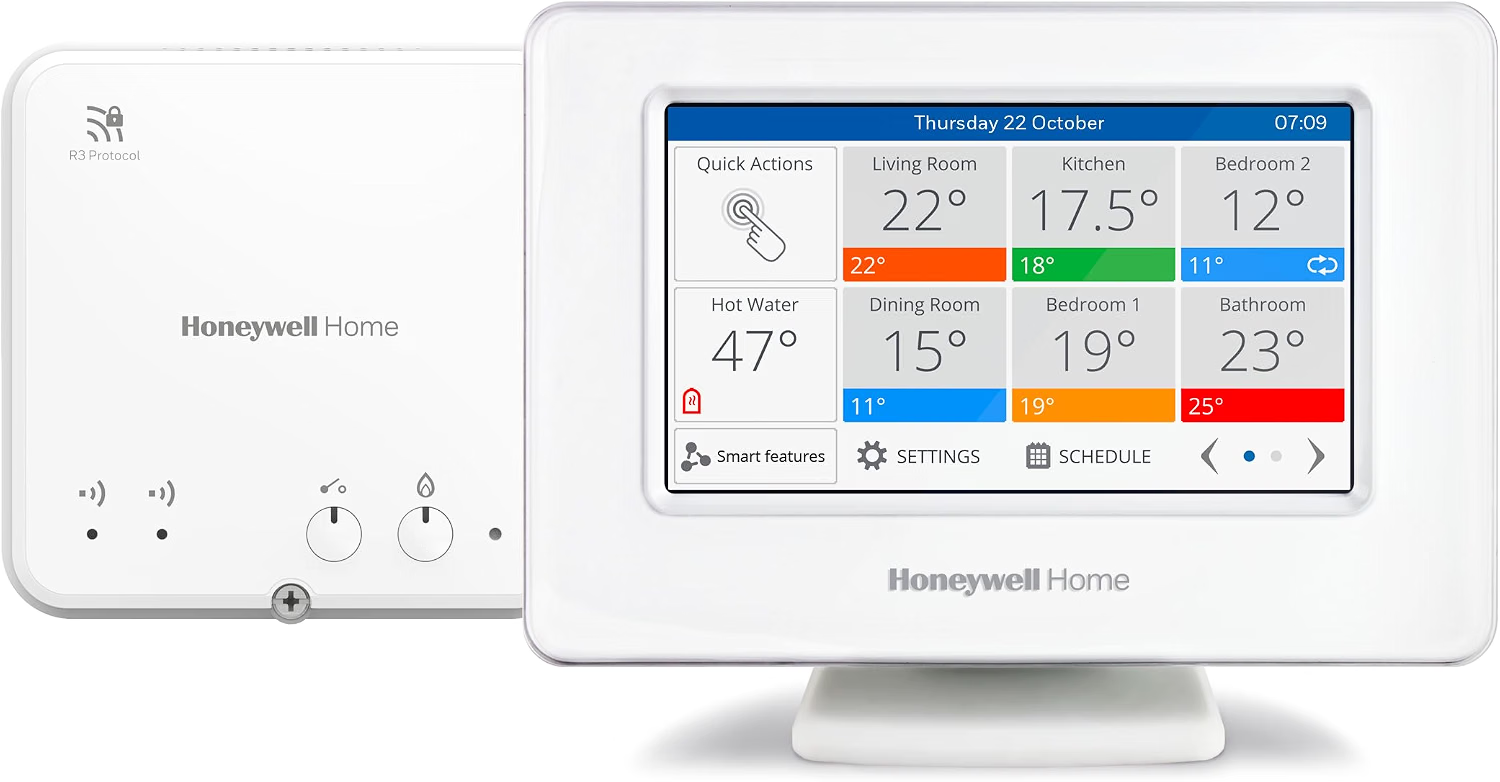
Honeywell Home evohome
Independent control of up to 12 heating zones.
Read our notes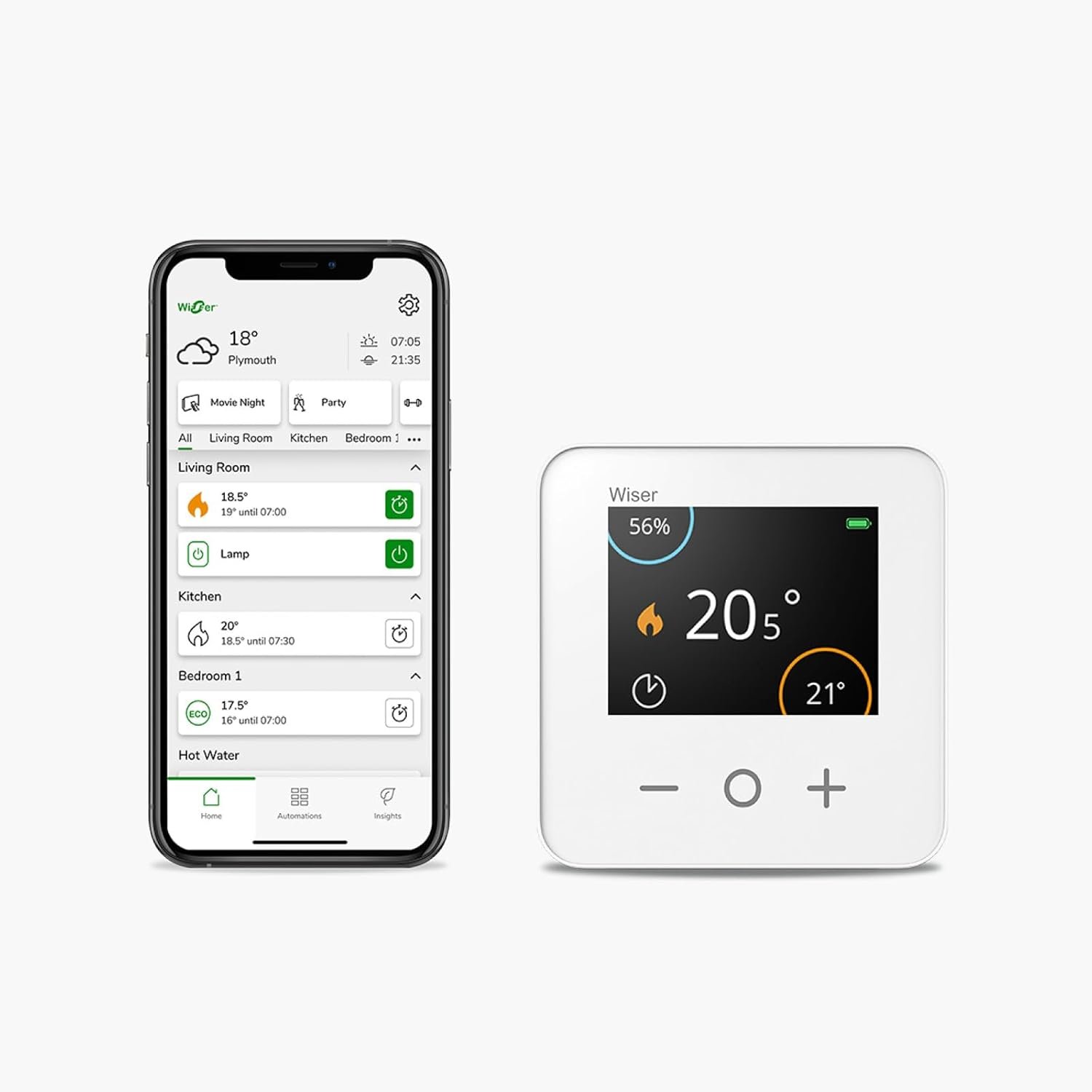
Drayton Wiser
Good-value route into room-by-room heating.
Read our notes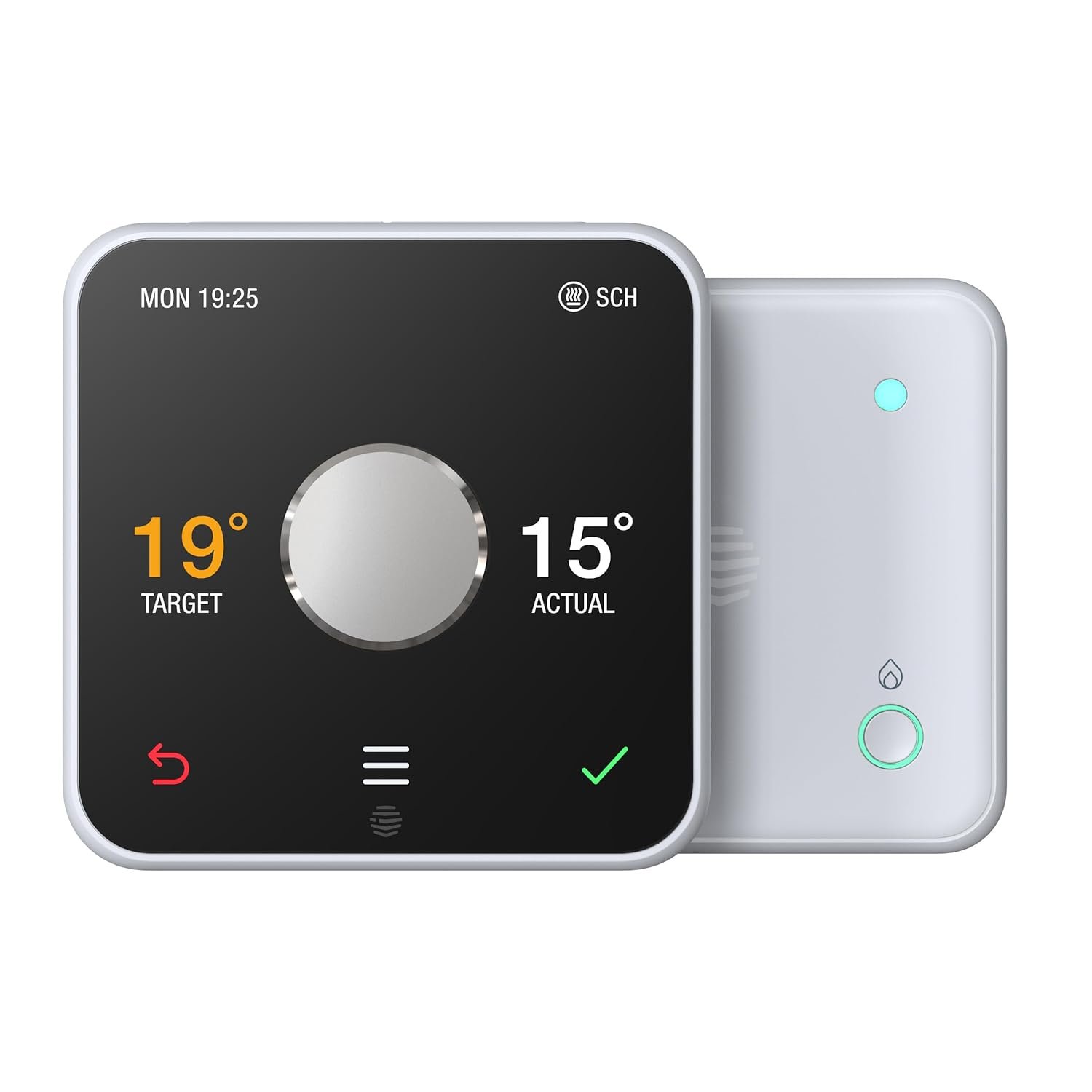
Hive Thermostat
Makes basic scheduling and remote control easier.
Read our notes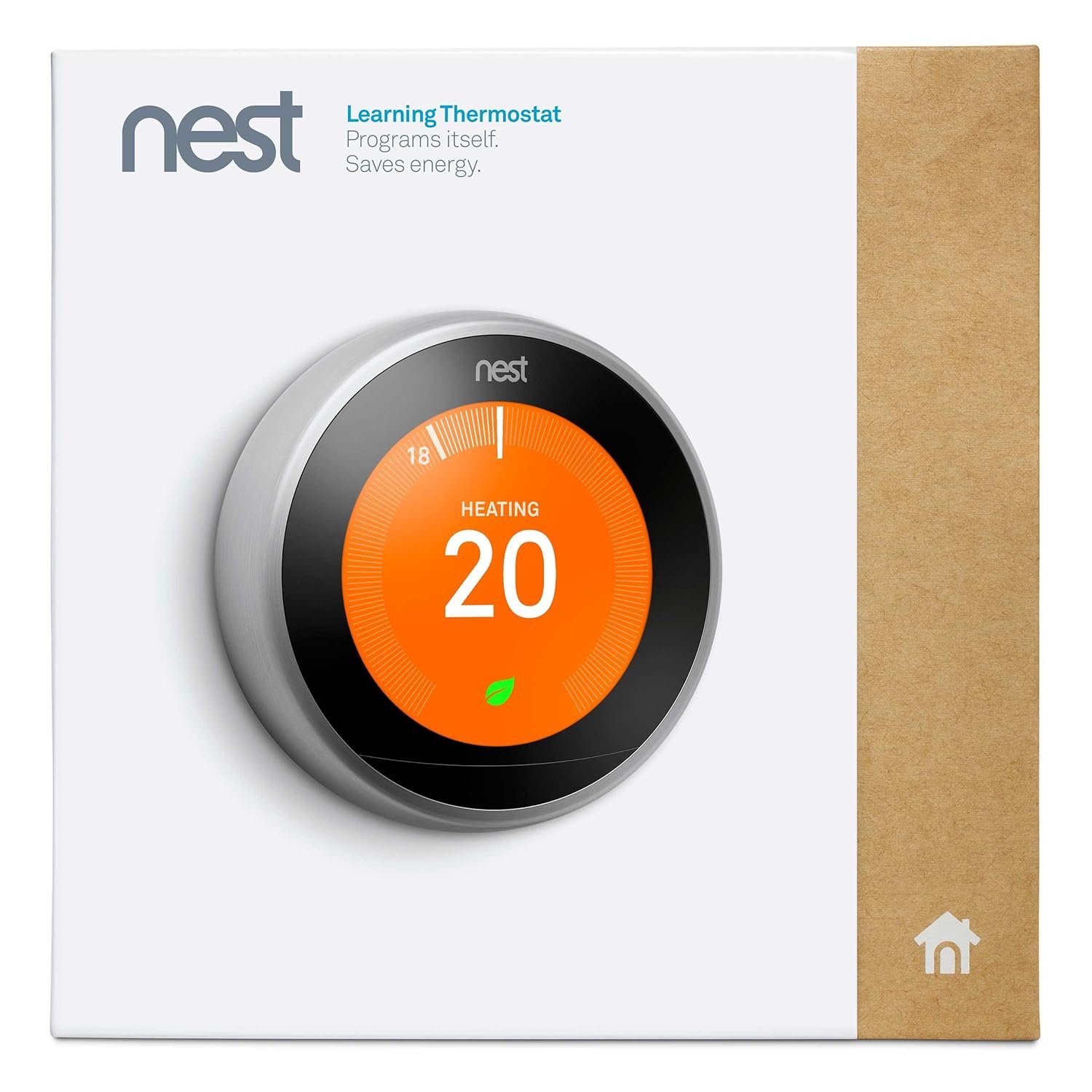
Google Nest Learning Thermostat
Learning and automated scheduling may reduce manual intervention.
Read our notes
1. tado° Smart Thermostat X (2nd gen)
Best for: homes that want strong schedules now and may add room-by-room control later.
tado° Smart Thermostat X (2nd gen) is our strongest all-round choice because it can address both whole-home scheduling and, with compatible radiator thermostats, room-specific heating.
tado° launched the 2nd-generation model on 2 September 2026. The wired version supports compatible relay and OpenTherm heating systems, uses Matter and Thread, and has a rechargeable USB-C battery.
Why tado° can help reduce wasted heating
- Flexible schedules and remote app control
- Strong room-by-room expansion
- Compatible smart radiator thermostats
- Relay and OpenTherm support on suitable systems
- Matter and Thread connectivity
- Can be expanded gradually
Potential downside
- The correct version depends on your existing thermostat and heating controls. Do not choose between the three kits purely on price
Choose the right tado° X version
Already have tado° X or suitable Thread connectivity?
Wired Thermostat OnlyFirst tado° X setup with an existing wired thermostat?
Wired Starter KitReplacing a wireless thermostat or need a boiler-side receiver?
Wireless Starter KitBefore buying: check your exact boiler, current thermostat wiring and whether your heating system uses relay, OpenTherm or a manufacturer-specific control protocol.
2. Honeywell Home evohome
Best for: larger homes where heating waste comes from warming several rooms that do not need to be heated at the same time.
evohome is particularly relevant when the money-saving opportunity comes from zoning rather than simply improving the main heating schedule.
Resideo’s current system builder supports up to 12 independently controlled heating or cooling zones. That makes evohome much more relevant to a large property than to a small home where every room follows the same routine.
Why evohome can reduce wasted heating
- Up to 12 individual heating zones
- Independent room schedules
- Strong radiator-based zoning
- Compatible with suitable on/off and OpenTherm boiler configurations
Potential downside
- A full evohome system costs more and requires more hardware, so the extra zoning needs to solve a genuine problem to justify the investment
3. Drayton Wiser
Best for: homes where several rooms are heated unnecessarily and you want a more affordable route into zoning.
Wiser is useful where the main opportunity is controlling spare bedrooms, home offices or other rooms independently rather than heating the whole property to the same schedule.
Why Wiser can reduce wasted heating
- Good value for multi-room control
- Strong smart radiator thermostat support
- Individual room schedules
- Good app control
- Expandable over time
Potential downside
- If every room is normally occupied at the same time, the zoning capability may provide less financial benefit
4. Hive Thermostat
Best for: homes where an old timer or difficult thermostat is the main source of poor control.
Hive makes a strong case when the problem is simple: the heating is awkward to programme, schedules are frequently wrong or nobody wants to interact with the existing controls.
Why Hive can reduce wasted heating
- Easy app control
- Simple schedules
- Good replacement for old timers
- Expandable with compatible Hive radiator valves
Potential downside
- For extensive zoning, tado°, Wiser or evohome provide more compelling ecosystems
5. Google Nest Learning Thermostat
Best for: households that value automated scheduling and Google smart-home integration.
Nest can reduce some manual heating-management effort by learning routines and automating schedules.
Why Nest can reduce wasted heating
- Learns routines
- Automates schedules
- Google smart-home integration
Potential downside
- Its room-by-room zoning proposition is weaker than tado°, Wiser or evohome, so it is less compelling where heating unused rooms is the main source of waste
Can a smart thermostat pay for itself?
Possibly, but there is no standard payback period. For some households, reduced heating use may eventually recover the cost. For others, convenience, comfort and improved control may be the main reasons to buy.
Do not buy on payback alone. If you already have good controls and little heating waste, the financial payback could be long or negligible. In that situation, buy a smart thermostat only if the convenience and additional control are worth the cost to you.
- The thermostat purchase price
- Installation cost
- The cost of any bridge, receiver or hub
- Whether smart radiator controls are added
- Your current annual heating use
- How much unnecessary heating can realistically be removed
- Future energy prices
Smart thermostat vs smart TRVs for saving money
They target different types of waste. For room-by-room savings, see do smart TRVs save money? in our smart TRV guide.
| Upgrade | Best for | Where savings may come from |
|---|---|---|
| Smart thermostat | Poor whole-home schedules | Reducing unnecessary heating across the property |
| Smart TRVs | Rooms used at different times | Reducing heating in specific unused rooms |
| Thermostat + smart TRVs | Larger homes with varied occupancy | Combining whole-home scheduling with room-by-room control |
You do not need smart valves on every radiator. They make the strongest financial case in rooms where different schedules genuinely reduce heating demand.
Common reasons smart thermostats fail to save money
The old controls were already good
There is little waste left to remove.
Target temperatures are increased
Easier controls sometimes tempt users to heat the house more.
Schedules are badly configured
Smart does not automatically mean sensible.
Users constantly override automation
This can undo the intended control strategy.
The wrong problem is being addressed
Controls cannot fix excessive heat loss or inadequate radiators.
Zoning is used unnecessarily
Complexity does not create savings if every room is occupied together.
The controls fight a heat pump
Inappropriate stop-start schedules can work against steady heat-pump operation.
Our verdict: do smart thermostats really save money?
They can, but the saving comes from improved heating control rather than from the thermostat being smart in itself.
The strongest financial case is where old controls, poor schedules or room-by-room heating waste currently use more energy than necessary. If your existing controls are already well programmed and the house is heated efficiently, a smart thermostat may still be worthwhile for convenience, but you should expect a smaller financial benefit.
Best takeaway: before buying, identify the source of your heating waste. If it is poor whole-home scheduling, improve the thermostat. If it is unused rooms, consider zoning. If it is excessive heat loss, spend the money on the building or heating system instead.
Frequently asked questions
Do smart thermostats save money?
They can save money when they reduce unnecessary heating through better schedules, remote control, lower temperatures or room-by-room control. Savings depend heavily on the controls and habits they replace.
How do smart thermostats save money?
They mainly save money by making it easier to heat the home only when and where heat is needed.
Will a smart thermostat make my boiler more efficient?
Not automatically. Better controls can improve how the heating system operates, and compatible modulating controls may help suitable boilers respond more closely to demand, but the thermostat does not change the boiler’s underlying efficiency.
How much can a smart thermostat save per year?
There is no reliable universal figure. The saving depends on your existing controls, heating use, property, temperatures and household behaviour.
Do smart thermostats save money with gas boilers?
They can be particularly useful where a gas boiler currently has basic controls or poor schedules. Check compatibility before buying, especially if you want OpenTherm modulation.
Do smart thermostats save money with heat pumps?
Possibly, but heat pumps usually need steadier control strategies than gas boilers. Manufacturer controls, weather compensation and correct system setup should normally take priority.
Are smart TRVs better for saving money?
They can be more useful when the main source of waste is heating individual rooms that are not being used. A central smart thermostat is more relevant when the main problem is poor whole-home scheduling.
Which smart thermostat is best for reducing wasted heating?
tado° Smart Thermostat X (2nd gen) is our strongest all-round recommendation. evohome is stronger for advanced zoning, Wiser for value room-by-room control and Hive for simpler whole-home scheduling.
Related guides
 Are Smart Thermostats Worth It?What you actually gain from an upgrade
 Best Smart ThermostatsOur top picks for heat pump homes
 Best Smart Thermostat for Gas BoilersSystem and regular boilers with cylinders
 Best Smart Thermostat for Combi BoilersHeating-only control for on-demand hot water
 Best Smart Thermostat for Older HomesControls for draughty, uneven properties
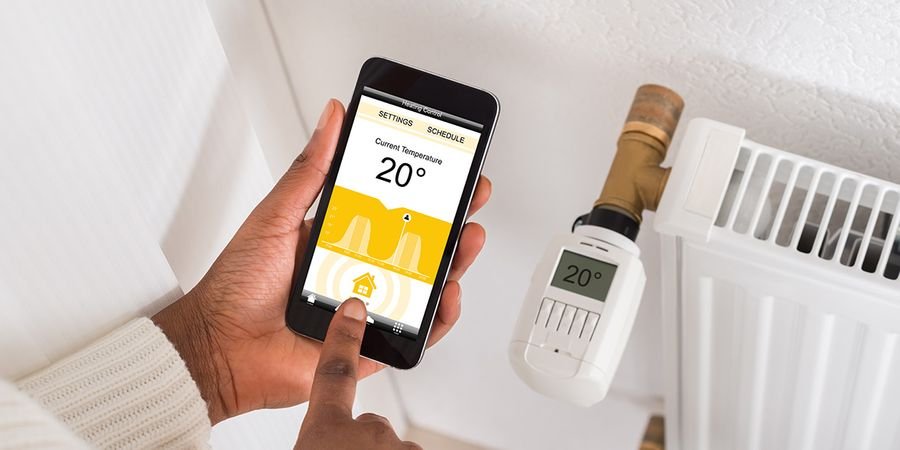 Smart Thermostat vs Smart TRVWhich upgrade solves your problem
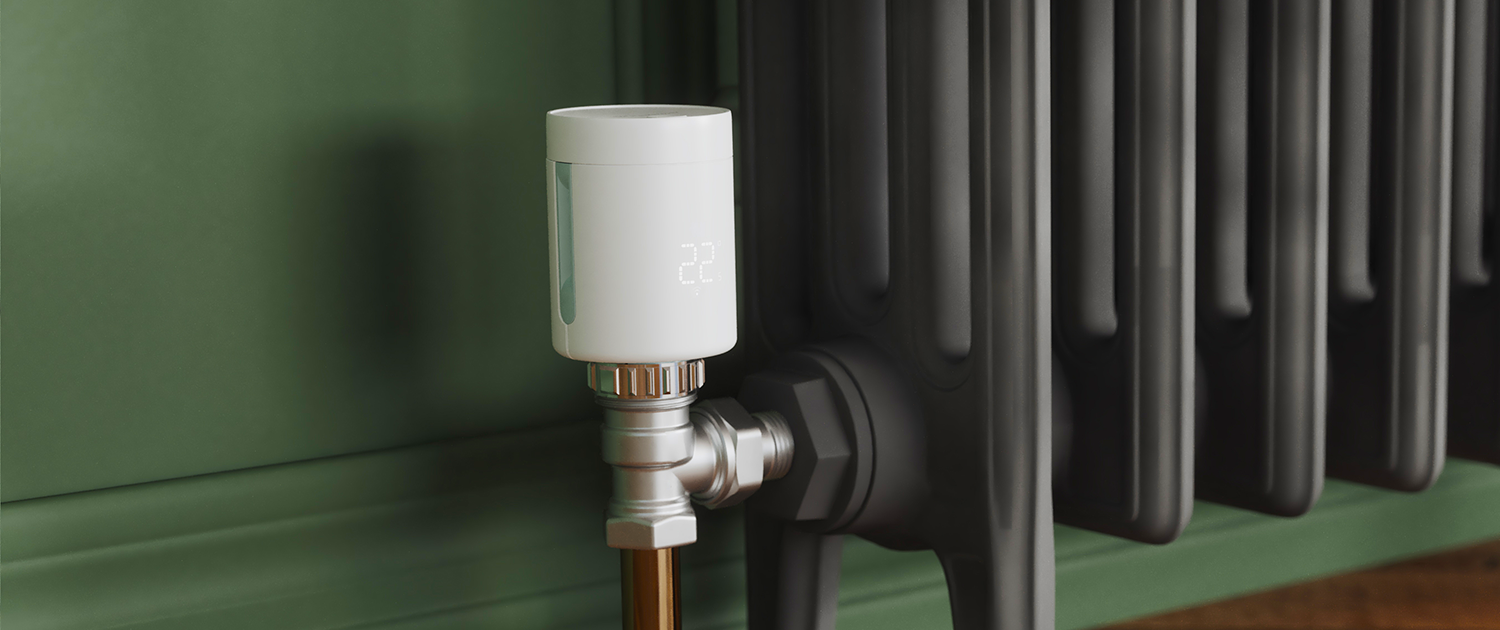 Are Smart TRVs Worth It?When room-by-room control pays off
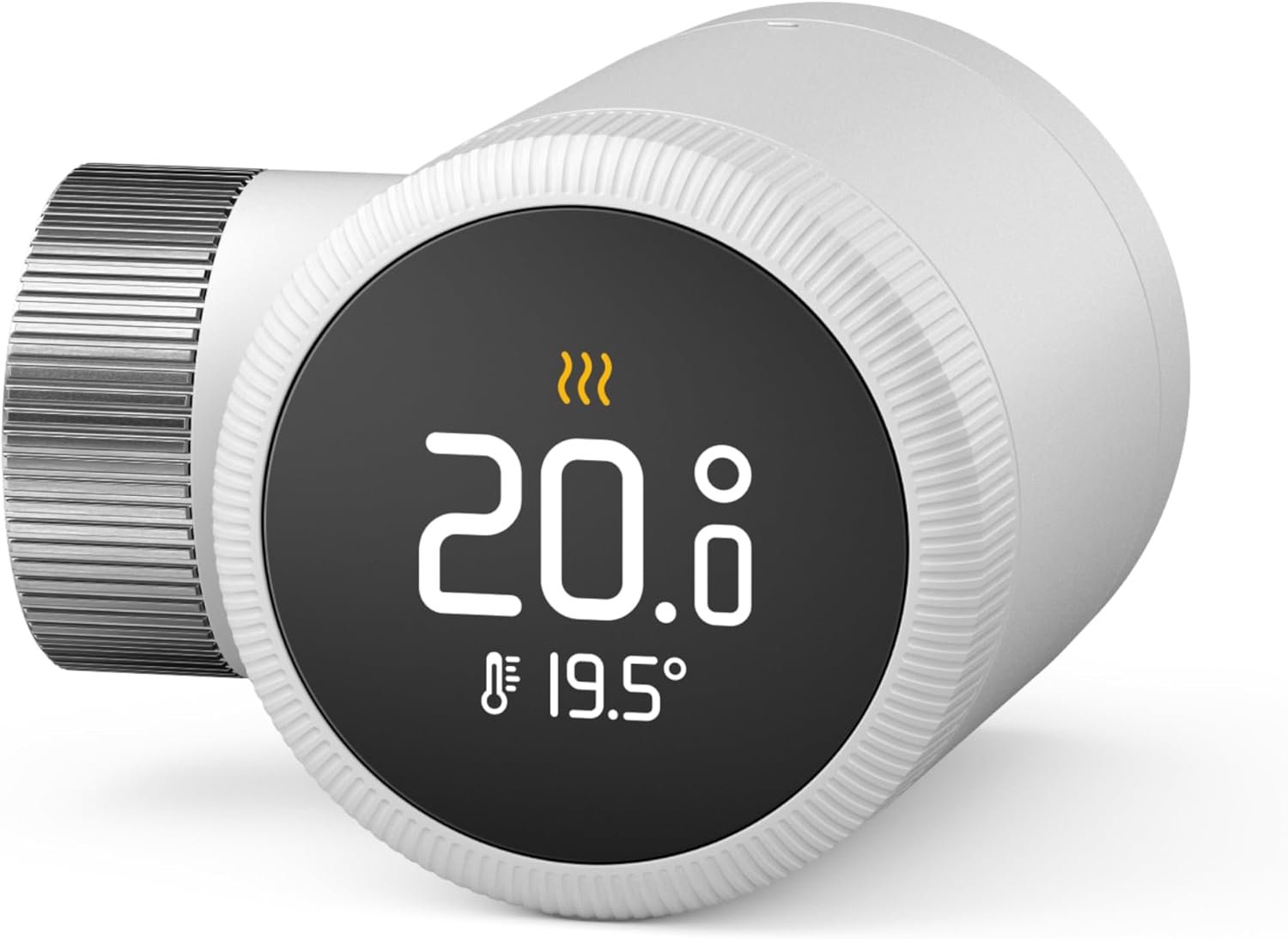 Best Smart TRVsRoom-by-room radiator control compared
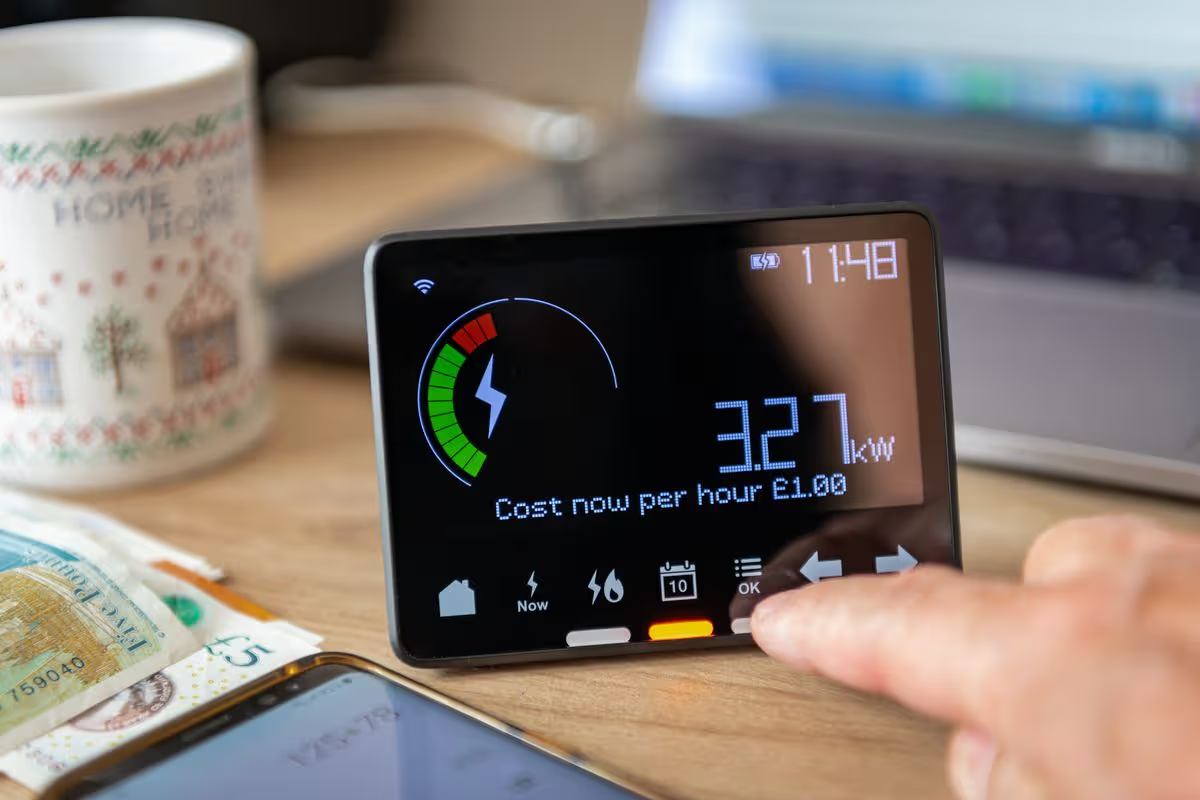 Why Are My Energy Bills So High?Common causes and what to check
 Is It Cheaper to Leave the Heating On All Day?Constant heating vs timed heating
 Heating Upgrades Before Replacing Your BoilerImprovements worth making first