Best Heat Pump Temperature Settings UK
Find the best heat pump temperature settings for comfort, efficiency, and lower running costs in UK homes.
- Updated for 2026
- UK homeowner guide
- Independent research

Short Answer
The best heat pump temperature settings are usually steady, moderate settings rather than frequent on-off changes. In most UK homes, heat pumps work best when they maintain a stable indoor temperature instead of trying to heat the house quickly like a gas boiler.
If you are still comparing systems overall, see our Best Air Source Heat Pumps UK guide. If your priority is reducing bills, read our Heat Pump Running Costs UK guide.
Why Heat Pump Settings Matter
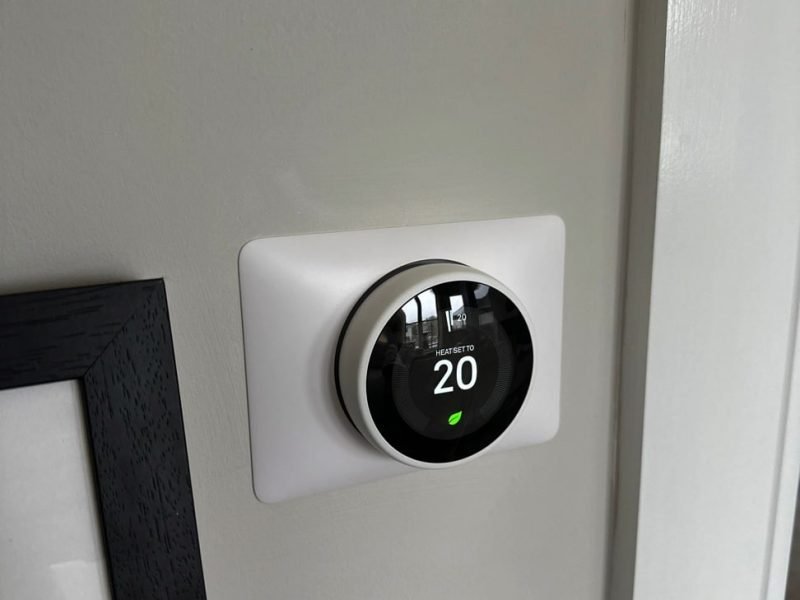
Heat pumps are most efficient when they run steadily and avoid big temperature swings. If the settings are too aggressive or the system is constantly being turned up and down, comfort can drop and running costs can rise.
Recommended Room Temperature Settings
- Living rooms: around 18–21°C
- Bedrooms: around 16–18°C
- Bathrooms: around 20–22°C when in use
- Whole-house approach: keep temperatures steady rather than switching off and reheating from cold
Exact comfort levels vary from home to home, but most systems work best when they are allowed to maintain a stable background temperature.
Best Flow Temperature Approach
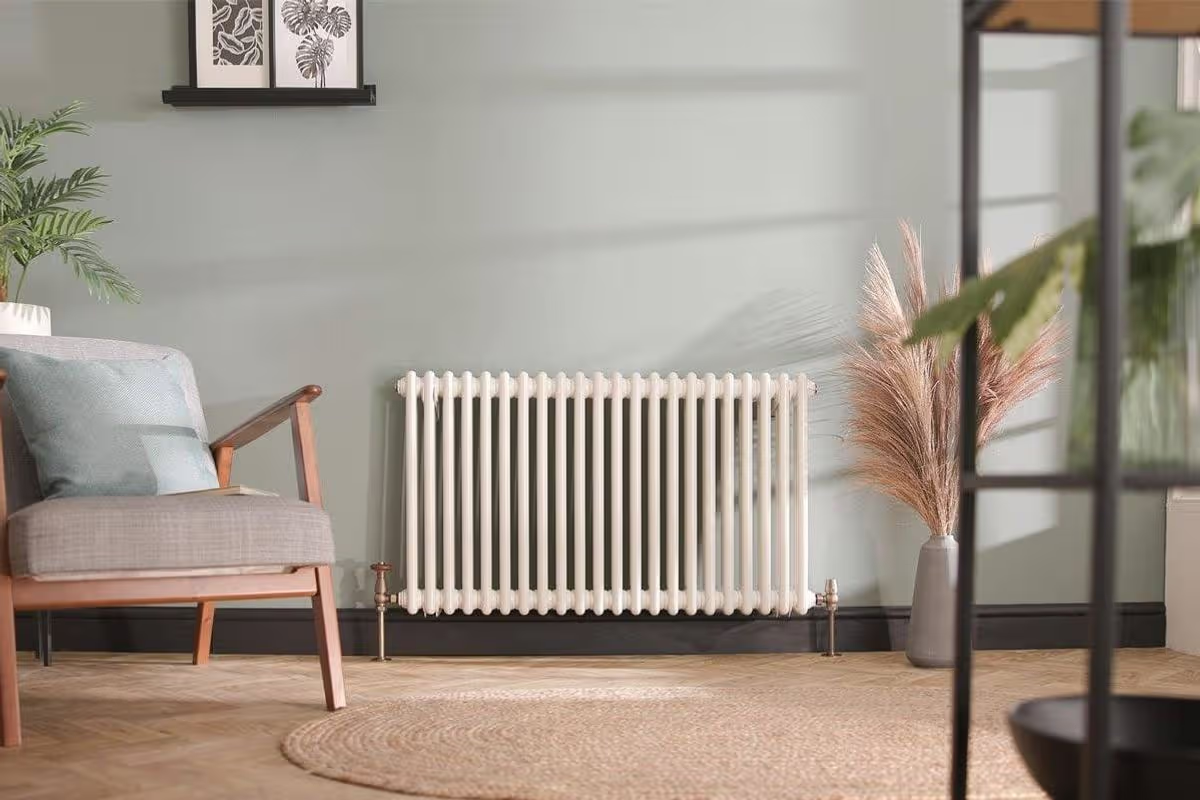
Lower flow temperatures usually improve efficiency, but they only work if the radiators or underfloor heating can deliver enough heat. This is one reason why some homes need larger emitters or better balancing.
If you are unsure whether your heating system is suitable, see Do You Need New Radiators for a Heat Pump?.
Should You Turn a Heat Pump Off at Night?
In many cases, no. Unlike a traditional boiler, a heat pump often works better when it keeps the home at a steady temperature rather than cooling down fully and then trying to recover quickly.
Some households may reduce the setpoint slightly overnight, but large setbacks can make the system work harder in the morning.
Smart Thermostats Can Make This Much Easier
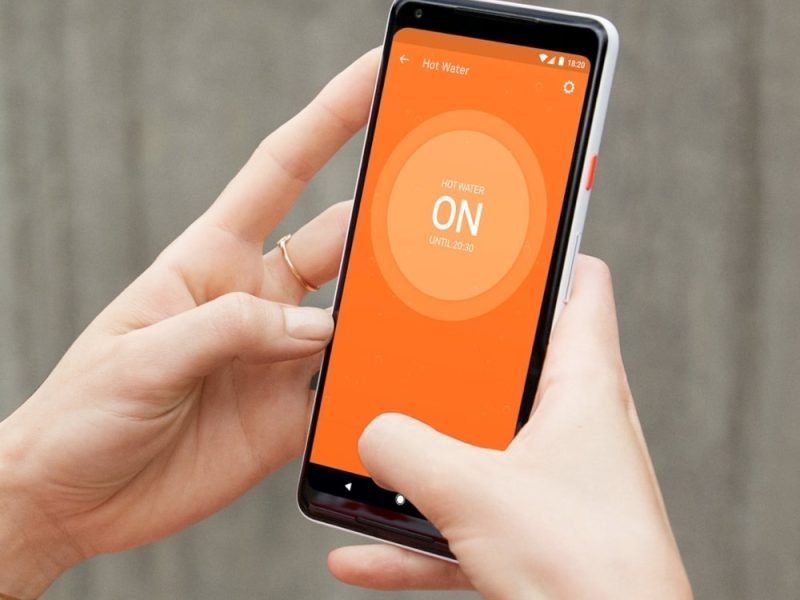
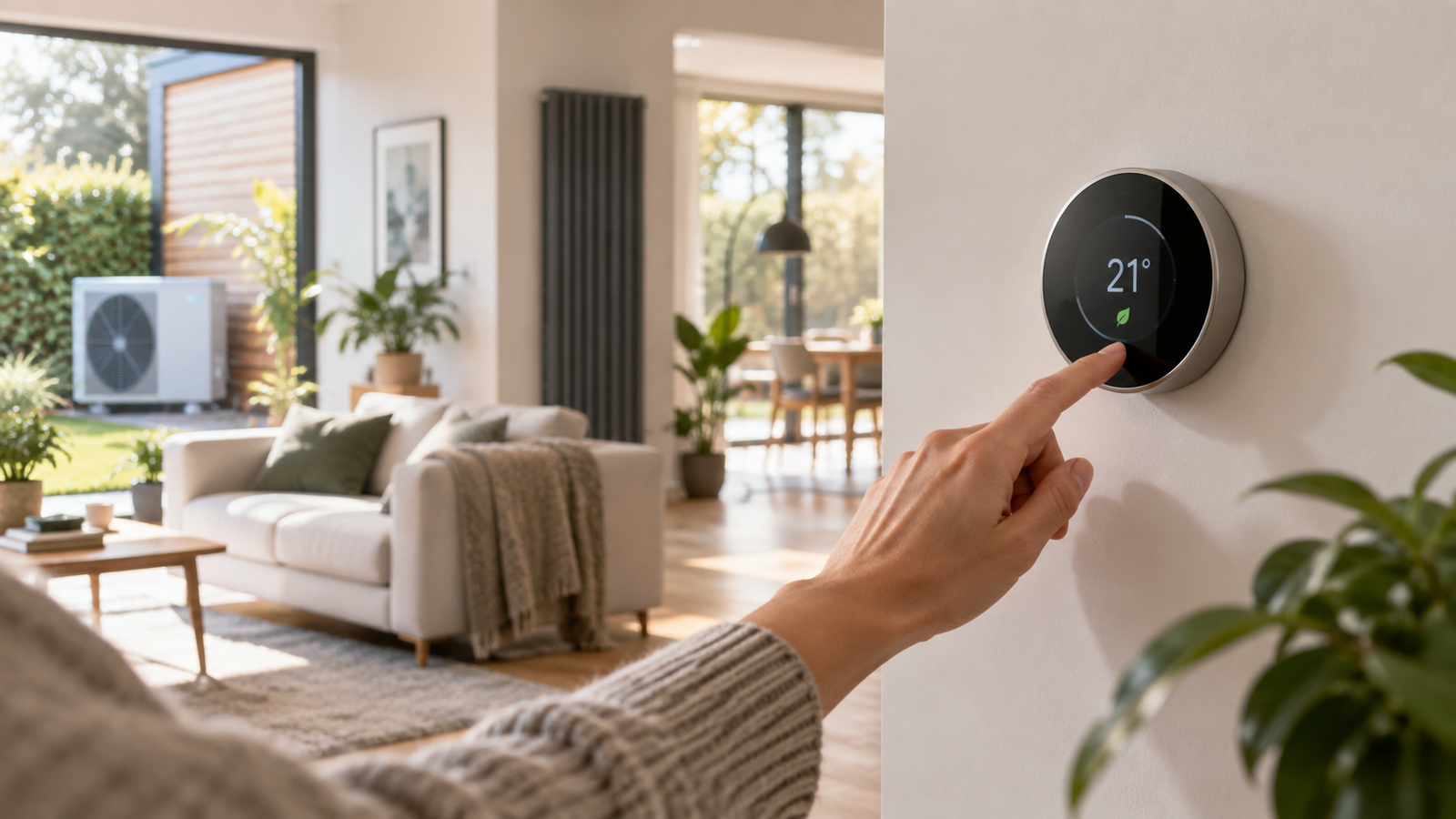
The right thermostat can make a big difference by keeping schedules consistent, managing temperature changes more gently, and improving comfort room by room.
Compare the best smart thermostats for heat pumps if you want more control over scheduling and efficiency.
Room-by-Room Settings and Zoning
Not every room needs the same temperature all day. Smart radiator valves, zoning controls, and sensors can help balance comfort more effectively and avoid overheating unused rooms.
See our guide to Heat Pump Accessories for the most useful upgrades.
Common Mistakes with Heat Pump Settings
- Turning the system on and off like a boiler
- Using large temperature setbacks
- Expecting very fast warm-up times
- Ignoring thermostat location and room balance
- Not adjusting controls after installation
What If the House Still Feels Cold?
If your settings seem reasonable but the house still does not feel warm enough, the issue may not be temperature settings alone. It could be radiator sizing, controls, or system design.
Read our guide on Heat Pump Not Heating Properly for the most common causes.
Important: The best heat pump settings depend on your home, emitters, insulation, and controls. The goal is usually steady comfort and stable efficiency, not sharp temperature swings.