
Heat Pump Glossary: COP, SCOP and Other Terms Explained
Plain-English definitions of the terms you will meet in heat pump quotes, surveys, tariffs and grant paperwork, from COP and flow temperature to MCS and the Boiler Upgrade Scheme.
- Figures checked 24 October 2026
- 47 terms in plain English
- Independent research

The six terms that matter most
If you only learn six terms before getting quotes, make them these. They have the biggest effect on what a heat pump costs to run and whether it is designed properly.
SCOP
How efficient a heat pump is over a heating season. Higher means cheaper to run.
Flow temperature
How hot the water going to your radiators is. Lower is more efficient.
Heat loss calculation
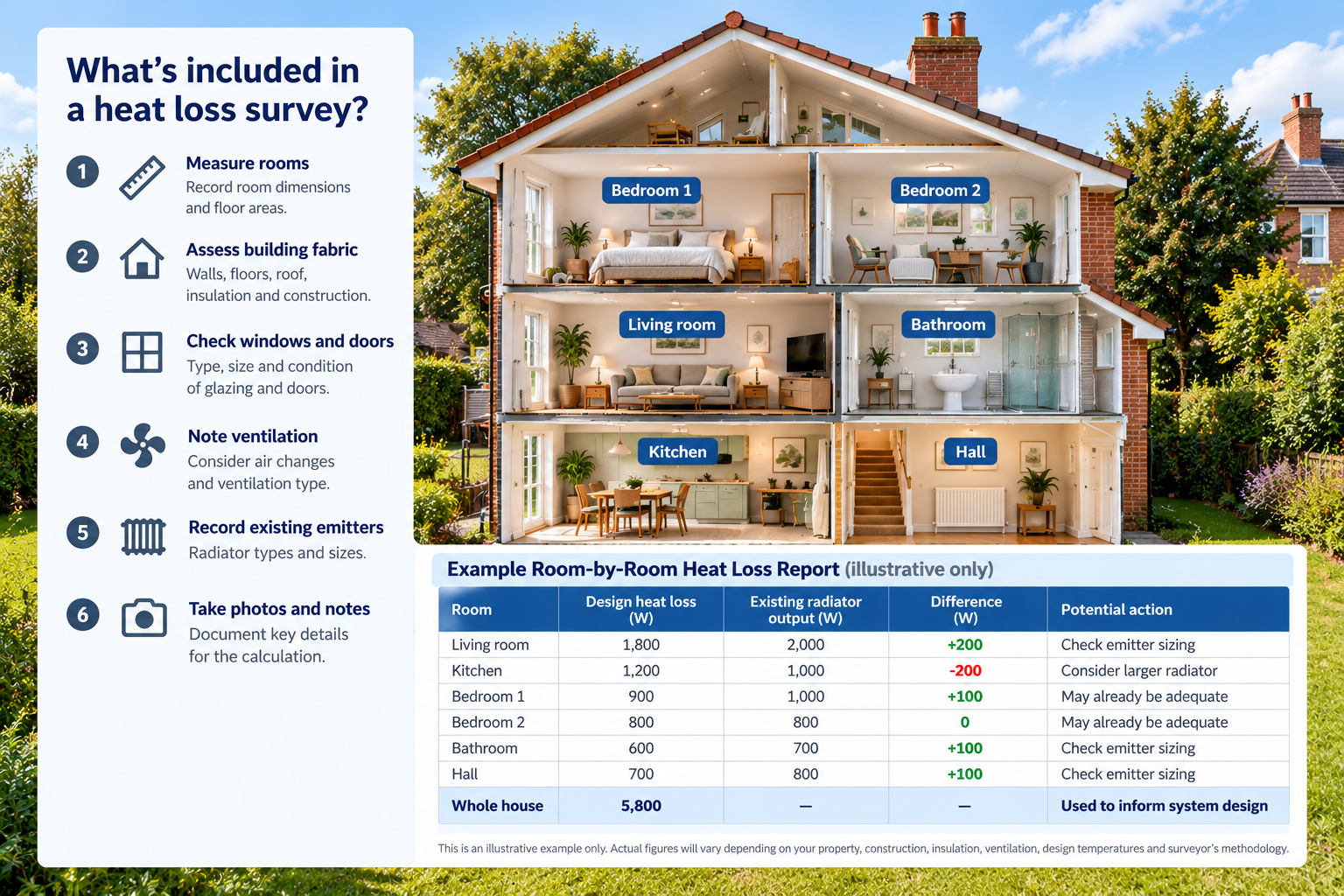
The room-by-room survey that sets the right size of heat pump and radiators.
Weather compensation
The control setting that keeps flow temperatures as low as the weather allows.
MCS
The certification your installer needs for grants, warranties and export tariffs.
Time-of-use tariff
Cheaper electricity at set hours, which can cut running costs if you schedule around it.
Jump to a term: Air source heat pump · Air-to-air heat pump · Annual service · Boiler Upgrade Scheme · Break-even SCOP · Buffer tank · Commissioning · Connect and notify · COP · Defrost cycle · Delta T · Design temperature · DNO · Emitters · Energy price cap · EPC · F-gas certification · Flow temperature · G98 and G99 · Ground source heat pump · Heat loss calculation · High-temperature heat pump · Hot water cylinder · Hybrid heat pump · Immersion heater · Insurance-backed guarantee · kW and kWh · Legionella cycle · Manufacturer warranty · MCS · Monobloc heat pump · Permitted development and MCS 020(a) · R290 · R32 · Refrigerant · SCOP · Short cycling · Smart Export Guarantee · SPF · Split system · Standing charge · Time-of-use tariff · TRV · Underfloor heating · Warm Homes Loan Scheme · Weather compensation · Workmanship guarantee
Efficiency and performance
The terms that decide how much a heat pump costs to run.
COP (coefficient of performance)
How much heat a heat pump produces for each unit of electricity it uses, measured at one set of test conditions. A COP of 3 means 3kWh of heat for every 1kWh of electricity. COP falls when it is colder outside or when the heat pump has to make hotter water.
Defrost cycle
In cold, damp weather, frost can build up on the outdoor unit. The heat pump briefly reverses to melt it, sometimes releasing a cloud of steam. This is normal, although frequent or very long defrosts can be worth asking an engineer about.
Delta T
The difference between the temperature of the water leaving the heat pump and the water coming back. Heat pump systems are usually designed for a small difference, often around 5°C, which is one reason radiator sizing matters.
Flow temperature
The temperature of the water a heat pump sends to your radiators or underfloor heating. Heat pumps are most efficient at low flow temperatures, often somewhere between about 35°C and 50°C, compared with the 70°C or so many gas boilers run at.
kW and kWh
A kilowatt (kW) is a rate of power, used for a heat pump’s size or heat output. A kilowatt-hour (kWh) is an amount of energy, used on your electricity bill. A 6kW heat pump running at full output for one hour produces 6kWh of heat.
SCOP (seasonal coefficient of performance)
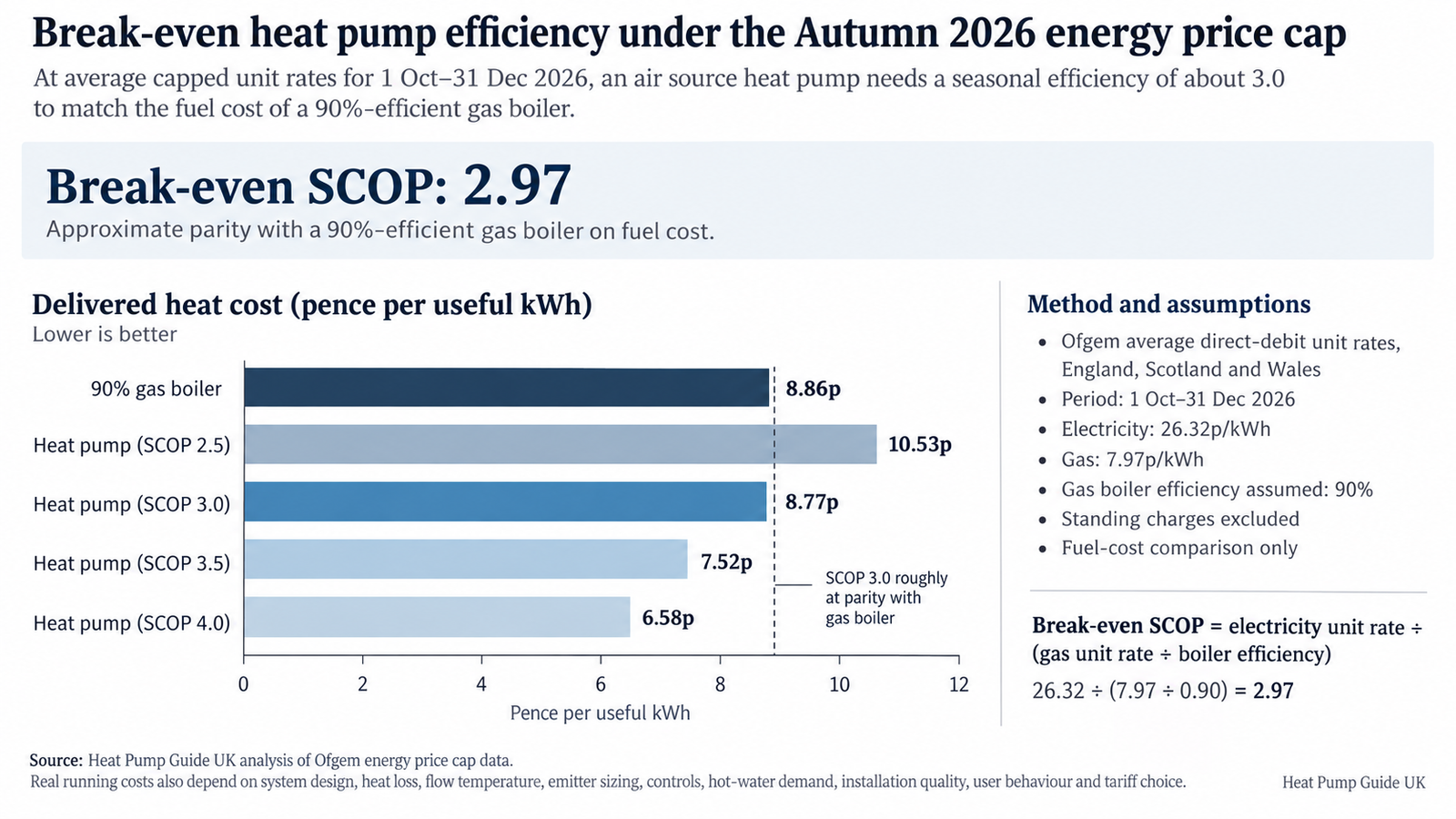
An average efficiency figure across a whole heating season, calculated from laboratory tests and a standard climate. It is more useful than a single COP for comparing models, but it is still a test figure rather than what your home will achieve. Against an illustrative 90%-efficient gas boiler, a SCOP of about 3 matches gas on fuel cost at current price-cap rates.
Short cycling
When a heat pump switches on and off repeatedly in short bursts instead of running steadily. It reduces efficiency and adds wear, and is often linked to an oversized heat pump, too little water in the system or poorly set controls.
SPF (seasonal performance factor)
The efficiency a heat pump actually achieves in a real home over a year, worked out from measured heat output and electricity use. It reflects the house, the system design and how it is run, so it is the best guide to real running costs.
Weather compensation
A control setting that automatically raises the flow temperature when it is colder outside and lowers it when it is milder. It keeps the heat pump running at the lowest temperature that keeps your home warm, which is one of the biggest influences on efficiency.
System types and parts
The main types of heat pump and the parts of a typical system.
Air source heat pump (air-to-water)
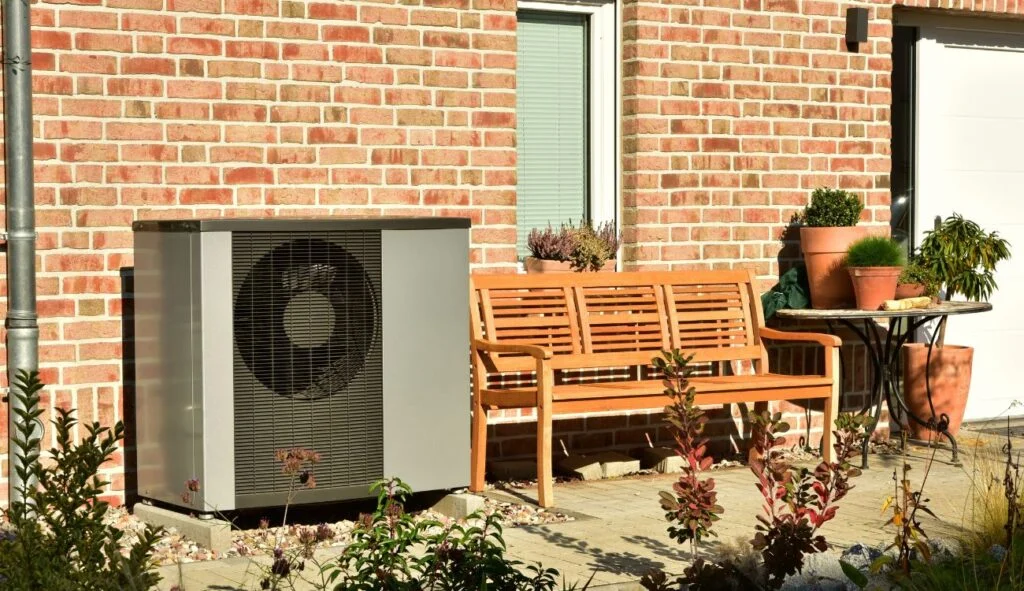
The most common type in UK homes. An outdoor unit takes heat from the outside air and transfers it to water for your radiators, underfloor heating and hot water cylinder.
Air-to-air heat pump
Heats rooms by blowing warm air from indoor wall or ceiling units, and can usually cool in summer too. It does not heat water, so you need a separate way to make hot water.
Buffer tank
An extra store of heating water between the heat pump and the radiators. It can help prevent short cycling in some systems, but it is not always needed and can reduce efficiency if poorly designed.
Emitters
Installers’ term for whatever releases heat into your rooms, usually radiators or underfloor heating. Heat pumps often need larger emitters than a boiler because they run at lower temperatures.
Ground source heat pump
Collects heat from the ground through pipes buried in trenches or boreholes. It usually costs more to install than an air source heat pump but runs at a steadier efficiency through the winter.
High-temperature heat pump
A heat pump designed to produce hotter water, around 70°C or more, so it can work with smaller existing radiators. It is usually less efficient at those temperatures than a standard heat pump running cooler.
Hot water cylinder
A tank that stores hot water heated by the heat pump. Heat pump cylinders have a larger internal coil than boiler cylinders. Homes moving from a combi boiler usually need space for one.
Hybrid heat pump
A heat pump paired with a boiler, with the controls deciding which one runs. Hybrids that keep a fossil fuel boiler are not supported by the standard Boiler Upgrade Scheme grant.
Immersion heater
An electric element inside the hot water cylinder. It is used as a backup and sometimes for the weekly legionella cycle, but it is much less efficient than heating water with the heat pump.
Legionella cycle
A scheduled routine that heats the stored hot water to 60°C or more to control Legionella bacteria. Check how often yours runs, because doing it more often than needed with the immersion heater adds to running costs.
Monobloc heat pump
All the refrigerant parts are sealed inside the outdoor unit, and only water pipes run into the house. This is the most common design for UK homes and is simpler to install.
R290 (propane)
A natural refrigerant with a global warming potential of 3, increasingly used in new heat pumps. It is flammable, so R290 units have extra safety features and need minimum clearances around the outdoor unit.
R32
A widely used refrigerant with a global warming potential (GWP) of 675. It is a fluorinated gas, so work on the refrigerant circuit is covered by F-gas rules.
Refrigerant
The fluid inside the sealed circuit of a heat pump that absorbs heat from outside and releases it inside. The type of refrigerant affects the environmental impact and the safety rules for installing it.
Split system
The refrigerant circuit is split between an outdoor unit and an indoor unit, connected by refrigerant pipes. Installing and connecting these pipes requires an engineer qualified to handle refrigerants.
TRV (thermostatic radiator valve)
A valve on each radiator that limits the temperature in that room. With a heat pump, installers often recommend leaving most TRVs fully open so the system can run steadily.
Underfloor heating
Pipes under the floor that warm the whole floor surface. Because the surface is so large, it works well at low flow temperatures, which suits heat pumps.
Design, installation and paperwork
Terms you will see in surveys, quotes and installation paperwork.
Annual service
A yearly check by a qualified engineer, usually a condition of the manufacturer’s warranty. It covers things like filters, pressures, electrical connections and controls.
Commissioning
The final stage of installation, when the system is filled, tested, balanced and set up. Your warranty and grant paperwork usually depend on it being completed and recorded properly.
Connect and notify
The simpler route for telling the DNO about a heat pump. MCS says it applies where the home’s new maximum demand is 60A or less and other criteria are met: the installer connects the heat pump and notifies the DNO within 28 days.
Design temperature
The cold outdoor temperature the heating system is designed to cope with while keeping your rooms at the target temperature. It is based on where you live, and it is used in the heat loss calculation.
DNO (distribution network operator)
The company that runs the local electricity network in your area. Installers must tell the DNO about a new heat pump, solar panels or battery, and larger systems need approval before they are connected.
EPC (Energy Performance Certificate)
A rating of a home’s energy efficiency from A to G, with recommendations for improvements. It gives a rough guide to heat loss, but it is not a substitute for a proper heat loss calculation.
F-gas certification
A legal qualification for engineers who handle fluorinated refrigerants such as R32. R290 is not a fluorinated gas, but installers still need training to work safely with flammable refrigerants.
G98 and G99
Engineering rules for connecting equipment that can export electricity, such as solar panels and batteries. Smaller systems use G98 and are notified after installation. Larger ones, including most solar-plus-battery systems, need G99 approval first.
Heat loss calculation
A room-by-room calculation of how much heat your home loses on a cold day. It is the basis for choosing the right size of heat pump and radiators, and MCS installers are required to carry one out.
Insurance-backed guarantee
Insurance that covers your workmanship guarantee if the installer stops trading. MCS requires one for domestic installations, and it is only valid once the policy has been issued to you.
Manufacturer warranty
Cover for faults in the heat pump itself. Its length often depends on the installer’s accreditation, registering within a deadline and having the heat pump serviced every year.
MCS (Microgeneration Certification Scheme)
The UK certification scheme for small-scale renewable installers and products. Using an MCS-certified installer is required for the Boiler Upgrade Scheme, and an MCS certificate is needed for most export tariffs.
Permitted development and MCS 020(a)
In England, many air source heat pumps can be installed without planning permission if conditions are met. One condition is that the noise level at the nearest neighbour’s door or window, calculated using the MCS 020(a) method, is 37dB(A) or less. Listed buildings still need permission, and the rules differ in Wales, Scotland and Northern Ireland.
Workmanship guarantee
Your installer’s promise to fix problems caused by the installation itself. For MCS-certified domestic installations it must last at least two years and transfer to a new owner if you sell.
Compare Up to 3 Heat Pump Installers Near You
Tell us a little about your property to see installer options available in your area.
Free to use with no obligation
Grants, tariffs and costs
The grants, loans and tariffs that affect what you pay.
Boiler Upgrade Scheme (BUS)
The main heat pump grant in England and Wales. It currently gives £7,500 towards an air-to-water or ground source heat pump, £9,000 for qualifying off-grid oil and LPG homes until 31 March 2027, and £2,500 for eligible air-to-air systems. The installer applies for it on your behalf.
Break-even SCOP
The efficiency a heat pump needs to match a gas boiler on fuel cost. Using price-cap rates for October to December 2026 and an illustrative 90%-efficient boiler, it is about 2.97.
Energy price cap
The maximum Ofgem allows suppliers in Great Britain to charge per kWh and per day on default tariffs, reviewed every quarter. From 1 October to 31 December 2026, the average electricity cap for direct debit customers is 26.32p per kWh with a 54.83p daily standing charge.
Smart Export Guarantee (SEG)
A scheme that requires larger electricity suppliers to pay you for electricity you export to the grid from eligible solar panels or batteries. Rates vary widely between suppliers.
Standing charge
A fixed daily amount on your electricity bill, paid regardless of how much you use. Households that switch from gas to a heat pump can stop paying a gas standing charge if they have the gas supply capped or removed.
Time-of-use tariff
An electricity tariff with cheaper rates at certain times of day and sometimes dearer peak rates. Heat pump tariffs work this way, so running heating and hot water in the cheap hours saves money.
Warm Homes Loan Scheme
A government-backed scheme offering low- and zero-interest loans through approved lenders for heat pumps, solar panels and batteries. A heat pump loan can be used alongside a Boiler Upgrade Scheme grant.
Heat pump glossary FAQs
What is the difference between COP and SCOP?
COP is a heat pump’s efficiency at one set of test conditions, such as a single outdoor temperature. SCOP averages efficiency across a whole heating season, so it is the better figure for comparing models. Neither is a guarantee of what your home will achieve.
What is a good SCOP for a heat pump?
Higher is better. As a rough guide, a SCOP of about 3 matches an efficient gas boiler on fuel cost at October to December 2026 price-cap rates, and many air source heat pumps are rated well above that. Real-world efficiency depends on your home and how the system is designed and set up.
What flow temperature should a heat pump run at?
As low as keeps your home comfortable. Many systems are designed for somewhere between about 35°C and 50°C on the coldest days, with weather compensation lowering it further in milder weather.
Is a monobloc or split heat pump better?
Neither is better in every home. Monobloc systems are simpler and more common in UK homes. Split systems can suit homes where water pipes running outside could be a problem, but they need an installer qualified to handle refrigerants.

Sources and further reading
All sources checked on 24 October 2026.
- GOV.UK: Boiler Upgrade Scheme
- Ofgem: Energy price cap unit rates and standing charges
- DESNZ: Warm Homes Loan Scheme rules (September 2026)
- MCS: Notifying DNOs
- MCS: Insurance-backed guarantees
- Grant UK: Air source heat pump planning permission guide for England
- Grant UK: What is R290 refrigerant?
- Ofgem: Smart Export Guarantee guidance for generators