
Best Heat Pump Tariffs UK (October 2026)
Cosy Octopus, EDF, British Gas and E.ON Next all offer cheaper electricity for heat pump homes at set times of day. Here is how each one works, when it saves money and how to choose the right one for the way your heat pump actually runs.
- Supplier pages checked 13 October 2026
- Ofgem price cap context
- Independent research

Quick answer: which heat pump tariff is best?
Compare the tariffsThe best heat pump tariff is the one whose cheap hours match when your heat pump actually runs. Cosy Octopus, EDF Heat Pump Tracker, British Gas Heat Power and E.ON Next Pumped all charge less for electricity at certain times of day. None of them is cheapest for every home.
If you cannot move much of your heating
As a rule of thumb, a tariff with long cheap windows and no peak penalty is the safer choice if you cannot move much of your heating.
No dearer peak: EDF Heat Pump Tracker, British Gas Heat Power
If you can schedule around 4pm–7pm
A tariff with deep cheap rates and a dearer 4pm–7pm peak can pay off more, but only if you schedule hot water and pre-heat the house outside that peak.
Dearer 4pm–7pm peak: Cosy Octopus, E.ON Next Pumped
For comparison: the Ofgem price cap average for electricity on direct debit is 26.32p per kWh from 1 October to 31 December 2026, with a standing charge of 54.83p per day. These figures vary by region.
UK heat pump tariffs compared
Details below were checked on the suppliers’ own pages on 13 October 2026. Unit rates vary by region, so check your own rates by postcode before switching.
| Tariff | Cheaper hours | How the price works | Dearer peak? | Key conditions |
|---|---|---|---|---|
| Cosy Octopus | 04:00–07:00, 13:00–16:00 and 22:00–00:00 | Cheap rate is 51% below Octopus’s Day rate for your region | Yes: 16:00–19:00 at 50% above the Day rate | Octopus customer; heat pump, electric boiler or electric radiators; SMETS2 or secure SMETS1 smart meter |
| EDF Heat Pump Tracker | 04:00–07:00 and 13:00–16:00 | 10p per kWh below EDF’s Standard rate in those hours; Standard rate at other times | No | EDF customer; proof of a heat pump (EDF may ask for an MCS certificate or photo); half-hourly smart meter; no exit fees |
| British Gas Heat Power | 00:00–07:00 and 13:00–16:00 | 50% off the unit rate in those hours, credited weekly | No peak rate stated | British Gas electricity; heat pump or electric heating; working smart meter; Direct Debit only |
| E.ON Next Pumped | 22:00–06:00 (cheapest) and 06:00–16:00 (lower) | Three time-of-day rates | Yes: 16:00–19:00, above E.ON’s Next Flex rate | Heat pump or electric boiler; smart meter with half-hourly data; monthly Direct Debit; 12-month fix with no exit fees |
How to choose the right heat pump tariff
Start with how your heat pump behaves now, not with the headline discount. A smart meter in-home display, your supplier’s app or your heat pump’s own app can show when most of your electricity is used.
Heating that runs all day
Many heat pumps run steadily at low flow temperatures. If yours does, a tariff without a dearer peak, such as EDF Heat Pump Tracker or British Gas Heat Power, carries less risk because you are never charged more than the standard rate.
Homes that can shift heat
Well-insulated homes can often warm up in the cheap afternoon window and coast through 4pm–7pm. That is where Cosy Octopus or E.ON Next Pumped can pay off, because their cheap rates are deeper but their peak is dearer.
Hot water timing
Heating the hot water cylinder is one of the easiest loads to move. Scheduling it inside a cheap window is often the single biggest saving available on any of these tariffs.
These tariffs price your whole electricity supply by time of day. The cheaper and dearer rates apply to everything you use in those hours, not just the heat pump. Cooking, a tumble dryer or an electric car charged during a peak window will cost more on Cosy Octopus or E.ON Next Pumped.
If you also have solar panels or a battery
Solar panels and a home battery change which tariff fits, because you are also choosing how to sell spare electricity and when to charge the battery. Octopus, for example, suggests different tariffs depending on what else you have.
| Your setup | What Octopus suggests | Why it can fit |
|---|---|---|
| Heat pump + solar (no battery) | Cosy Octopus for import, plus Outgoing Octopus for export | Cheap windows suit heat pump scheduling; spare solar is exported |
| Heat pump + solar + battery | Octopus Flux (import and export) | Cheap 02:00–05:00 battery charging and better export rates from 16:00 to 19:00 |
| Heat pump + solar + battery + electric car | Intelligent Octopus Go, plus Outgoing Octopus and its Charge Pack add-on | A long cheap overnight window for the car, battery and heat pump |
From Octopus’s smart tariff page and tariff guide, checked on 21 October 2026. Octopus’s modelling assumes a 10kWh battery, 4,500kWh of solar a year and heat pump schedules moved into cheap hours, so your results could differ. If you prefer another supplier’s heat pump tariff, check whether it can be combined with the export tariff you want.
For how much solar can realistically cover in winter, and what a battery does with a heat pump, see our heat pump with solar panels and battery guide.
How much could a heat pump tariff save?
EDF’s tracker is the simplest to illustrate, because the discount is a fixed 10p per kWh in six cheap hours and there is no peak penalty.
| Share of heat pump use in the cheap hours | kWh in cheap hours (of 4,000 kWh a year) | Annual saving at 10p per kWh |
|---|---|---|
| 15% | 600 kWh | £60 |
| 25% (roughly what six hours of steady running gives) | 1,000 kWh | £100 |
| 40% (heating and hot water shifted into cheap hours) | 1,600 kWh | £160 |
Illustrative only. The 4,000 kWh figure is an assumption chosen to make the arithmetic clear, not a typical UK consumption figure. Your heat pump’s annual use depends on your home’s heat loss, flow temperature, hot water demand and the weather. The saving is measured against EDF’s own Standard rate, not against other suppliers.
The same logic applies to the other tariffs, but the maths is less predictable. On Cosy Octopus and E.ON Next Pumped, electricity used in the 4pm–7pm peak costs more than standard, so a home that needs a lot of heat in the early evening can lose part of the saving. Our Heat Pump Running Cost Index and running costs guide show how tariff choice fits into total annual costs.
What to check before switching
Your meter and account
- Do you have a working smart meter that the new supplier can read every half hour?
- Will you need to join the supplier’s standard tariff first? Octopus and EDF both start new customers on a standard tariff before the switch completes.
- Are you on prepayment? British Gas Heat Power and E.ON Next Pumped require Direct Debit.
- Is it fixed or variable, and are there exit fees?
Your heat pump and controls
- Can your controls schedule heating and hot water by time of day?
- Is weather compensation set up, so the system is not running hotter than it needs to? See our heat pump temperature settings guide.
- Can you see your heat pump’s electricity use by hour? Our energy monitoring guide explains the options.
- Do you have solar panels, a battery or an electric car that could also use the cheap hours?
Check your regional rates, not just the percentage. Cosy Octopus and E.ON Next Pumped are priced against each supplier’s own regional rates, which may be higher or lower than the price cap. A large percentage discount on a higher base rate can end up similar to a smaller discount on a lower one.
England, Scotland, Wales and Northern Ireland
The tariffs above are offered in Great Britain, with rates that vary by region. The Ofgem price cap figures quoted on this page also apply to England, Scotland and Wales only.
Northern Ireland has a separate electricity market that is not covered by the Ofgem price cap. If you live there, check heat pump and time-of-use options directly with Northern Ireland suppliers.
Ofgem also notes that there is no VAT on domestic electricity in Great Britain from 1 October 2026 to 31 March 2027. Compare tariffs on like-for-like terms, and expect prices to change when that period ends.
Heat pump tariff FAQs
Do I need a special tariff for a heat pump?
No. A heat pump works on any electricity tariff. A heat pump or time-of-use tariff can lower your bills if enough of your electricity use falls in its cheap hours, but it is optional.
Does my heat pump need to be installed by the energy supplier?
Not for the tariffs on this page. Octopus states that your heat pump does not have to have been installed by Octopus to use Cosy Octopus. EDF asks for proof that you have a heat pump, such as an MCS certificate or a photo.
Is Economy 7 good for a heat pump?
Usually it is a weaker fit than a dedicated heat pump tariff. Economy 7 gives cheaper electricity overnight, but heat pumps often do much of their work during the day. Check what your daytime rate would be and how much of your use falls overnight before choosing it.
Will a heat pump tariff save money if my heat pump runs all day?
It can, but by less. A tariff without a dearer peak, such as EDF Heat Pump Tracker or British Gas Heat Power, still gives a discount on the share of use that falls in its cheap hours, without charging more at other times.
Can I use a heat pump tariff with solar panels or a battery?
Usually yes, and a battery can widen the benefit by charging in the cheap hours. British Gas lists homes with a storage battery among those suited to Heat Power. Check each supplier’s terms, because some tariffs cannot be combined with other time-of-use products.
How often do these tariffs change?
Regularly. EDF reviews its tracker rates every three months in line with the price cap, while keeping the 10p discount. Cheap-hour windows and conditions can also change, so check the supplier’s current page before switching.
Related running cost guides
 Heat Pump Running Costs UKSee what drives annual running costs
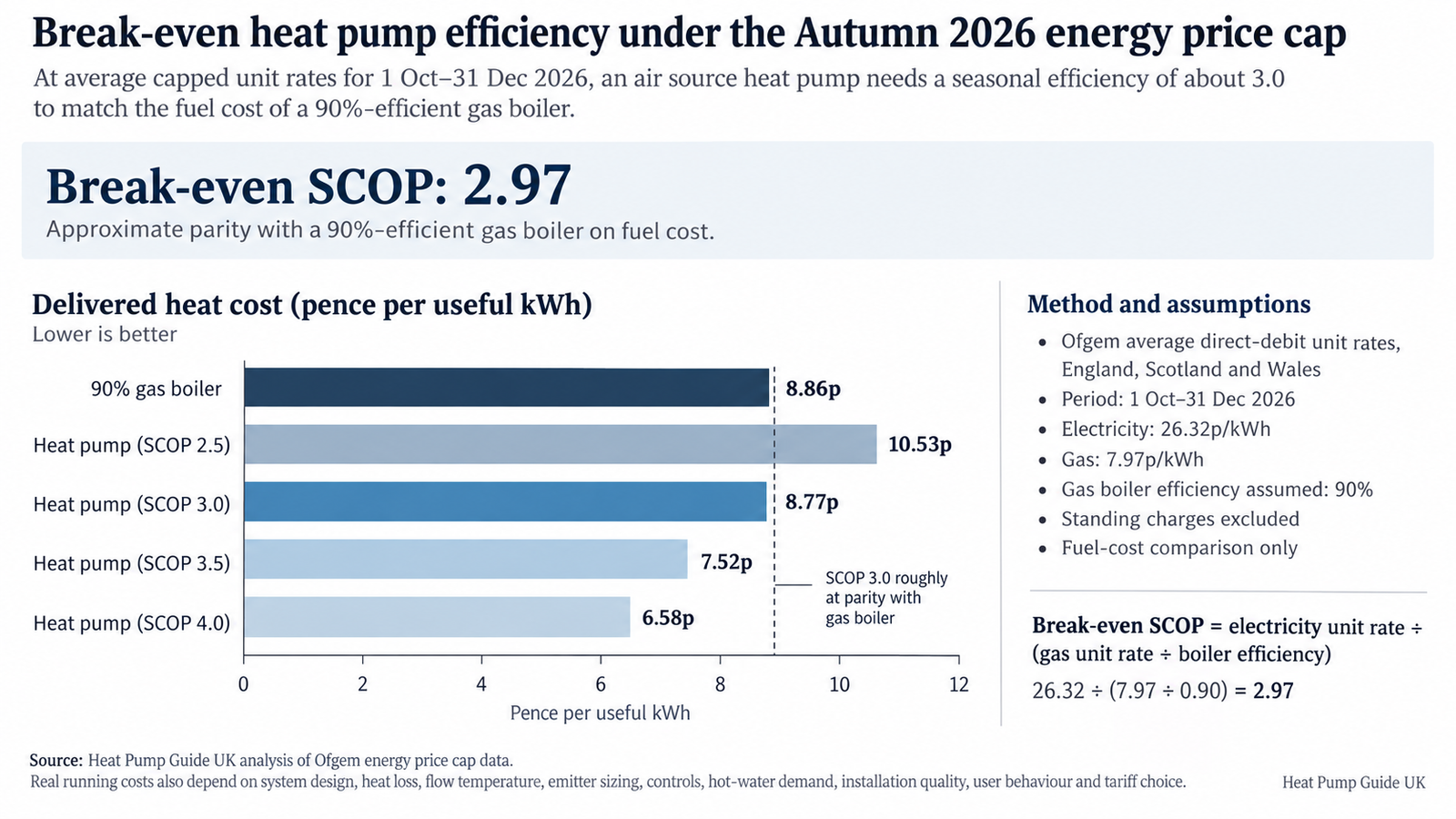 Heat Pump Running Cost IndexCompare costs against gas and oil
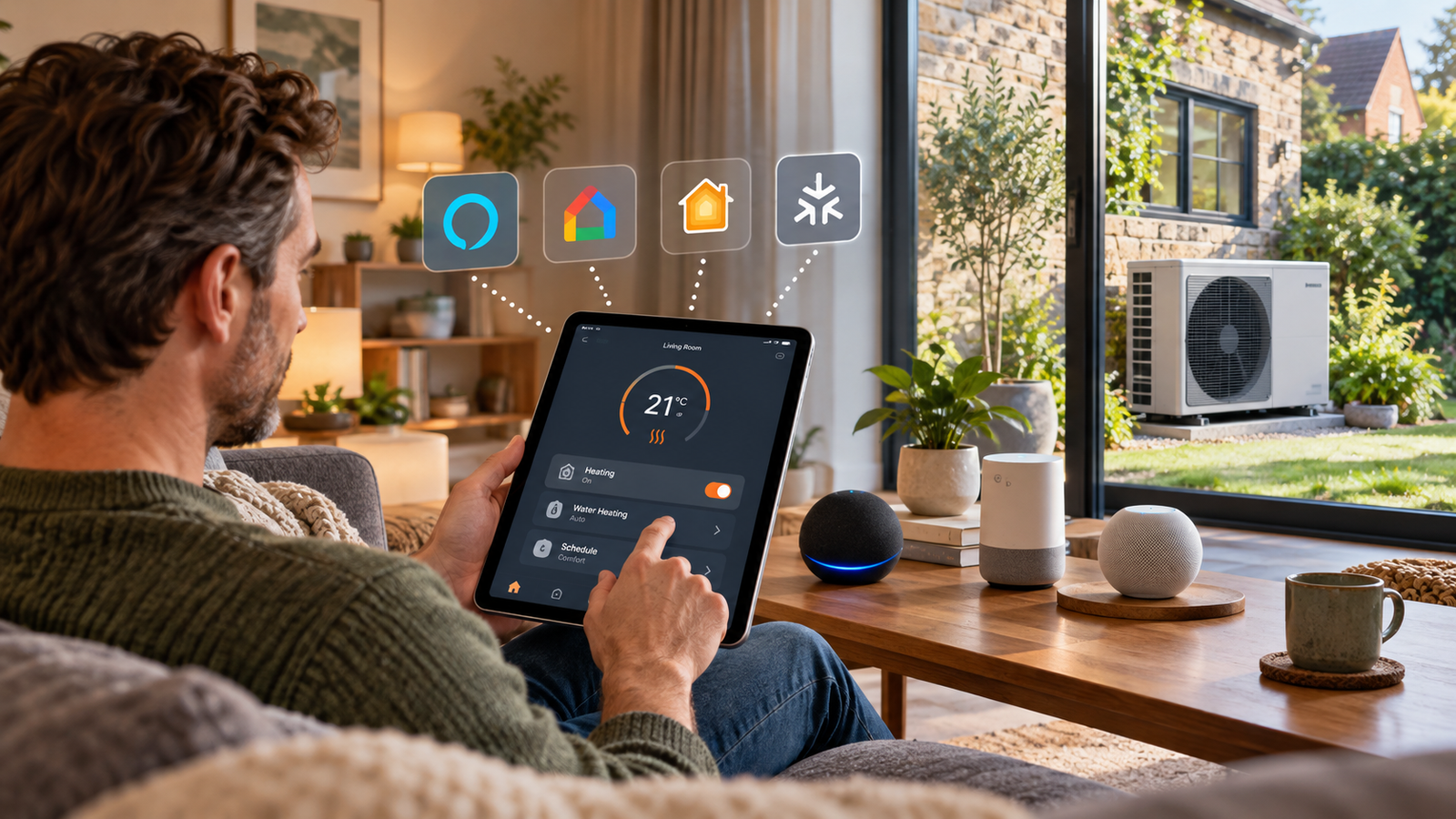 Best Heat Pump Temperature SettingsSet flow temperatures and schedules
 Heat Pump Not Saving Money?Find out what to check first
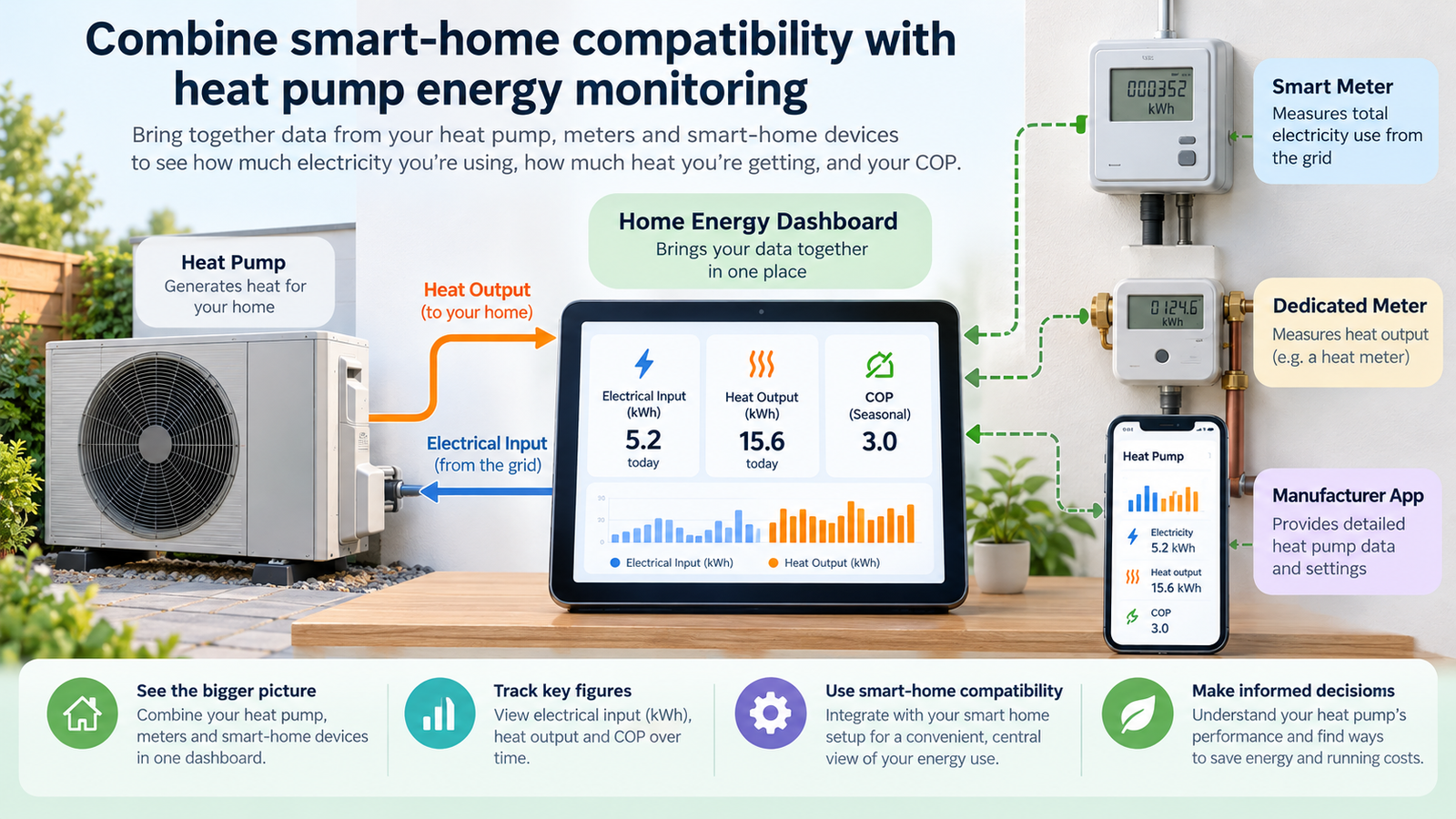 Heat Pump Energy MonitoringSee when your heat pump uses power
 Best Heat Pump Apps UKControl schedules from your phone
Sources and further reading
All sources checked on 13 October 2026.
- Ofgem: Energy price cap unit rates and standing charges
- Ofgem: Energy price cap will rise by 4% from October 2026
- Octopus Energy: Cosy Octopus
- Octopus Energy: Smart tariffs (checked 21 October 2026)
- Octopus Energy: Which smart tariff should I choose? (checked 21 October 2026)
- EDF: Heat Pump Tracker tariff
- British Gas: Heat Power tariff
- E.ON Next: Next Pumped