
Are Smart Thermostats Worth It in the UK? (2026 Guide)
Smart thermostats can make heating easier to control, improve schedules and reduce unnecessary heating. But whether one is actually worth buying depends heavily on the controls you already have and what problem you are trying to solve.
This guide explains when a smart thermostat is worthwhile, when it probably is not, and which current systems are worth considering for UK homes.
- Independent research
- UK homes focus
- Affiliate links disclosed

Quick answer: are smart thermostats worth it?
See systems worth consideringFor many UK homes, yes, particularly if your existing heating controls are basic, inconvenient or regularly result in the heating running when it is not needed. A smart thermostat does not make a boiler or heat pump inherently more efficient. Its value comes from making the heating easier to schedule and adjust, and in some systems allowing more sophisticated boiler or room-by-room control.
If you already have a modern programmable thermostat, sensible schedules and rarely waste heat, the financial case is much weaker. You may still value the convenience of app control, but you should not assume the thermostat will quickly pay for itself.
Worth it
If your current controls are basic, your routine changes regularly, you want remote control or you plan to add room-by-room heating.
Less compelling
If your existing programmable controls already work well and you manage them carefully.
Affiliate disclosure: This page contains Amazon affiliate links. If you buy through one of these links, Heat Pump Guide UK may earn a commission at no extra cost to you. Affiliate relationships do not determine our recommendations.
What is a smart thermostat?
A smart thermostat is an internet-connected heating control that normally lets you adjust temperatures and heating schedules through an app as well as from the thermostat itself.
Energy Saving Trust notes that smart heating controls can provide remote access, learning features and geofencing, but whether they actually reduce energy use depends on how you currently control the heating.
- Phone and tablet control
- Flexible heating schedules
- Remote changes when away from home
- Geofencing
- Learning or automated schedules
- Heating-use information
- Voice-assistant integration
- Smart radiator thermostat support
- Modulating boiler control on compatible systems
Are smart thermostats worth it for your current setup?
Find the row closest to your home to see how strong the case is.
| Your current setup | Worth it? | Why |
|---|---|---|
| Old manual thermostat | Usually yes | Scheduling and temperature control become much easier |
| Basic timer/programmer | Usually yes | More flexible schedules and remote changes can reduce unnecessary heating |
| Heating regularly left on | Usually yes | App control and better schedules directly address the problem |
| Modern programmable thermostat | Maybe | Convenience may be the main benefit rather than major savings |
| Heating already carefully controlled | Less likely | There may be little wasted heating for the smart thermostat to remove |
| Rooms need different schedules | Potentially very useful | Choose a system with strong smart radiator control |
| Cold room caused by poor insulation or undersized radiator | Probably not the solution | The underlying heat-loss or emitter problem needs addressing |
What are the main benefits?
- Better heating schedules: it becomes much easier to create different schedules for weekdays, weekends and changing routines.
- Remote control: if plans change, you can alter the heating without being at home. This is one of the most useful everyday advantages over a conventional timer.
- Less unnecessary heating: if the heating is running when nobody is home or staying on longer than necessary, smart controls make those situations easier to avoid.
- Better comfort: more flexible temperature and time control can help avoid cold mornings, overheated evenings or heating that comes on at inappropriate times.
- Room-by-room expansion: systems such as tado°, Honeywell Home evohome and Drayton Wiser can move beyond one central thermostat and give individual rooms separate schedules.
- Better boiler control on suitable systems: some thermostats support digital modulation such as OpenTherm on compatible boilers rather than relying only on simple on/off switching.
What are the drawbacks?
- Upfront cost: smart controls cost more than conventional thermostats.
- Installation: some systems require electrical or heating-control work.
- Compatibility: the exact boiler, wiring and control protocol matter.
- Complexity: zoning systems can involve several thermostats, radiator controllers and schedules.
- Limited savings for careful users: good existing controls leave less room for improvement.
- Cloud and internet features: some functionality depends on connectivity or manufacturer services.
- Not a cure-all: controls cannot fix insulation, draughts, poor radiator sizing or badly balanced systems.
Important
Do not buy a smart thermostat to solve a building-fabric or heating-system problem. If one room is always cold, first establish whether the cause is control, heat loss, radiator sizing or system balance.
Who is most likely to find one worthwhile?
More likely to be worth it
- You currently have basic controls
- Your schedule changes regularly
- The heating is sometimes left on accidentally
- You want phone control
- You have several rooms used at different times
- You want smart radiator control later
- Your boiler can benefit from compatible modulating controls
Less likely to be worth it
- Your programmable thermostat already works well
- You rarely change your routine
- Your schedules are already carefully managed
- You have little wasted heating
- Your main problem is heat loss rather than control
- You do not want app-based heating
Do smart thermostats save money?
They can, but there is no universal percentage saving. Energy Saving Trust says the financial benefit of smart heating controls depends on how you currently manage your heating. The opportunity is greater where better scheduling or remote control reduces heat that would otherwise have been used unnecessarily.
It is therefore better to view a smart thermostat as a control upgrade first and a potential money-saving measure second.
Where the savings actually come from
Potential savings normally come from reducing unnecessary heating, using lower temperatures where appropriate, improving schedules and avoiding heating rooms that do not need it.
Best smart thermostats worth considering in 2026
If you have decided a smart thermostat is worthwhile, these are the systems we think have the clearest use cases for UK homes.
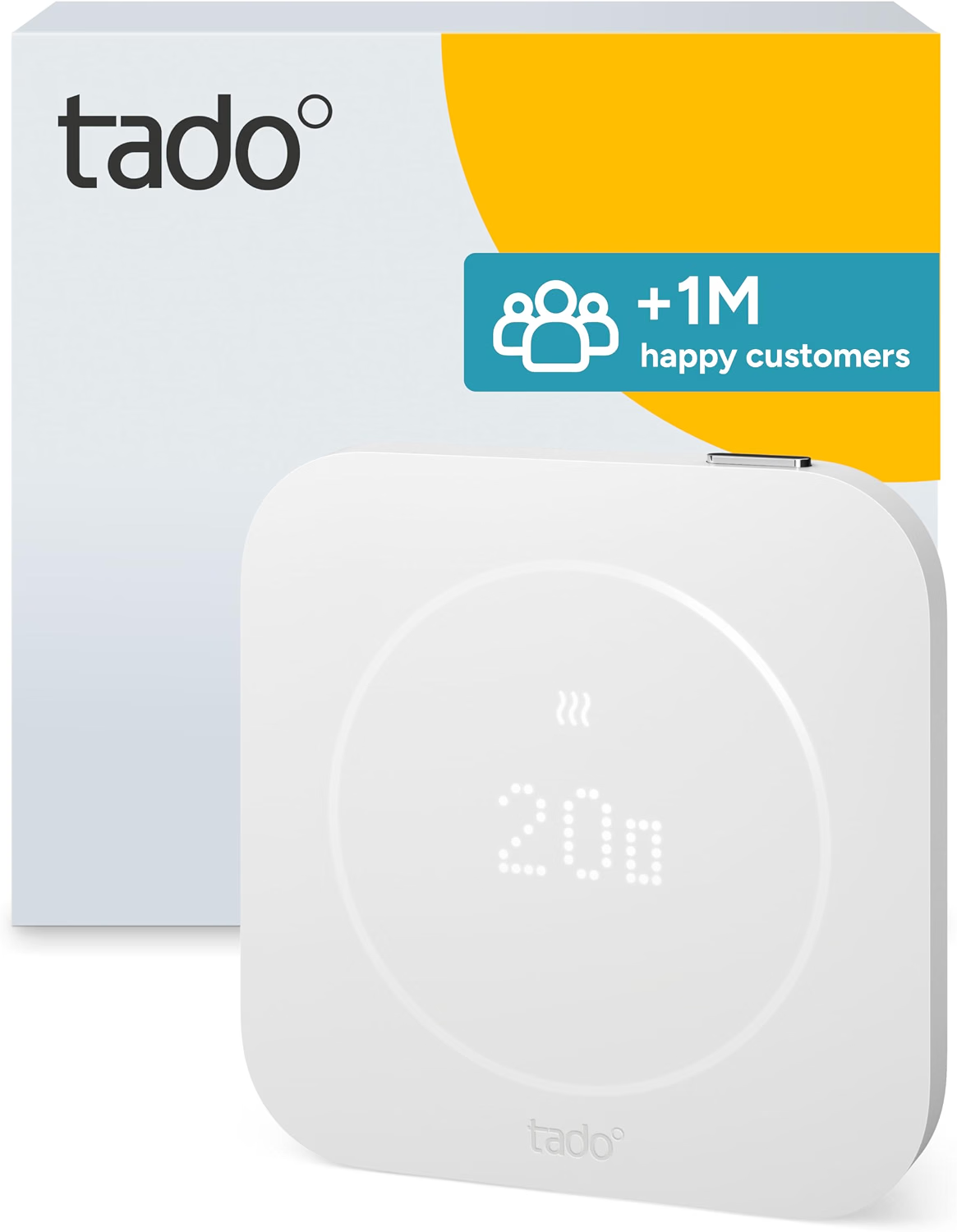
tado° Smart Thermostat X (2nd gen)
Strong balance of app control, boiler compatibility and expansion.
Read our notes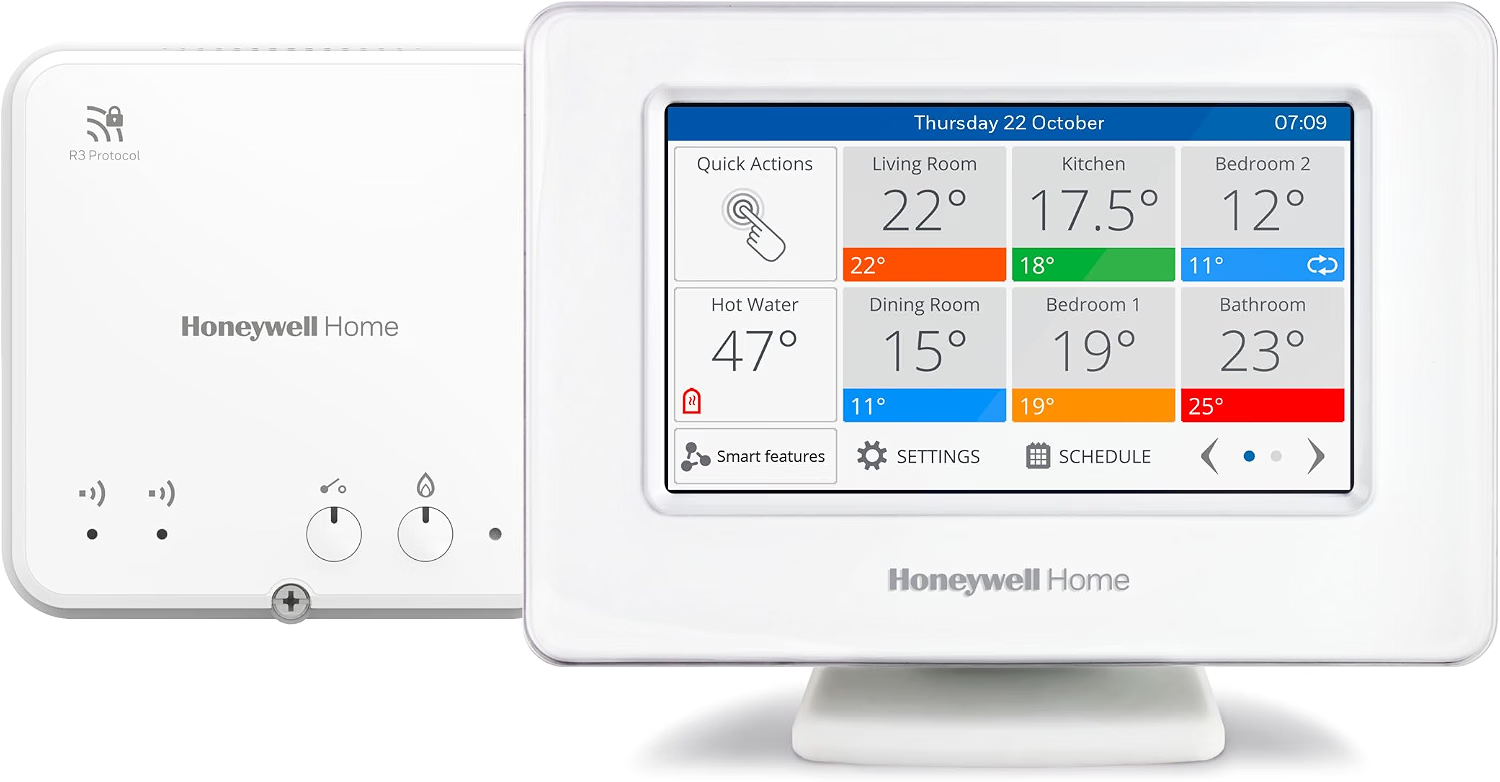
Honeywell Home evohome
Best suited to larger or more complex properties.
Read our notes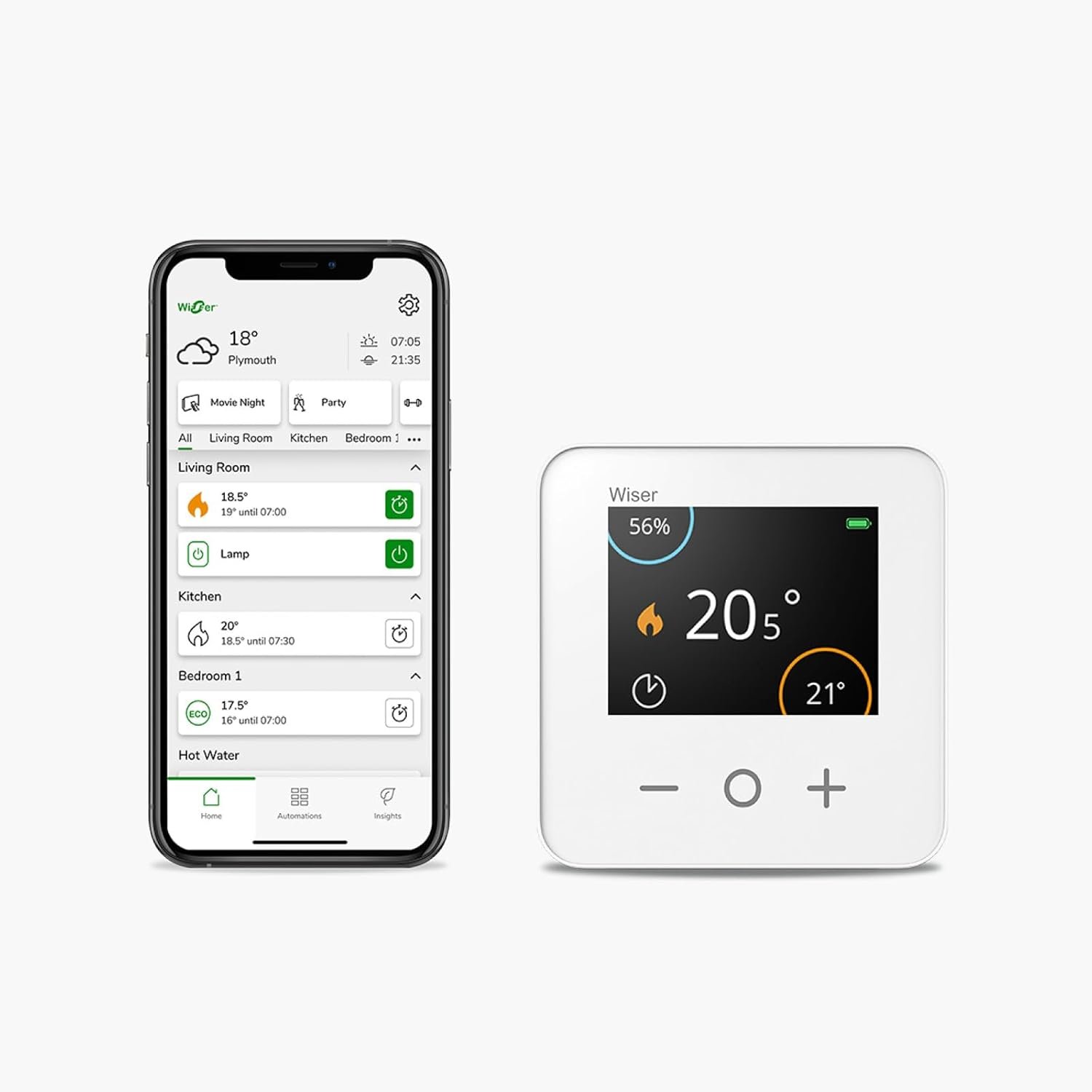
Drayton Wiser
Strong-value route into room-by-room heating.
Read our notes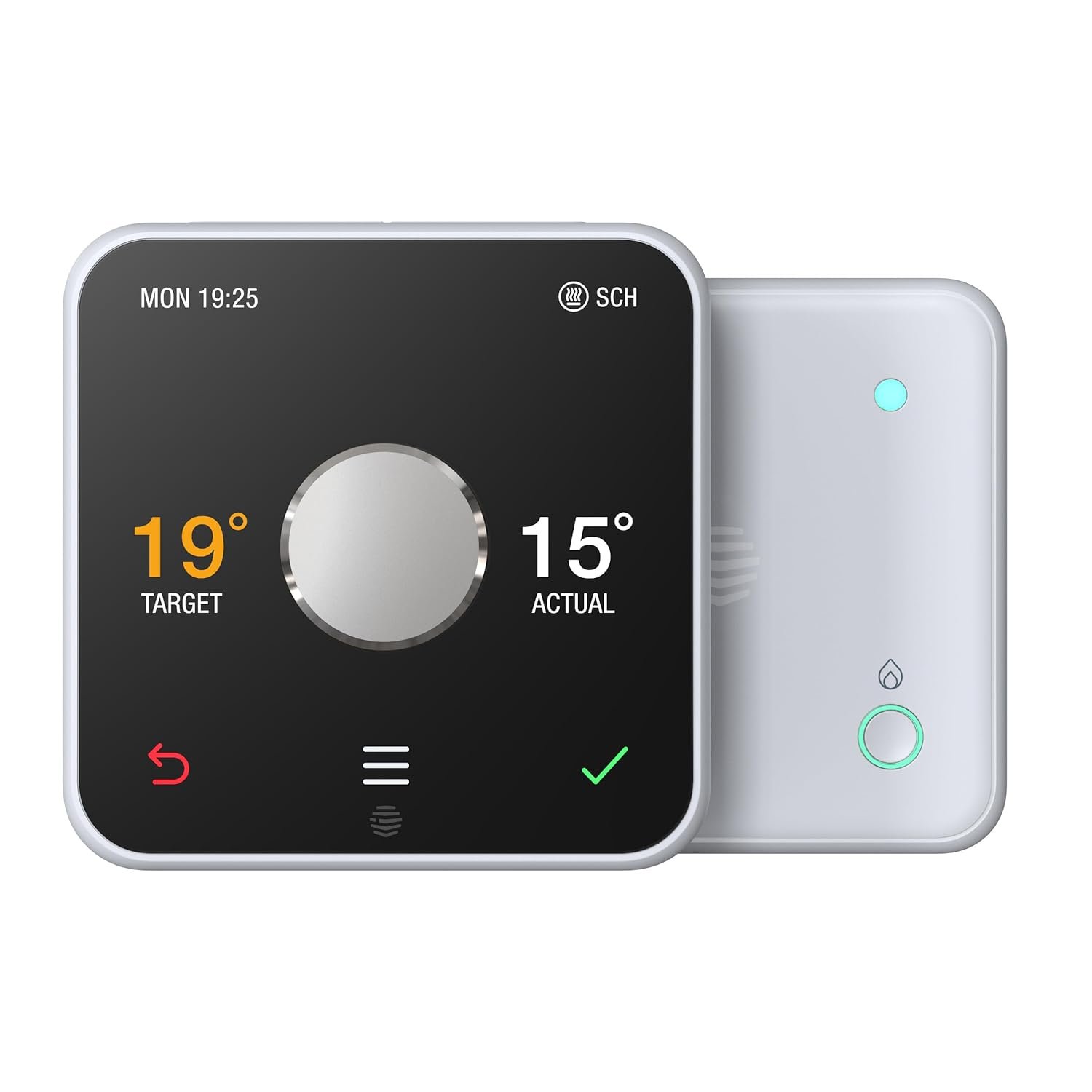
Hive Thermostat
Easy upgrade from older heating controls.
Read our notes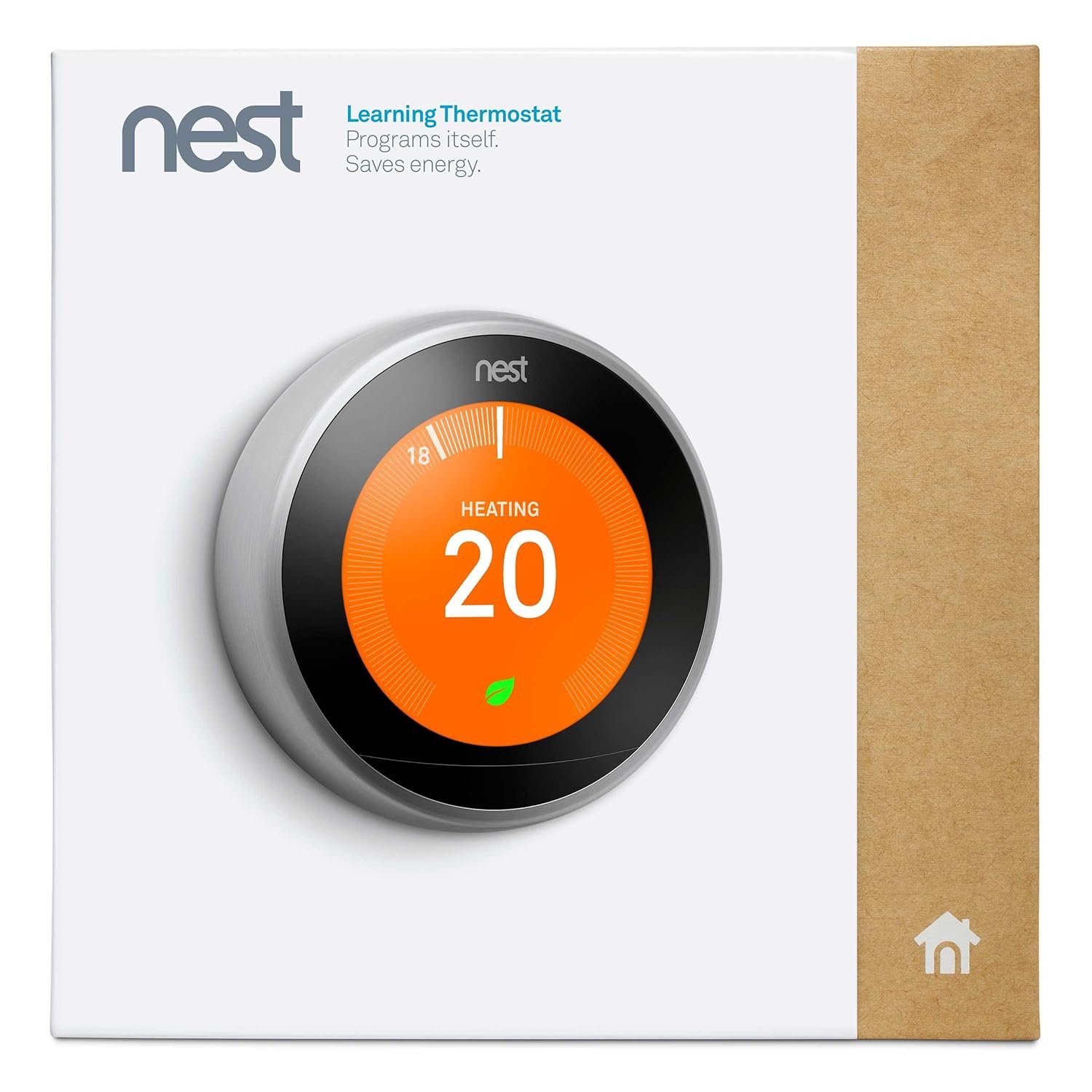
Google Nest Learning Thermostat
Strong for Google smart-home users.
Read our notes
1. tado° Smart Thermostat X (2nd gen)
Best for: homes that want strong app control and the option to build a room-by-room heating system later.
The latest tado° Smart Thermostat X (2nd gen) is our strongest all-round recommendation because it combines flexible heating control with a well-developed smart radiator ecosystem.
The wired model supports relay and OpenTherm on compatible systems, while the wider tado° X platform uses Matter and Thread connectivity. tado° launched the 2nd-generation model in September 2026.
Why it can be worth paying for
- Strong app scheduling and remote control
- Excellent room-by-room expansion
- Relay and OpenTherm support on compatible heating systems
- Matter and Thread connectivity
- Can be expanded gradually
- Useful for homes with changing occupancy patterns
Potential downside
- You need to buy the version that matches your existing controls
- tado° X is a separate platform from older V3+ products
Choose the right tado° X version
Already have tado° X or suitable Thread connectivity?
Wired Thermostat OnlyFirst tado° X setup with an existing wired thermostat?
Wired Starter KitReplacing a wireless thermostat or need a boiler-side receiver?
Wireless Starter KitBefore buying: check your boiler, thermostat wiring and whether your heating system uses relay, OpenTherm or a manufacturer-specific control protocol.
2. Honeywell Home evohome
Best for: larger homes where different rooms or areas genuinely need independent heating schedules.
evohome is less about adding a clever central thermostat and more about building a complete zoned heating system. It can control up to 12 heating zones, which makes it much more relevant to large houses than to small homes where every room follows roughly the same routine.
Why it can be worth paying for
- Up to 12 independently controlled zones
- Strong radiator-based zoning
- Suitable for more complex heating layouts
- Compatible with appropriate on/off and OpenTherm boiler configurations
Potential downside
- It can be overkill if all you really want is app control for one thermostat
3. Drayton Wiser
Best for: homes that want a practical route into room-by-room heating without moving to a more expensive advanced zoning system.
Drayton Wiser is particularly attractive when several rooms follow different routines. You can start with the main controls and add compatible smart radiator thermostats over time.
Why it can be worth paying for
- Good value for multi-room control
- Strong smart radiator thermostat ecosystem
- Useful room schedules
- Good app control
- Can be expanded gradually
Potential downside
- If you have no interest in room-by-room heating, its strongest benefit may not matter to you
4. Hive Thermostat
Best for: homeowners whose main aim is replacing an old thermostat or timer with easy phone control.
Hive remains one of the easiest systems to recommend where simplicity is more important than detailed zoning.
Why it can be worth paying for
- Simple app control
- Easy heating schedules
- Good replacement for basic heating controls
- Expandable with compatible Hive radiator valves
Potential downside
- If sophisticated zoning is the reason you are upgrading, tado°, Wiser or evohome make stronger cases
5. Google Nest Learning Thermostat
Best for: Google smart-home users who prefer automation and learning features to extensive room-by-room control.
Nest remains attractive because of its learning features, polished interface and smart-home integration.
Why it can be worth paying for
- Learning features
- Polished interface
- Smart-home integration
Potential downside
- It is less naturally focused on detailed radiator zoning than tado°, Wiser or evohome
Smart thermostat vs smart TRVs: which is more worthwhile?
A smart thermostat and a smart TRV do different jobs.
| Upgrade | Best for | Main benefit |
|---|---|---|
| Smart thermostat | Old timers, poor schedules and whole-home control | Better central heating control |
| Smart TRVs | Rooms used at different times | Individual room schedules and temperatures |
| Thermostat + smart TRVs | Larger homes or varied occupancy | More complete room-by-room control |
Which should you buy first? Start with the smart thermostat if the main problem is outdated whole-home controls. Add smart TRVs if particular rooms need genuinely different schedules or temperatures. Our guide to whether smart radiator valves are worth it covers their costs and savings.
Are smart thermostats worth it for your heating system?
The answer changes with the kind of heating and home you have.
Gas boilers
They can be one of the more useful upgrades for a gas-boiler home where the existing timer or thermostat is basic. Potential benefits include better schedules, remote control and, on compatible boiler and thermostat combinations, modulating control such as OpenTherm.
Compatibility should always be checked against the exact boiler rather than simply assuming every gas boiler works with every thermostat.
Older homes
They can be particularly useful in older houses where rooms have different occupancy patterns, but a central smart thermostat alone will not necessarily solve uneven temperatures.
If zoning is the main objective, systems such as tado°, Wiser or evohome can make more sense because room controls can be added around the property. Persistent cold rooms should also be checked for heat loss, draughts, inadequate radiator output and balancing problems.
Heat pumps
This requires more caution. Heat pumps often work best with steady operation, weather compensation and relatively small temperature changes rather than the short heating periods and large setbacks commonly used with gas boilers.
A third-party smart thermostat should therefore not automatically replace the manufacturer’s heat-pump controls simply because it offers more app features.
Heat pump advice: Prioritise the heat pump manufacturer’s control strategy, weather compensation and correct system design. A smart thermostat should support that strategy rather than repeatedly switching the heat pump on and off.
Can smart controls be worthwhile before replacing a boiler?
Yes. If the existing boiler still works but the heating controls are dated, improving the controls can be a sensible smaller upgrade. It can improve everyday usability and help you understand how the house responds to different schedules before committing to a larger heating-system change.
If you expect to replace the boiler with a heat pump soon, however, avoid spending heavily on an elaborate boiler-control ecosystem purely on the assumption that all of it will transfer to the new system.
Common mistakes when buying a smart thermostat
Assuming every thermostat works with every heating system
Boiler model, wiring and control protocol matter. Heat pumps need even more careful consideration.
Buying features you will never use
If your routine is completely predictable and every room is heated together, an advanced zoning system may add complexity without much practical benefit.
Ignoring smart TRV compatibility
If room-by-room control might matter later, consider the wider ecosystem before choosing the central thermostat.
Expecting guaranteed savings
Smart controls make it easier to reduce waste; they cannot guarantee that you actually will.
Choosing the wrong tado° kit
The standalone thermostat, wired Starter Kit and wireless Starter Kit are intended for different control setups.
Using gas-boiler control habits with a heat pump
Large setbacks and repeated on/off control can be inappropriate for heat pumps, which often work better at steady lower-temperature operation.
Our verdict: are smart thermostats worth buying?
For many UK homes, yes, but mainly because they improve control rather than because they guarantee large financial savings.
If your existing heating controls are basic, inconvenient or regularly result in unnecessary heating, a smart thermostat can be a sensible upgrade. If you already use a modern programmable thermostat effectively, the benefit is more likely to be convenience than significant energy savings. For homes where different rooms need different schedules, the wider smart-heating ecosystem matters more than the wall thermostat itself.
Our recommendation: choose tado° X for the strongest all-round expandable system, evohome for advanced zoning, Wiser for value zoning, Hive for simplicity and Nest for automation.
Frequently asked questions
Are smart thermostats worth it?
They are usually most worthwhile where existing heating controls are basic, difficult to adjust or result in unnecessary heating. If your existing programmable thermostat is already used effectively, the benefits may be mainly convenience rather than substantial savings.
Do smart thermostats save money?
They can help reduce wasted heating, but the amount depends on your existing controls and heating habits. There is no guaranteed percentage saving.
How long does a smart thermostat take to pay for itself?
There is no standard payback period. It depends on the purchase and installation cost and how much unnecessary heating the new controls actually eliminate.
Which smart thermostat is best in 2026?
For many UK homes, tado° Smart Thermostat X (2nd gen) is our strongest all-round recommendation. evohome is stronger for advanced zoning, Wiser for value room-by-room control, Hive for simplicity and Nest for automation.
Are smart thermostats worth it for combi boilers?
They can be particularly useful where a combi boiler currently has basic controls. Check the exact boiler and thermostat compatibility before buying, especially if you want OpenTherm modulation.
Are smart thermostats worth it for heat pumps?
Sometimes, but heat pumps need a different control strategy from many gas boilers. Manufacturer controls and weather compensation should normally take priority over aggressive smart-thermostat scheduling.
Should I buy a smart thermostat or smart TRVs first?
Start with a smart thermostat if your main issue is whole-home scheduling and control. Smart TRVs become more useful where particular rooms genuinely need different schedules or target temperatures.
Related guides
 Best Smart Thermostats for Heat PumpsControls that suit low-temperature heating
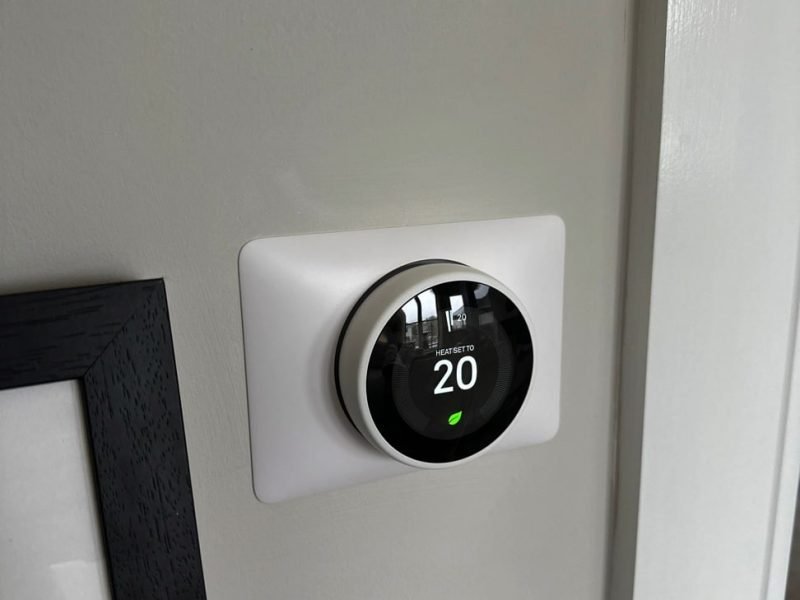 Best Smart Thermostat for Gas BoilersSystem and regular boilers with cylinders
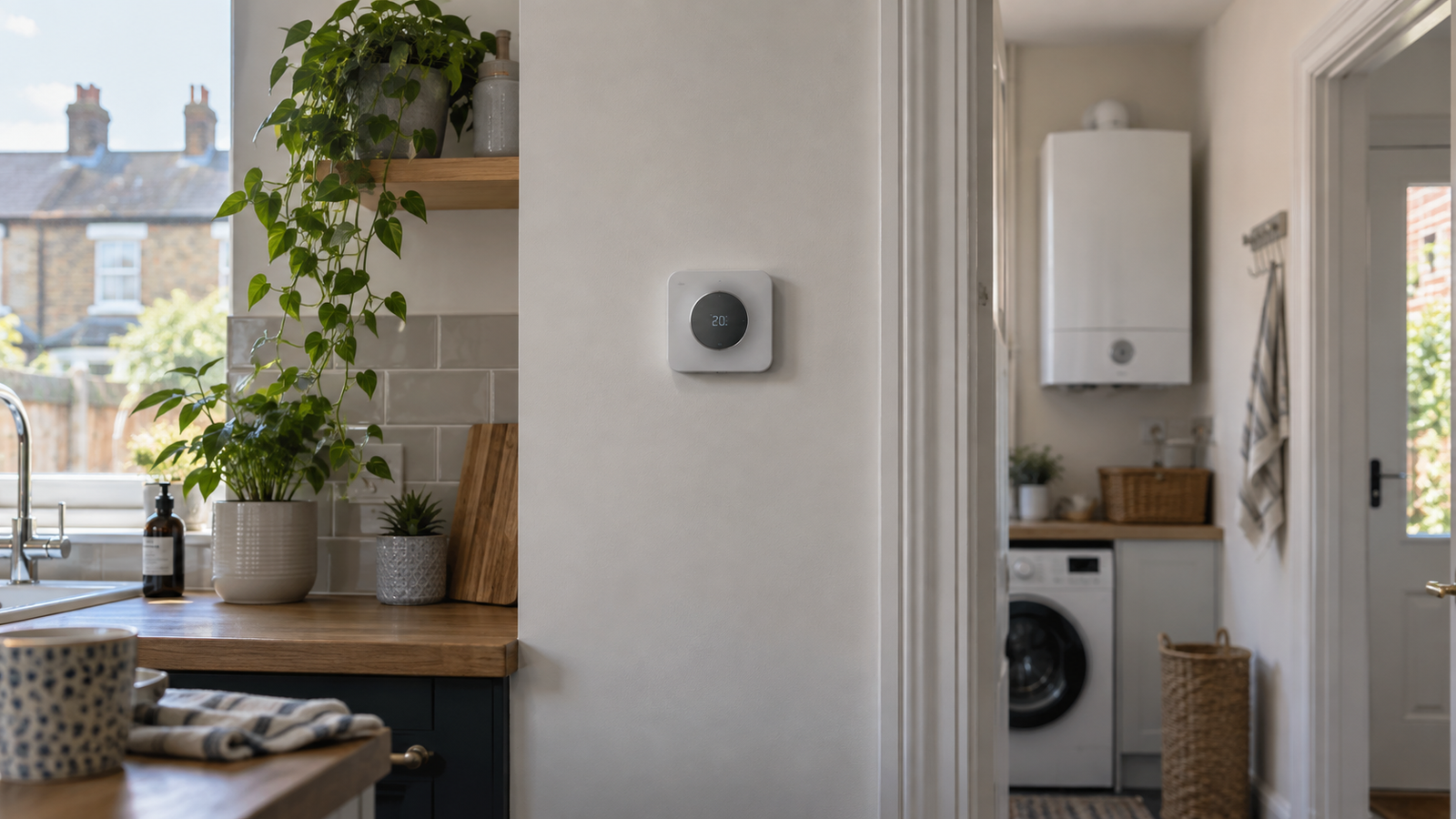 Best Smart Thermostat for Combi BoilersHeating-only control for on-demand hot water
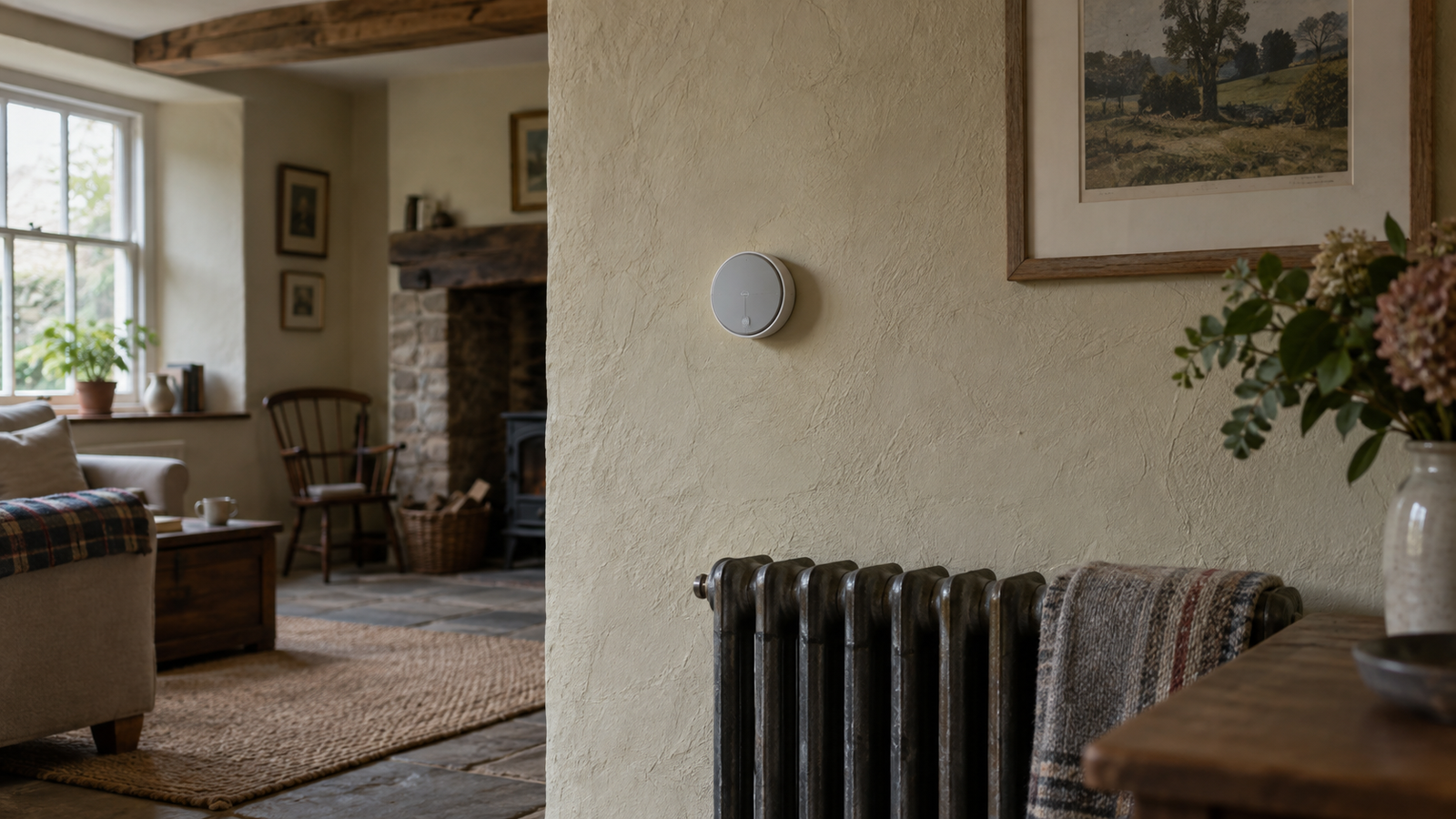 Best Smart Thermostat for Older HomesControls for draughty, uneven properties
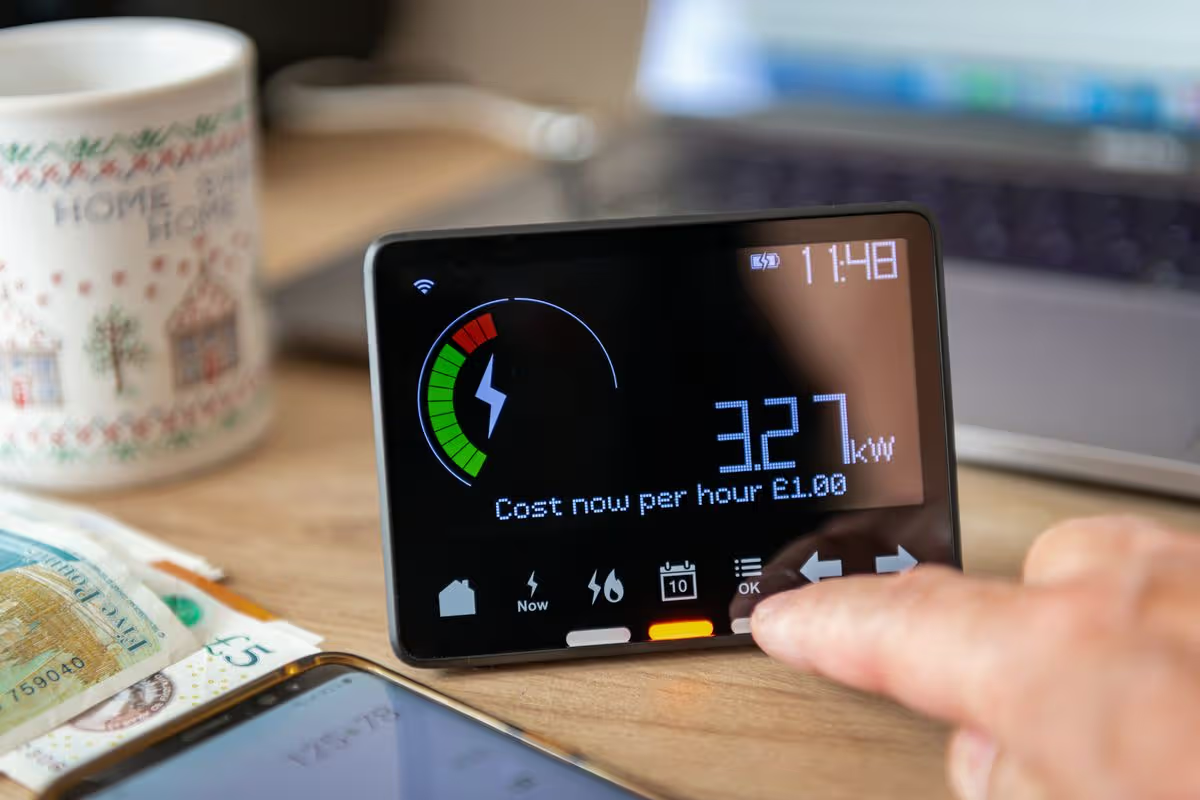 Do Smart Thermostats Save Money?What affects any savings on your bills
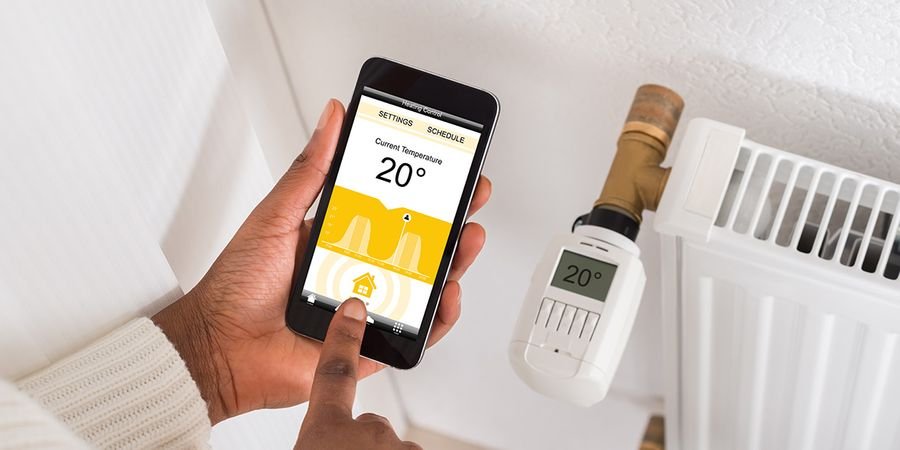 Smart Thermostat vs Smart TRVWhich upgrade solves your problem
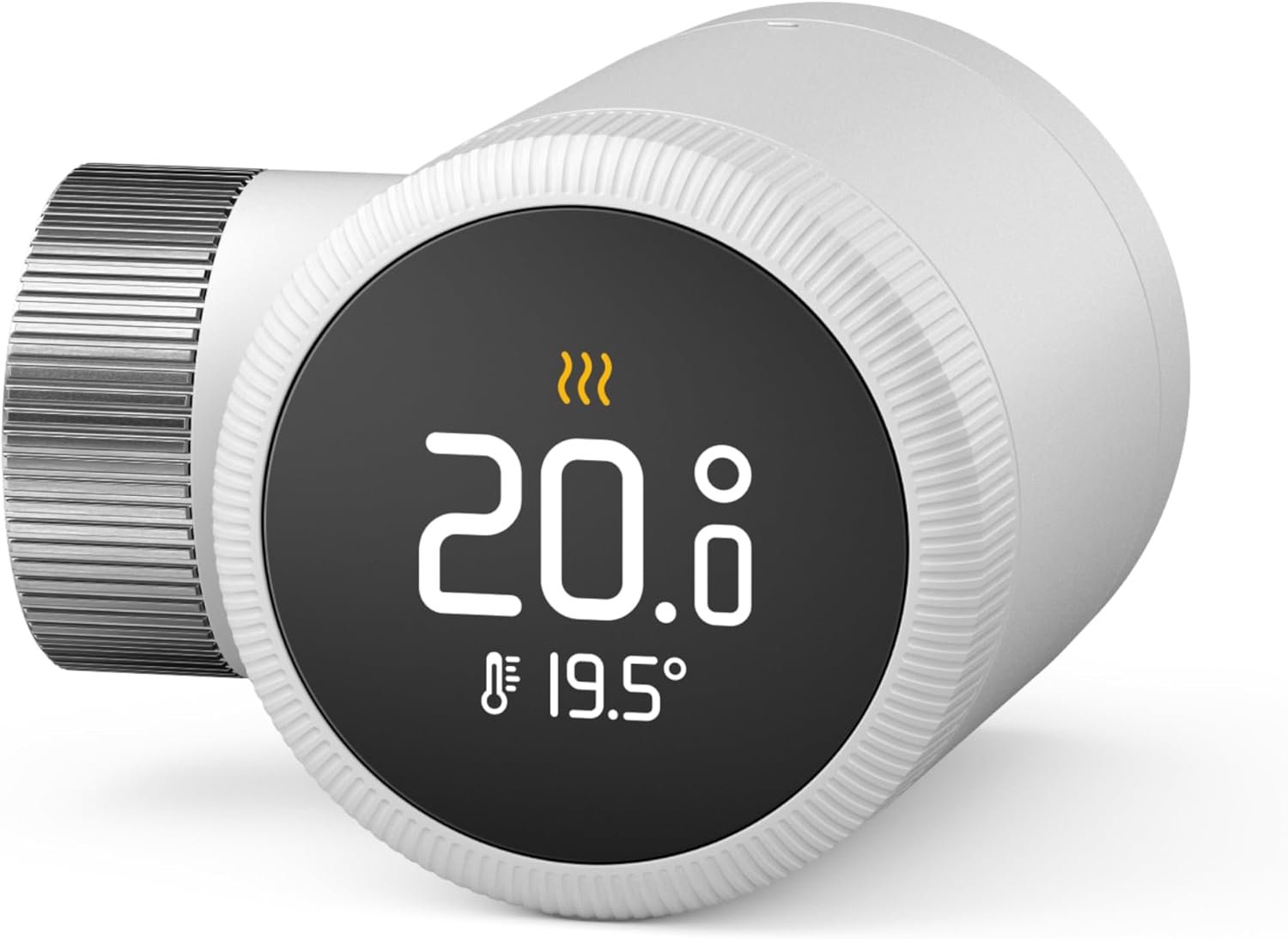 Best Smart TRVsRoom-by-room radiator control compared
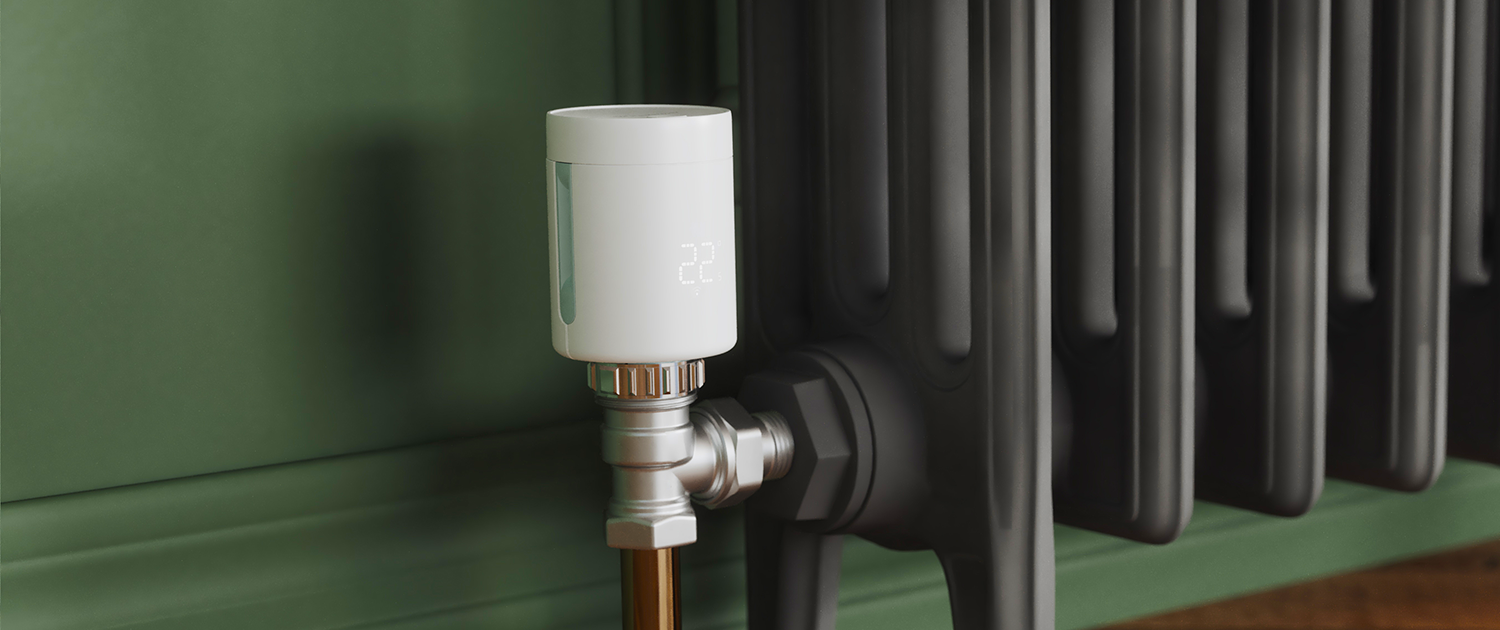 Are Smart TRVs Worth It?When room-by-room control pays off
 Best Heat Pump Temperature SettingsSettings that keep running costs down
 Gas Boiler to Heat Pump UKWhat changes if you switch later