
From EPC E to B: Josh’s Five-Year Social Housing Retrofit Journey
Homeowner Stories · Social Housing Retrofit
Five years. Sixty improvements. One tenant determined to transform an inefficient, oil-heated house into a warmer, more secure all-electric home — with a Mitsubishi Ecodan heat pump, solar panels and battery storage.
What began as a request for a warmer, more secure home became a five-year transformation. Social housing tenant Josh Mack helped drive a whole-home retrofit that replaced oil heating with a Mitsubishi Ecodan heat pump and added insulation, solar panels, battery storage, electric vehicles and new electrical infrastructure.
His documentation records an EPC improvement from E (51) to B (88) and an estimated 88% reduction in annual purchased household energy and vehicle fuel costs. But Josh says the biggest changes have been to his comfort, independence and confidence about the future.
Editor’s note: This case study is based on Josh Mack’s 26-page account, “5 Years of Vision, Evolution & Revolution”, and accompanying photographs, shared with Heat Pump Guide UK with permission. Reported performance and cost figures are Josh’s estimates or measurements unless otherwise specified. The article is an account of one unusually extensive project, not a prediction of what another home would achieve.


The transformation at a glance
| Measure | Before | After |
|---|---|---|
| EPC rating | E (51), August 2022 | B (88), July 2024 |
| Heating | Oil boiler and radiators | 8.5 kW Mitsubishi Ecodan heat pump and radiators |
| Hot water | From oil heating system | 210-litre Mixergy X cylinder |
| Solar PV | None recorded | 6.97 kWp |
| Battery | None | 24 kWh, including backup for essential circuits |
| Indoor temperature | 19°C reported annual average | 20.5°C reported annual average |
| Vehicles | Two diesel vehicles | Two Skoda Enyaq EVs |
| Estimated annual purchased energy and vehicle fuel cost | £9,164 | £1,059 |
Cost estimates use Josh’s stated domestic energy-price-cap and national-average oil and road-fuel assumptions; export income is excluded. They should not be interpreted as a measured heat-pump-only saving.
Why the project began: warmth, health and energy security
Josh lives with severe illnesses and relies on essential medical equipment. For him, secure access to electricity, warmth and hot water is particularly important. In his account, the original house was inefficient and dependent on oil, while rising bills forced difficult choices about heating and spending.
The property averaged around 19°C indoors across a year before the works, according to Josh. He wanted more than a replacement appliance: a safer and more comfortable building, heating and hot water he could rely upon, and greater control of costs.
Josh approached his housing association, Yorkshire Housing, about a coordinated set of improvements. When no suitable planned programme was available for the home, he continued to investigate other routes. He identified the Energy Company Obligation scheme, ECO4, and says a property survey subsequently confirmed eligibility.
From an ECO4 opportunity to a five-year collaborative retrofit
ECO4 provided a route into the project, but the eventual work grew into far more than a single funding package or one contractor’s installation. Josh describes working with Yorkshire Housing, Broadoak Group, Northern Powergrid, O’Connor & Murphy, Quickline and other specialists as successive parts of the programme were planned and delivered.
He was not simply waiting for work to happen. According to his account, he helped maintain contact between different teams, considered technical options, dealt with practical site issues, pursued paperwork and helped arrange complex infrastructure work. Afterwards, he continued monitoring the new systems and adjusting settings.
The project document groups 60 measures into 11 categories, including repairing the property, insulation, ventilation, heating and hot water, electrical infrastructure, generation and backup power, transport and automation.
Repairing, insulating and ventilating the home
One of the most useful lessons from Josh’s experience is that the retrofit did not begin and end with a heat pump. The building itself needed substantial attention.
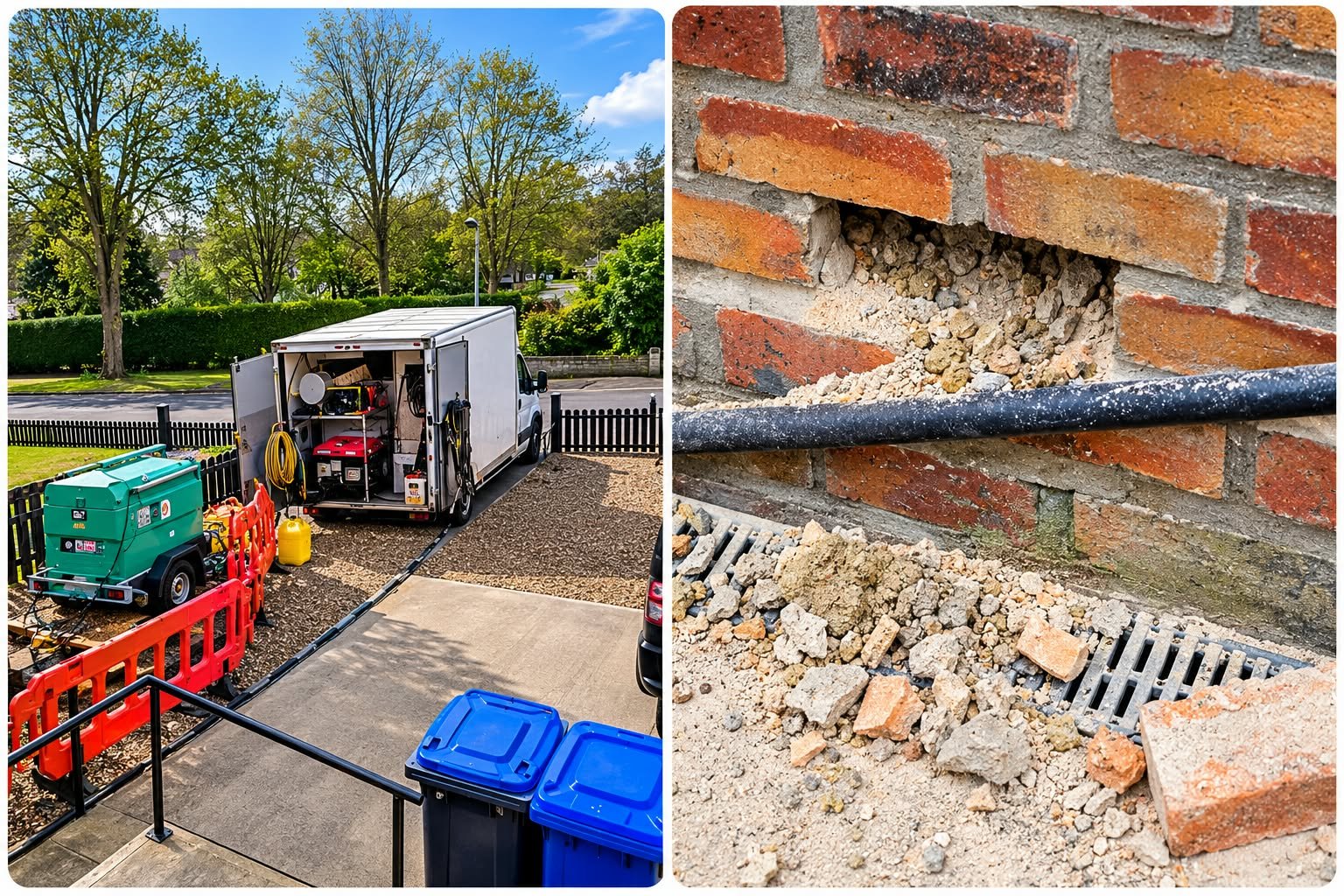
Work recorded in his photographic log included a new roof and ventilation strategy, replacement of decayed brickwork, repointing, treatment for woodworm, damp-proofing, changes to external ground levels and extensive replastering. These were followed by improvements to the building fabric.
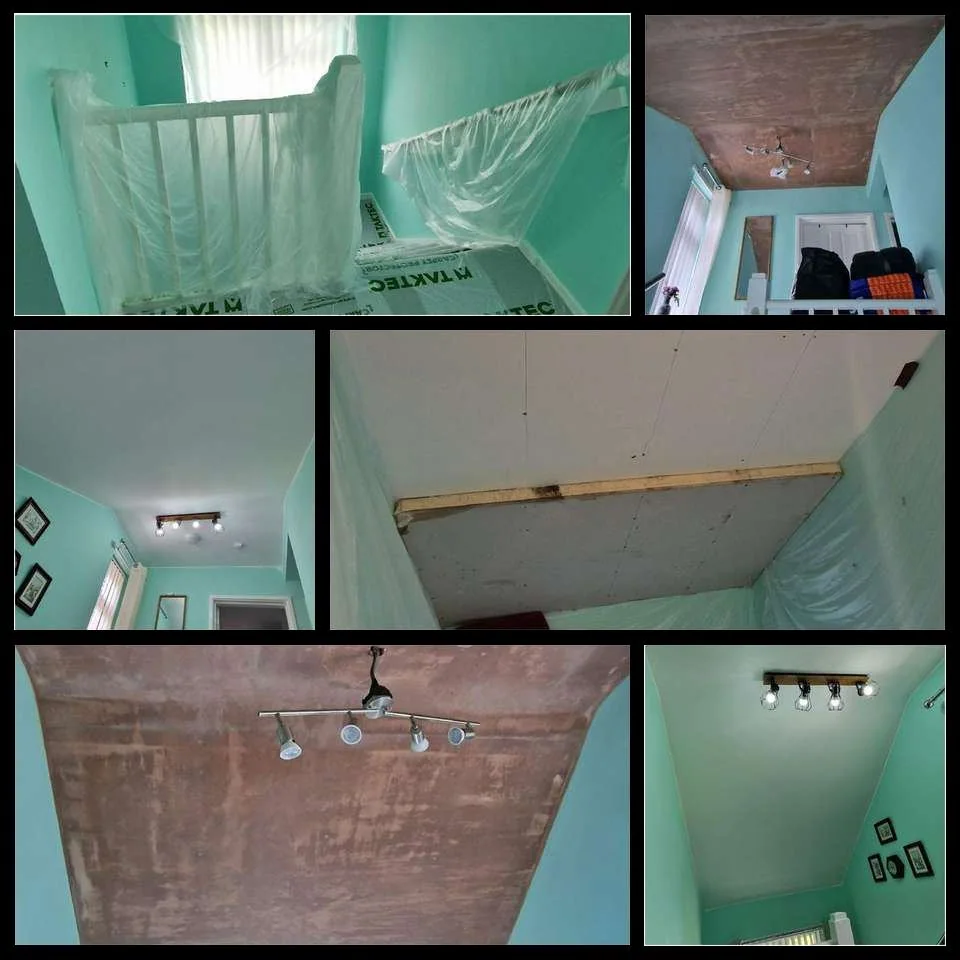
Double glazing, composite doors, poly-bead cavity wall insulation, new loft insulation to around 300 mm and room-in-roof insulation to the rear bedroom and landing helped address heat loss. Josh also describes a complete extraction and ventilation upgrade, including an EnviroVent positive input ventilation unit and humidity-controlled extractor fans for rooms where moisture builds up. The programme also included positive input ventilation and humidity-controlled extraction in relevant rooms to help manage moisture and air quality.
The ventilation improvements were particularly relevant after substantial work to the building fabric: better insulation and airtightness need to be considered alongside moisture control and fresh air. Josh’s project included extraction from the bathroom, WC, kitchen and utility areas as documented in his case study. These steps matter because a heat pump forms only one part of a home’s heating performance. Property heat loss, radiator sizing, operating temperatures and installation quality all influence how efficiently a system can keep rooms comfortable.


Replacing oil heating with a Mitsubishi Ecodan heat pump
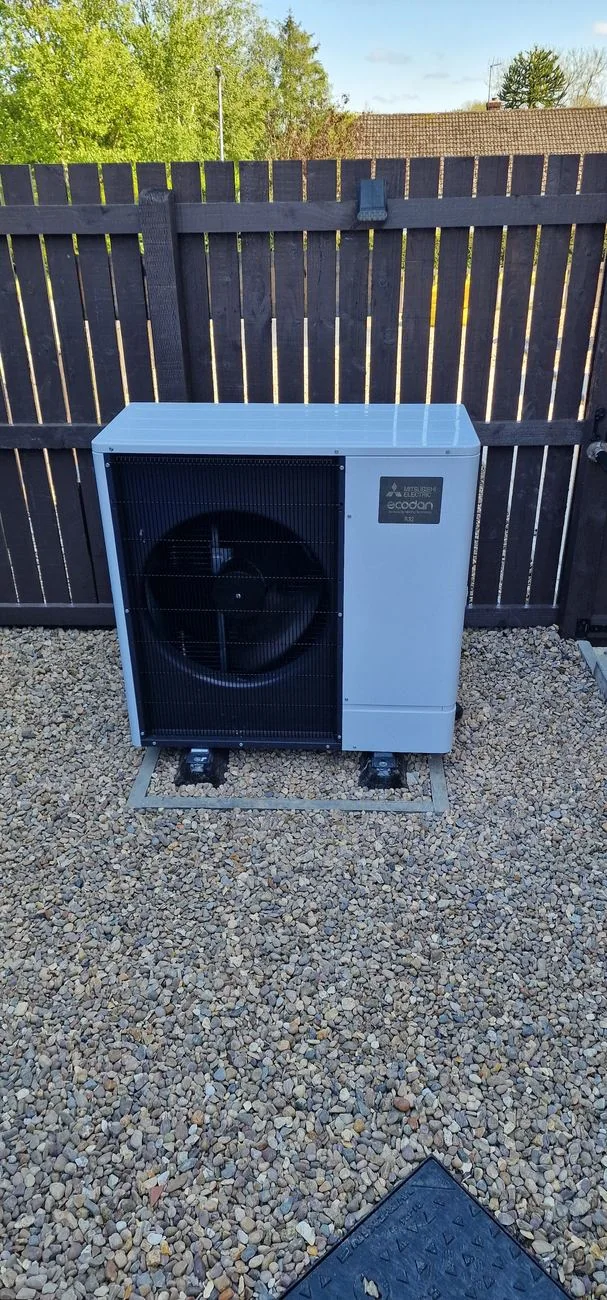
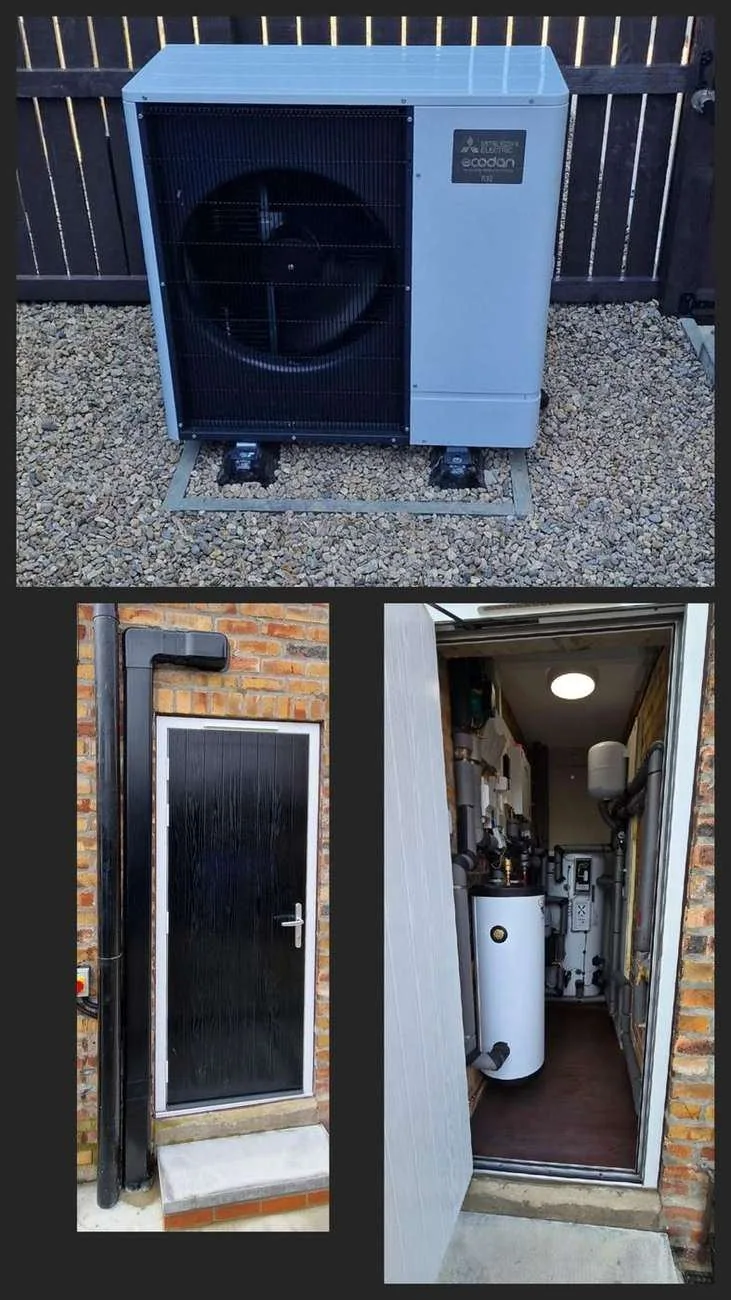
Oil heating was removed and an 8.5 kW Mitsubishi Ecodan air source heat pump installed to provide heating and hot water. Josh’s account describes radiators designed to operate at approximately 45°C flow temperature, alongside a 210-litre Mixergy X smart hot-water cylinder.
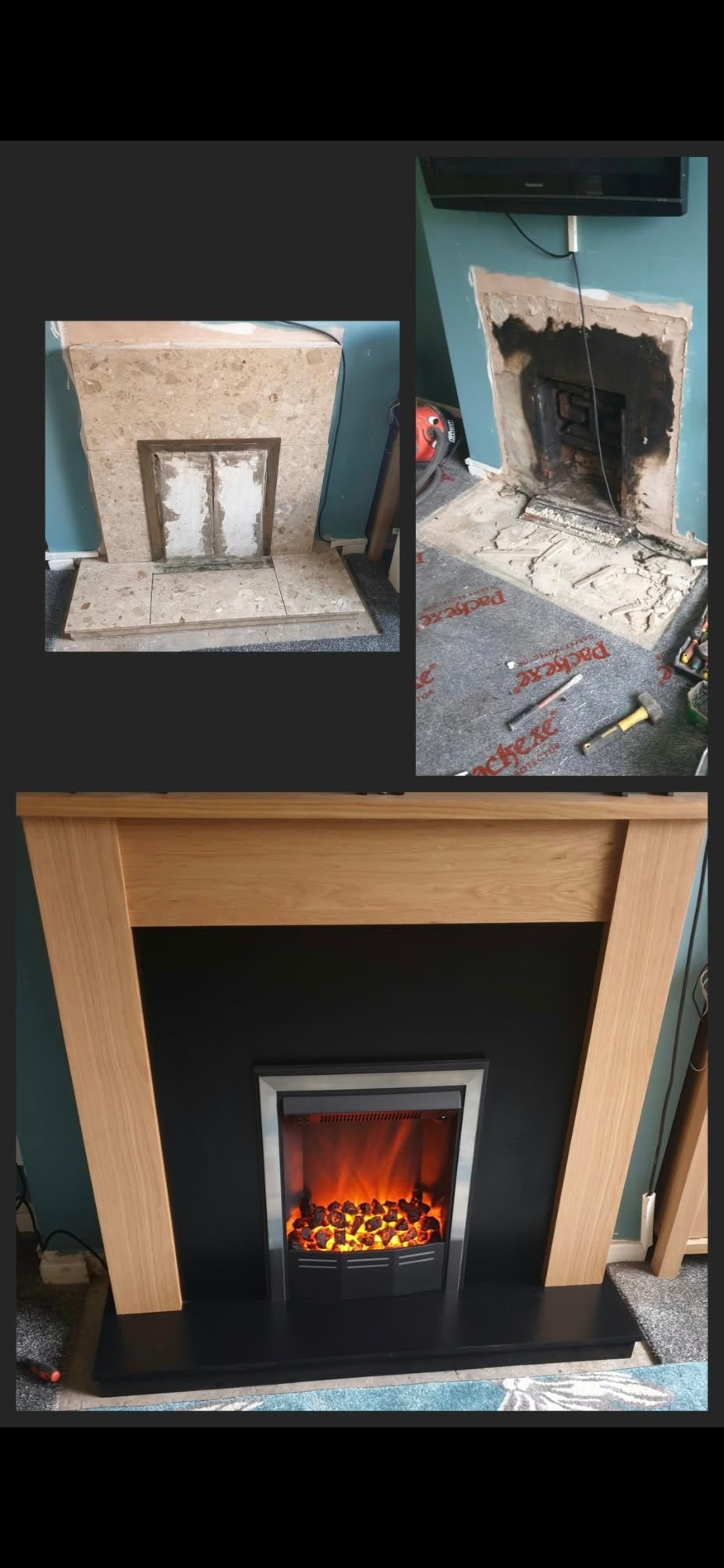
An old coal store was converted into an insulated plant room to accommodate equipment. The former back boiler was removed, and the original fireplace was replaced with an electric-effect fire and surround. This removed another part of the home’s former fuel-burning heating arrangements. Solar diversion and smart controls were introduced so surplus generation and cheaper electricity periods could be used for water heating when suitable.
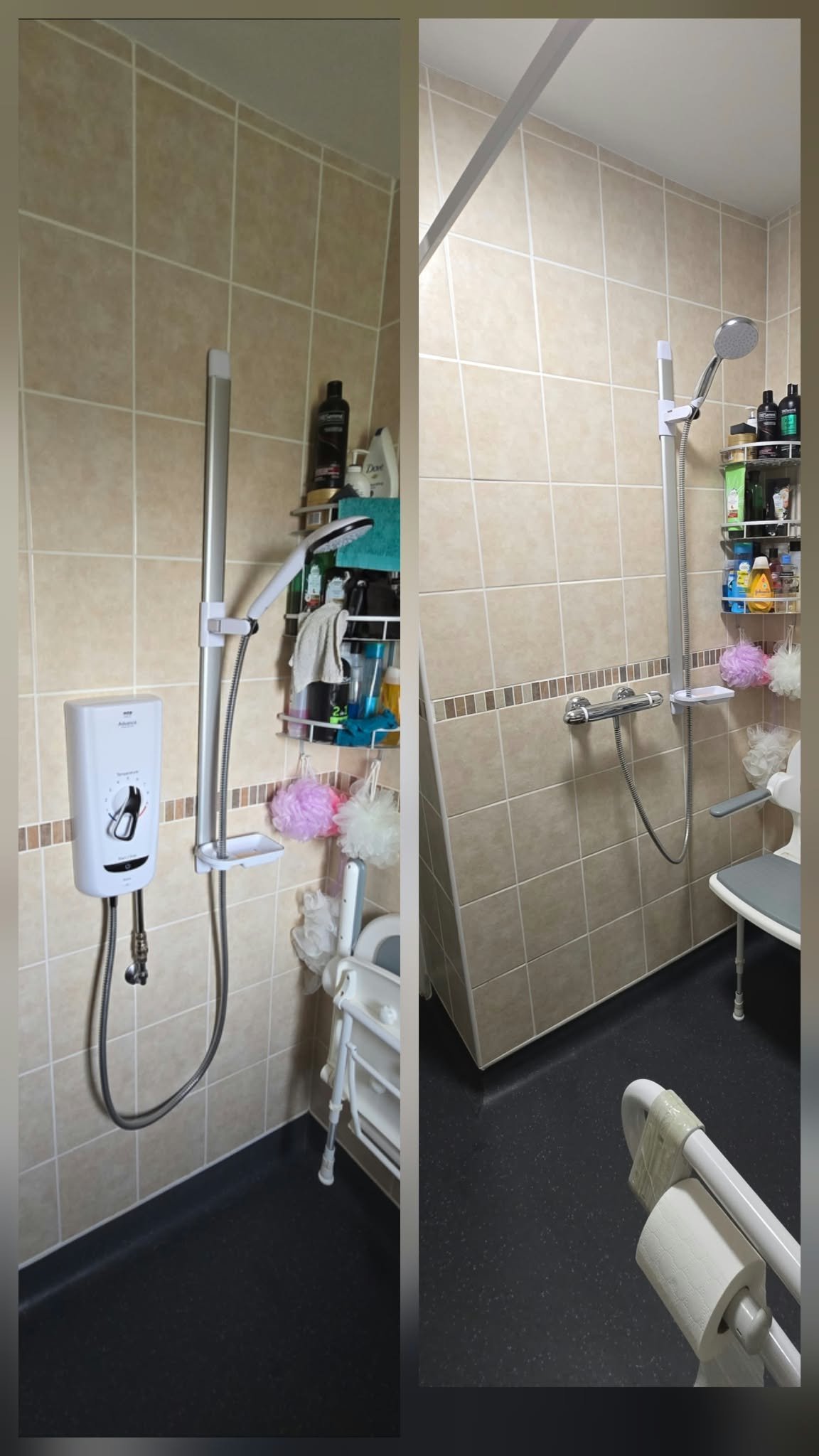
The old electric shower was also removed and replaced by a thermostatic mains mixer shower supplied with hot water from the new cylinder. Josh describes a solar diversion system that uses surplus solar generation for water heating when available. The Mixergy arrangement provides visibility of hot-water availability and lets Josh manage schedules and boosts. The wider controls also connect with Home Assistant for monitoring and automation.
For readers considering a similar heating change, our guide to air source heat pumps explains the main choices. Our heat pump running costs guide explores why real household results depend on system design, energy prices and how the home is heated.
Solar panels, battery storage and backup power
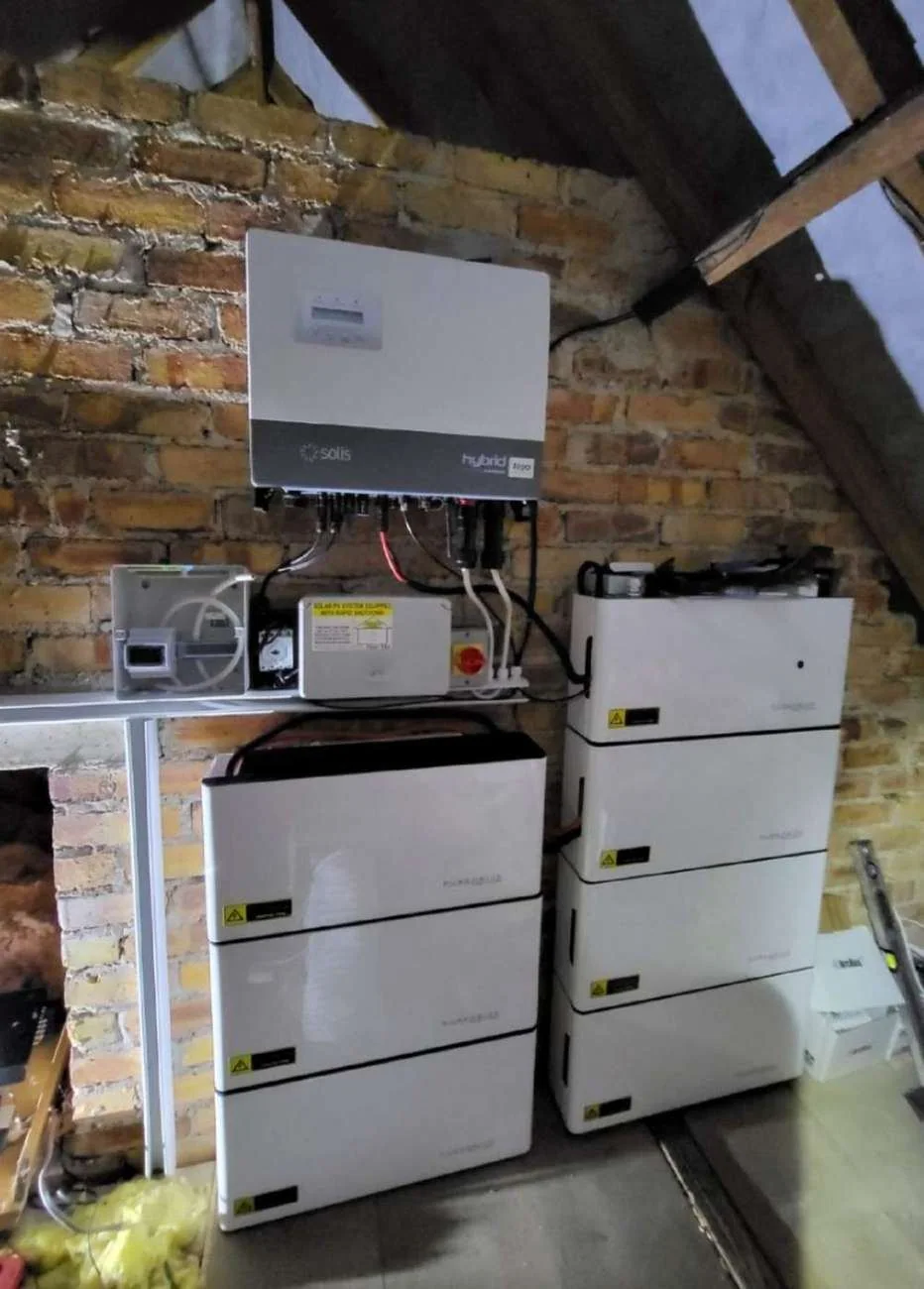
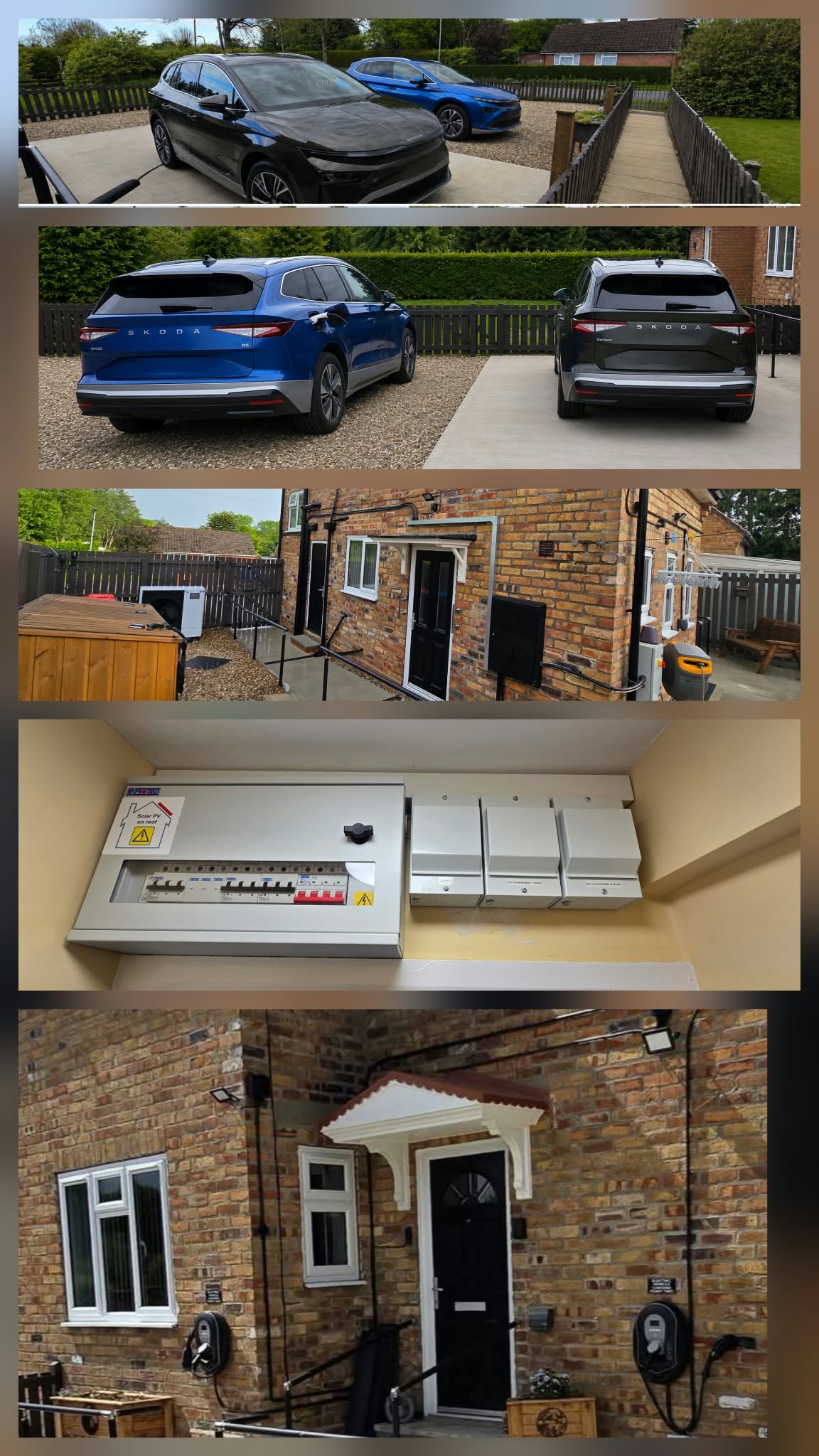
The house also gained a 6.97 kWp solar PV array, a three-phase hybrid inverter and 24 kWh of battery storage. Josh’s setup includes emergency power supply arrangements for selected essential circuits, an important consideration given his reliance on medical equipment.
Solar power can directly supply household electricity, while batteries can shift some consumption into other periods. The potential benefit depends on generation, demand, tariffs, storage capacity and the way the system is operated. Battery backup is not automatically available from every solar or battery installation: it requires suitable equipment and electrical design.
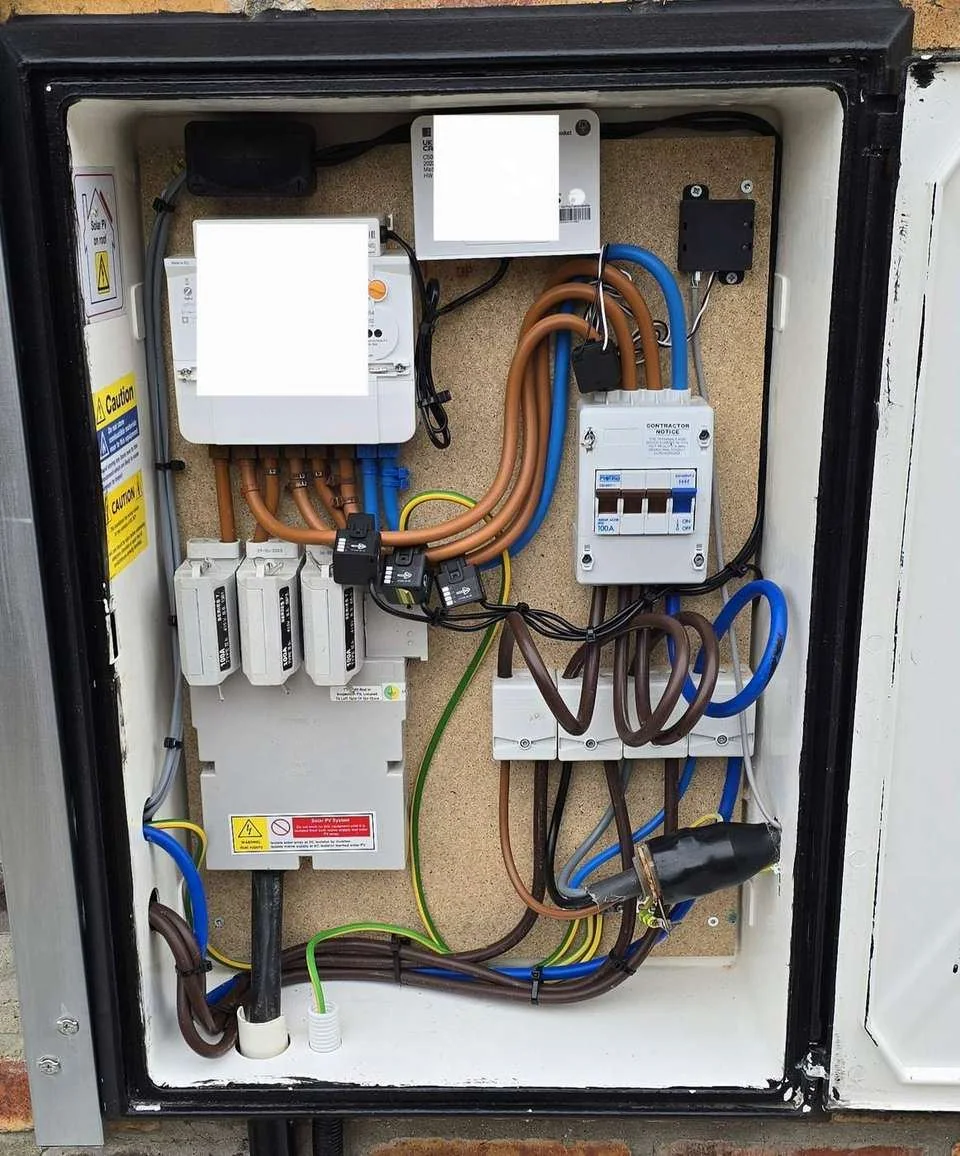
Josh also documented work by Northern Powergrid and utilities contractors to replace the original looped overhead supply with a dedicated three-phase underground connection, including transformer and meter upgrades. This was a significant piece of infrastructure work for this particular project, not a normal requirement for every domestic heat-pump installation.

Two electric vehicles and a carefully managed smart tariff
Transport was another major part of the transformation. Josh replaced two diesel vehicles with two Skoda Enyaq electric vehicles, with home charging incorporated into the wider energy strategy.
His account describes using E.ON Next Drive Smart and compatible myenergi Zappi charging equipment. At the time covered by his case study, the arrangement provided an overnight off-peak window and additional smart-charging opportunities. He reports buying 96.2% of the home’s net grid electricity off-peak, equivalent to 6,650 kWh off-peak and 260 kWh at peak rates in the period reported.
That is an unusually high off-peak proportion and reflects Josh’s particular equipment, charging habits and tariff setup. Smart tariff terms and compatibility can change, so it should not be treated as a promise or a current tariff offer.
Josh estimates average EV charging energy costs of £29.60 per 1,000 miles under his assumptions. More importantly for him, he says lower vehicle energy costs have made it easier to go on social outings with his carers without worrying as much about the distance or the cost of fuel.
What changed? EPC performance, costs and comfort
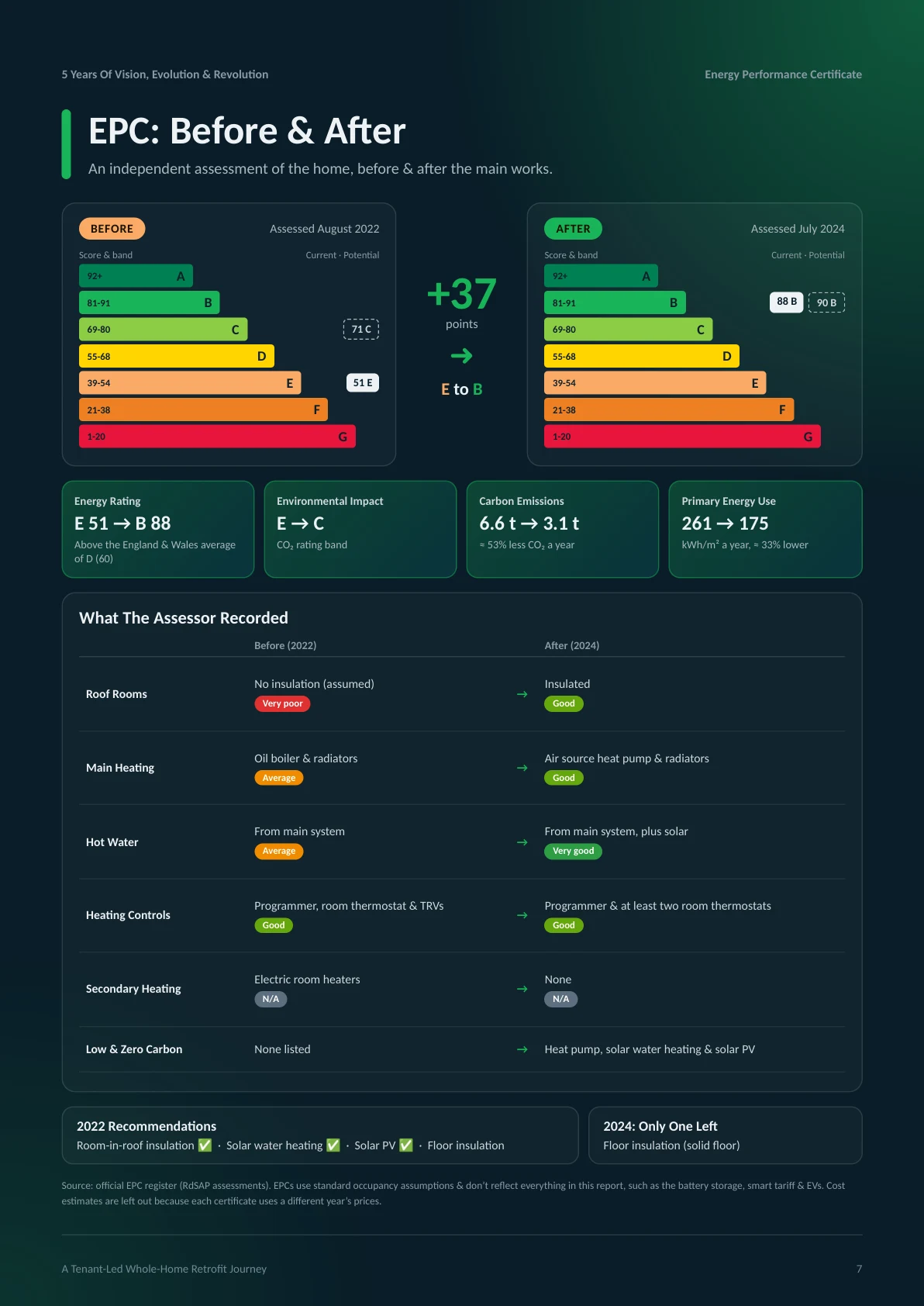
From EPC E (51) to B (88)
The two EPC assessments reproduced in Josh’s document show an increase of 37 points, from E (51) in August 2022 to B (88) in July 2024. The assessments also show lower modelled carbon emissions, from 6.6 to 3.1 tonnes annually, and lower primary energy use, from 261 to 175 kWh per square metre per year.
An EPC is a standardised property assessment, not a meter reading. It does not capture every benefit of battery storage, an EV charging strategy or an individual household’s actual behaviour. Nevertheless, the before-and-after assessments offer useful evidence of a substantial improvement in the building’s rated performance.
What the estimated 88% cost reduction really includes
Josh’s case study estimates that annual purchased energy and road-fuel costs fell from £9,164 to £1,059, a difference of £8,105, or approximately 88%.
This is a combined household energy and transport comparison using stated price assumptions; it is not a claim that replacing an oil boiler with a heat pump alone saves £8,105 each year. The comparison spans building improvements, solar generation, battery storage, a smart tariff and the replacement of two diesel vehicles with EVs. It also excludes solar export income.
Households considering electrification should assess their own building, heating needs, energy use, equipment costs and tariffs rather than use this figure as a savings forecast. Our air source heat pump installation cost guide provides context for the expense of installing heat-pump heating.
A warmer home
Josh reports an increase in average indoor temperature from 19°C to 20.5°C. That difference might seem modest on paper, but in a home where comfort and dependable warmth are particularly important, it represents a meaningful improvement in day-to-day living.

What matters beyond the numbers
For Josh, the outcome was never solely a better EPC score or lower estimated annual costs. In his reflections, he describes a house that is warmer and easier to manage, greater confidence in the availability of essential electricity and less fear of future bills.
For Josh, reliable energy also supports everyday medical and mobility needs, including a feeding pump, lift and adjustable bed. He describes essential-circuit backup power as an additional source of reassurance, although any medical equipment requiring uninterrupted electricity must still have an appropriate, individually assessed backup arrangement. Automation also plays a practical role. Monitoring, voice controls and one-touch routines mean some aspects of running the home can be managed more easily on days when his health makes everyday tasks difficult.
He also describes renewed pride in the property and a sense of purpose from having contributed to an ambitious project over several years.
Reliable broadband for connected home controls. Josh says the project also involved replacing an unreliable copper broadband connection with new fibre-optic infrastructure installed by Quickline. For his household, this has helped the internet-connected heat pump, Mixergy hot-water system and energy monitoring equipment work together more reliably, with remote monitoring and control through their respective mobile apps. As Josh points out, dependable connectivity is an often-overlooked part of living with a smart, electrified home.
“The benefits have gone far beyond anything I originally thought possible.”
Josh Mack, 5 Years of Vision, Evolution & Revolution
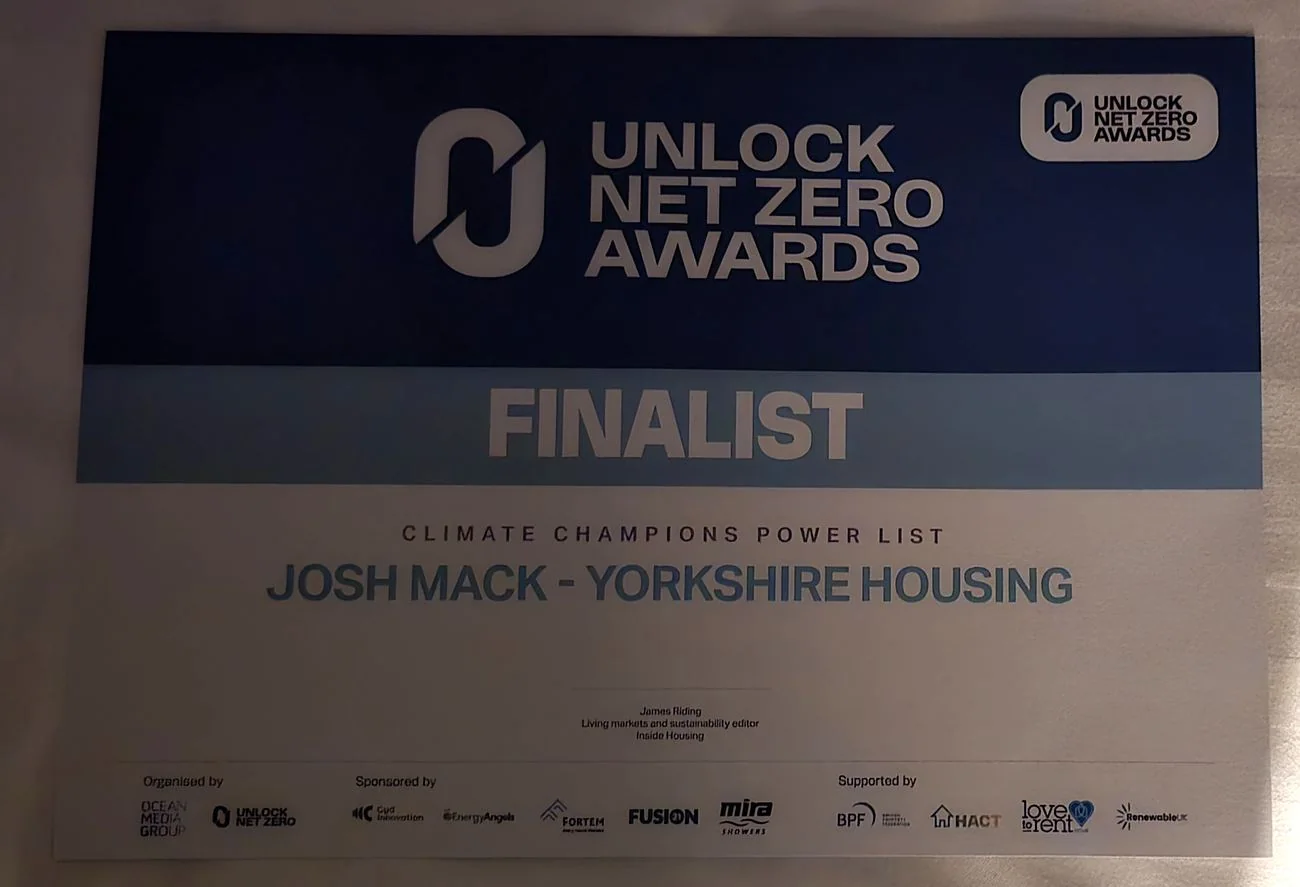
In June 2025, Josh was named a finalist in the Climate Champions Power List at the Unlock Net Zero Awards, recognising his contribution as a tenant working to drive change in housing and sustainability.
What other households can learn from Josh’s experience
Very few homes will follow exactly the same path. The scope of Josh’s project, the participating organisations, the electrical infrastructure work and the combination of systems were unusual. Nevertheless, several practical lessons stand out.
- Start with the needs of the occupants. For Josh, warmth, accessibility, essential electricity and manageable running costs shaped the decisions.
- Assess the whole building. Repair, ventilation and insulation can be as important as selecting heating equipment.
- Explore eligibility rather than assume no support exists. Josh found a route through ECO4 after an initial programme was unavailable, although scheme rules and funding differ by household and property.
- Coordinate the systems. Heating, hot water, solar generation, storage and tariffs can interact, but they need suitable design and controls.
- Measure and keep learning. Josh used monitoring to refine how the installed systems operated rather than regarding handover as the end of the journey.
- Look beyond bill savings. Comfort, security and independence can be important outcomes even when they cannot be expressed as a financial return.
For an explanation of available heating support, see our UK heat pump grants guide. ECO4 and other funding routes have different eligibility and application rules; Josh’s funding arrangements should not be taken as a standard package offered to every tenant.
The organisations involved
Josh credits a range of organisations and contractors for helping deliver the transformation. His document identifies Yorkshire Housing, Broadoak Group, Northern Powergrid, O’Connor & Murphy and Quickline among the contributors, alongside Mitsubishi Electric, Mixergy and specialist installation teams.
The individual roles varied, from housing-association involvement and funding to contracting, electricity infrastructure, broadband and equipment supply. The case study does not suggest that any single organisation funded or delivered all 60 measures.
A five-year journey — and a project still evolving
Josh’s home today is very different from the one that first motivated him to ask for help. The oil heating has gone, the property has been extensively repaired and insulated, and the heating, electricity generation, storage and transport systems now work together in ways that would have seemed remote at the start.
What is perhaps most striking is Josh’s determination to participate in the process. He researched possibilities, brought people together, dealt with setbacks and continues to learn from the systems in daily use.
For other social housing tenants and homeowners, his experience is not a ready-made installation specification. It is an example of what a coordinated approach to building condition, occupant needs, funding, engineering and long-term operation can achieve.
Above all, it is a reminder that the purpose of a home retrofit is not just to install technology. It is to make a home better for the people living in it.
Photo gallery: the wider transformation
Josh documented the work as it progressed, including insulation, solar installation, electrical improvements and the move to electric transport.


Images supplied by Josh Mack. Select a photograph to view the full image.
The person behind the project
About contributor Josh Mack
Josh Mack is the social housing tenant who initiated, documented and helped coordinate this five-year retrofit. His detailed first-person account covers the practical work, organisations involved, energy monitoring and how the changes affected his health, independence and day-to-day life.
Josh was named a finalist in the Climate Champions Power List at the 2025 Unlock Net Zero Awards. He provided his documentation and images for this independent editorial feature.
Explore Josh’s Social Housing Renewables & Electrification Journey
About the author

David Tooth
Founder & Editor | Heat Pump Guide UK
Independent UK heat pump researcher
David researches heat-pump technology, costs, performance and UK heating policy to produce independent, practical guidance for homeowners.
About this case study and contributor Josh Mack
This independent editorial feature was prepared by David Tooth, Founder & Editor of Heat Pump Guide UK, using source material supplied with permission by Josh Mack. Josh documented his experiences in 5 Years of Vision, Evolution & Revolution: My Home. My Health. A Determination To Change What Felt Impossible.
Technical specifications, estimates, project history and first-person outcomes are attributed to Josh’s documentation. They have not all been independently audited by Heat Pump Guide UK. The project is presented as an individual case study and not as an endorsement of a supplier or a guarantee of similar results.
Further reading: Social Housing Renewables & Electrification Journey — Josh’s project page.