
High-Temperature Heat Pumps UK: Homeowner Guide
High-temperature heat pumps can produce hotter water than conventional low-temperature systems, which can make them particularly interesting for older UK homes, existing radiators and properties where extensive heating-system upgrades could otherwise be required.
But being able to produce 65°C, 70°C or even around 80°C does not automatically make a heat pump better. This guide explains what high temperature really means, whether you actually need it, how it affects radiator upgrades and running costs, and why the lowest practical flow temperature usually remains the better target.
- UK homeowner advice
- Independent heat pump research
- Technical claims checked

Quick Answer: What Is a High-Temperature Heat Pump?
A high-temperature heat pump is designed to provide hotter heating water than a conventional low-temperature heat-pump system.
CIBSE’s explanation of the BS EN 14825:2022 testing standard describes a high-temperature application as producing 65°C leaving water at specified cold outdoor test conditions. Some modern heat pumps can operate at temperatures above this and may be capable of approximately 70°C, 75°C or 80°C depending on the system and operating conditions.
High temperature does not mean it should run hot all the time
A heat pump capable of producing 75°C water might still run your radiators at 45°C, 50°C or 55°C for much of the year. The higher capability provides extra operating range when it is genuinely needed.
Do You Actually Need a High-Temperature Heat Pump?
Many homeowners do not need their heat pump to operate at particularly high temperatures all year.
The better question is:
What is the lowest flow temperature that can still heat your home comfortably?
If your home can meet its heat demand at 45°C or 50°C, there is normally little benefit in deliberately running the system at 65°C simply because the heat pump can.
A high-temperature-capable system becomes more interesting where:
- Your home has an existing radiator system designed around a boiler
- Some radiators cannot practically be enlarged
- The property has relatively high heat loss
- Major heating-system alterations would be disruptive
- You want additional temperature capability for particularly cold conditions
- Hot-water production benefits from a wider operating-temperature range
It may be less important in a well-insulated home with large radiators, fan-assisted emitters or underfloor heating that can already provide enough heat at lower water temperatures.
What Do 35°C, 45°C, 55°C and 65°C Mean?
These temperatures normally refer to the flow temperature: the temperature of the water leaving the heat pump and travelling towards the radiators or other heat emitters.
| Flow Temperature | What It Can Mean in a Home | Main Consideration |
|---|---|---|
| Around 35°C | Very low-temperature heating | Particularly compatible with suitable underfloor heating or large emitters |
| Around 40–45°C | Common heat-pump design territory | Radiators usually need enough surface area to deliver the required room heat |
| Around 50–55°C | Higher-temperature radiator operation | Can make retrofit easier but may reduce heat-pump efficiency compared with lower temperatures |
| 65°C+ | High-temperature heat-pump application | Useful where genuinely required, but performance at the higher temperature matters |
Energy Saving Trust says many heat-pump systems commonly operate with radiator water around 45°C, while conventional boiler-heated radiators may historically have operated substantially hotter.
Compare Up to 3 Heat Pump Installers Near You
Tell us a little about your property to see installer options available in your area.
Free to use with no obligation
Can a High-Temperature Heat Pump Work With Existing Radiators?
Potentially, yes. This is one of the biggest reasons high-temperature heat pumps appeal to homeowners replacing a boiler.
A radiator gives out more heat when the water flowing through it is hotter. If you substantially reduce the water temperature, the same radiator produces less heat.
This means a home designed around relatively hot boiler water may need one or more of the following when switching to a heat pump:
- Larger radiators
- Additional radiators
- Higher-output or fan-assisted emitters
- Improved insulation
- A higher heat-pump flow temperature
Do not assume either extreme.
You should not automatically be told that every radiator must be replaced, but you also should not be promised that a high-temperature heat pump means every existing radiator can definitely stay.
The correct answer comes from comparing each room’s heat loss with the output of its radiator at the proposed heat-pump temperatures.
Read our full guide to whether you need new radiators for a heat pump.
Could a High-Temperature Heat Pump Save You From Replacing Radiators?
It can reduce the amount of radiator work needed in some homes, but there is an important trade-off.
| Option | Potential Advantage | Potential Disadvantage |
|---|---|---|
| Keep smaller radiator and run hotter | Less disruption and lower emitter-upgrade cost | Higher heat-pump electricity consumption may result |
| Increase radiator size and run cooler | Can improve heat-pump efficiency | Higher initial cost and disruption |
| Improve insulation and reduce heat loss | Reduces the amount of heat the room needs | Some improvements can involve significant additional cost |
The best answer can differ from room to room. Replacing one or two undersized radiators may be more sensible than either replacing every radiator or forcing the entire heating system to run hotter.
Are High-Temperature Heat Pumps Good for Older Houses?
They can be particularly useful to investigate in older homes, but an older property does not automatically need a high-temperature heat pump.
An older house may have:
- Higher heat loss
- Solid walls
- Older radiator systems
- Existing pipework that is difficult to change
- Rooms where large new radiators would be impractical
On the other hand, older heating systems sometimes contain radiators that were already generously sized. Improvements made to windows, loft insulation or walls over the years may also mean the home now needs less heat than when the original heating system was designed.
Age alone does not determine the answer
A room-by-room heat-loss calculation and radiator assessment tell you much more than the age of the house.
Citizens Advice also notes that homeowners considering a heat pump may need changes such as insulation, draught-proofing, radiator or pipe upgrades depending on the property.
Are High-Temperature Heat Pumps Less Efficient?
Running a heat pump at higher temperatures will generally make it work harder.
The refrigeration cycle has to raise heat from its source temperature to the temperature required by your heating system. Increasing that temperature lift generally reduces efficiency.
This is why lowering flow temperatures is one of the main ways to improve heat-pump performance.
Lower Flow Temperature
Smaller temperature lift can improve efficiency, provided the radiators can still keep the home warm.
Higher Flow Temperature
Can increase radiator output and make difficult retrofits easier, but usually places greater demand on the heat pump.
Energy Saving Trust recommends reducing heat-pump flow temperature as far as practical while maintaining comfort because this can improve efficiency.
Important: This does not mean every high-temperature heat pump is inefficient. It means you should compare its performance at the temperature your home actually requires rather than judging it solely by its maximum flow temperature.
Does a High-Temperature Heat Pump Cost More to Run?
It can cost more to run if the system actually operates at higher temperatures for long periods.
Running costs still depend on the complete system, including:
- Property heat loss
- Outside temperature
- Flow temperature
- Radiator sizing
- Heat-pump efficiency
- Weather compensation
- Hot-water use
- Electricity tariff
- Installation and commissioning quality
A high-temperature-capable heat pump operating mostly at 45–50°C could therefore have a very different annual result from a similar system being forced to provide 65°C throughout winter.
For a fuller explanation of electricity use, see our Air Source Heat Pump Running Costs UK guide.
High-Temperature vs Low-Temperature Heat Pump
The difference should not be viewed as one technology being universally better than the other.
| Lower-Temperature Design | High-Temperature-Capable Design | |
|---|---|---|
| Radiators | May require larger emitters | May allow more existing radiators to remain |
| Efficiency | Lower temperature lift generally helps | Depends strongly on the temperature actually used |
| Older-home retrofit | Can involve more emitter work | Can provide greater design flexibility |
| Cold-weather headroom | Depends on the system design | Wider temperature capability may be useful |
| Hot water | System-specific strategy required | Higher-temperature capability can be useful |
The ideal outcome is often a heat pump with enough operating range for difficult conditions but a heating system designed to spend as much time as practical at lower temperatures.
Compare Up to 3 Heat Pump Installers Near You
Tell us a little about your property to see installer options available in your area.
Free to use with no obligation
What Does an 80°C Heat Pump Actually Mean?
You may see modern heat pumps promoted as being capable of producing water at approximately 70°C, 75°C or 80°C.
These figures can be useful, but they need context.
You should ask:
- At what outdoor temperature can it produce that water temperature?
- How much heating output is still available?
- What is the COP at that condition?
- Can it maintain that temperature continuously?
- Is supplementary electrical heating involved?
- Does your home actually require that temperature?
CIBSE notes that although modern high-temperature air-source systems can reach approximately 80°C, this can be towards the top end of their operating envelope.
Maximum temperature is not an efficiency score
A heat pump that reaches the highest temperature is not automatically the best heat pump for your home.
R290 and High-Temperature Heat Pumps
R290 propane has become closely associated with a newer generation of high-temperature air-to-water heat pumps.
However:
- Not every R290 heat pump has the same temperature capability
- R290 itself does not guarantee high efficiency
- High-temperature heat pumps can use refrigerants other than R290
R290 also introduces specific safety and installation considerations because propane is flammable.
Our dedicated R290 Heat Pumps UK guide explains propane refrigerant, R290 vs R32, safety and why it is increasingly used in modern heat pumps.
High-Temperature Heat Pumps and Hot Water
Higher-temperature capability can also be useful for producing domestic hot water.
But your hot-water cylinder and space-heating system are different loads.
The heat pump may therefore use:
- Lower temperatures while heating the house
- Higher temperatures when charging the hot-water cylinder
- A separate periodic strategy for hygiene requirements where needed
This is another reason why seeing an advertised maximum temperature does not mean your radiators will operate at that temperature continuously.
Can a High-Temperature Heat Pump Replace a Gas Boiler?
Yes, a high-temperature heat pump can potentially replace a gas boiler, but it should still be designed as a heat-pump system rather than treated as a simple appliance swap.
Before replacing a boiler, establish:
- Your home’s room-by-room heat loss
- Required heating output on a cold day
- Existing radiator sizes
- The lowest practical flow temperature
- Hot-water requirements
- Heat-pump output at the required conditions
- Electrical requirements
- How weather compensation will be configured
The government’s heat-pump advice similarly recommends considering cost-effective insulation and radiator changes where these can help improve performance rather than assuming higher-temperature operation removes the need for system optimisation.
For the wider switch, read our Gas Boiler to Heat Pump UK guide.
Could a High-Temperature Heat Pump Replace an Oil or LPG Boiler?
Potentially. High-temperature capability can be particularly interesting in older off-grid homes where the existing wet heating system was designed around oil or LPG boiler temperatures.
However, the same design principles apply:
- Calculate heat loss
- Assess radiator output
- Reduce unnecessary heat loss where practical
- Use the lowest practical flow temperature
- Model running costs using realistic system efficiency
For fuel-specific advice, see our Oil to Heat Pump UK guide and LPG Boiler to Heat Pump UK guide.
Do High-Temperature Heat Pumps Work in Cold Weather?
They can, but cold weather combined with high flow temperatures represents a demanding operating condition for an air-source heat pump.
This is why the technical definition is useful. CIBSE’s explanation of BS EN 14825 classifies the high-temperature application at 65°C leaving water under -7°C dry-bulb/-8°C wet-bulb outdoor test conditions.
When comparing heat pumps, do not check only the minimum outdoor temperature at which the machine can operate.
Look for:
- Heating output at cold outdoor conditions
- COP at those conditions
- The water temperature being produced
- Defrost behaviour
- Whether supplementary heating is required
For more on winter operation, see Do Heat Pumps Work in Winter UK?
Weather Compensation Is Still Important
A high-temperature heat pump should not normally need to use its maximum flow temperature whenever the heating is running.
Weather compensation adjusts the heating-water temperature according to outdoor conditions.
Milder Weather
The system can lower the flow temperature because the home is losing less heat.
Colder Weather
The flow temperature can rise as the building’s heating requirement increases.
This allows higher-temperature capability to provide useful headroom without forcing the heat pump to operate at that temperature all winter.
Energy Saving Trust recommends adjusting heating curves and reducing flow temperatures where possible as part of efficient heat-pump operation.
See our Best Heat Pump Temperature Settings UK guide for more on system settings.
Will a High-Temperature Heat Pump Heat Your Home Faster?
Hotter radiators can release heat into a room more quickly, but this does not mean a heat pump should be operated like a boiler.
Heat pumps generally work best when maintaining a steadier indoor temperature rather than repeatedly allowing the home to become cold and then using very high flow temperatures to recover quickly.
For most households, comfort and efficiency depend more on good system sizing, weather compensation and sensible schedules than on chasing the highest possible water temperature.
Can You Get the Boiler Upgrade Scheme for a High-Temperature Heat Pump?
There is no separate Boiler Upgrade Scheme grant specifically for a high-temperature heat pump.
An eligible high-temperature air-to-water heat pump can potentially qualify where the property, product and installation meet the normal BUS requirements.
As of August 2026, Ofgem lists:
- £7,500 towards qualifying air-to-water heat pumps
- £7,500 towards qualifying ground-source and water-source heat pumps
- £9,000 towards qualifying air-to-water or ground-source systems in eligible off-gas-grid properties from 21 July 2026 until 31 March 2027
High-temperature capability does not increase the grant. BUS eligibility is based on the eligible technology, property, product and installation requirements rather than maximum flow temperature.
How Much Does a High-Temperature Heat Pump Cost?
It is not useful to assume that every high-temperature heat pump installation carries a fixed price premium.
The complete installation cost depends on:
- Property heat loss
- Heat-pump capacity
- Radiator upgrades
- Hot-water cylinder
- Pipework
- Electrical work
- Controls
- Installation complexity
A high-temperature-capable system might cost more at equipment level but potentially reduce the amount spent replacing radiators. Equally, enlarging selected radiators might allow a different heat pump to operate more efficiently.
For current homeowner installation-cost guidance, see our Air Source Heat Pump Cost UK guide.
Compare Up to 3 Heat Pump Installers Near You
Tell us a little about your property to see installer options available in your area.
Free to use with no obligation
Should You Buy a High-Temperature Heat Pump?
A high-temperature heat pump is worth considering when its additional operating range solves a genuine problem in your home.
| Your Situation | How Relevant Is High-Temperature Capability? |
|---|---|
| Modern home with underfloor heating | Probably not a major priority for space heating |
| Well-insulated home with generously sized radiators | Useful headroom, but may rarely be needed at maximum temperature |
| Older home with existing radiators | Worth investigating alongside radiator upgrades and heat-loss reduction |
| Several difficult-to-upgrade radiators | Higher-temperature capability may give the designer more options |
| Home requiring 70°C+ constantly just to stay warm | Investigate whether heat loss or emitter improvements could reduce the required temperature |
How to Compare High-Temperature Heat Pumps
Do not choose solely on the largest temperature printed in the brochure.
| Compare | What Matters |
|---|---|
| Cold-weather output | Can it meet your home’s heat loss at the required outdoor temperature? |
| Efficiency | What COP does it achieve at the flow temperatures you are likely to use? |
| Maximum flow temperature | At what outdoor conditions is the maximum available? |
| Modulation | Can the heat pump reduce its output efficiently during milder weather? |
| Noise | Is the outdoor unit suitable for the proposed location? |
| Refrigerant | What refrigerant does it use and what installation requirements apply? |
| Controls | Does it provide effective weather compensation and system optimisation? |
| Installer design | Has your home been properly assessed rather than simply matching the old boiler? |
For broader domestic product research, continue to our Best Air Source Heat Pumps UK guide.
Questions to Ask Before Choosing a High-Temperature Heat Pump
- What is my room-by-room heat loss?
- What flow temperature is the system being designed around?
- Why has that temperature been chosen?
- Which existing radiators can remain?
- Which radiators need changing?
- Could a small number of radiator upgrades reduce the required flow temperature?
- What heat output does the proposed heat pump provide on the coldest design day?
- What COP does it achieve at my proposed flow temperature?
- How will weather compensation be configured?
- How will hot water be produced?
- Is supplementary electrical heating expected to operate regularly?
The most important question:
Ask why your proposed system needs its stated design flow temperature. A clear answer based on heat-loss and emitter calculations is much more useful than being told the heat pump can simply “run like a boiler”.
Looking for a Commercial or Industrial High-Temperature Heat Pump?
This page is primarily written for UK homeowners. High-temperature heat pumps are also used in commercial buildings and industrial processes, but those projects involve substantially different capacities, controls, hot-water loads and engineering requirements.
Use the relevant specialist guide instead:
Commercial Buildings
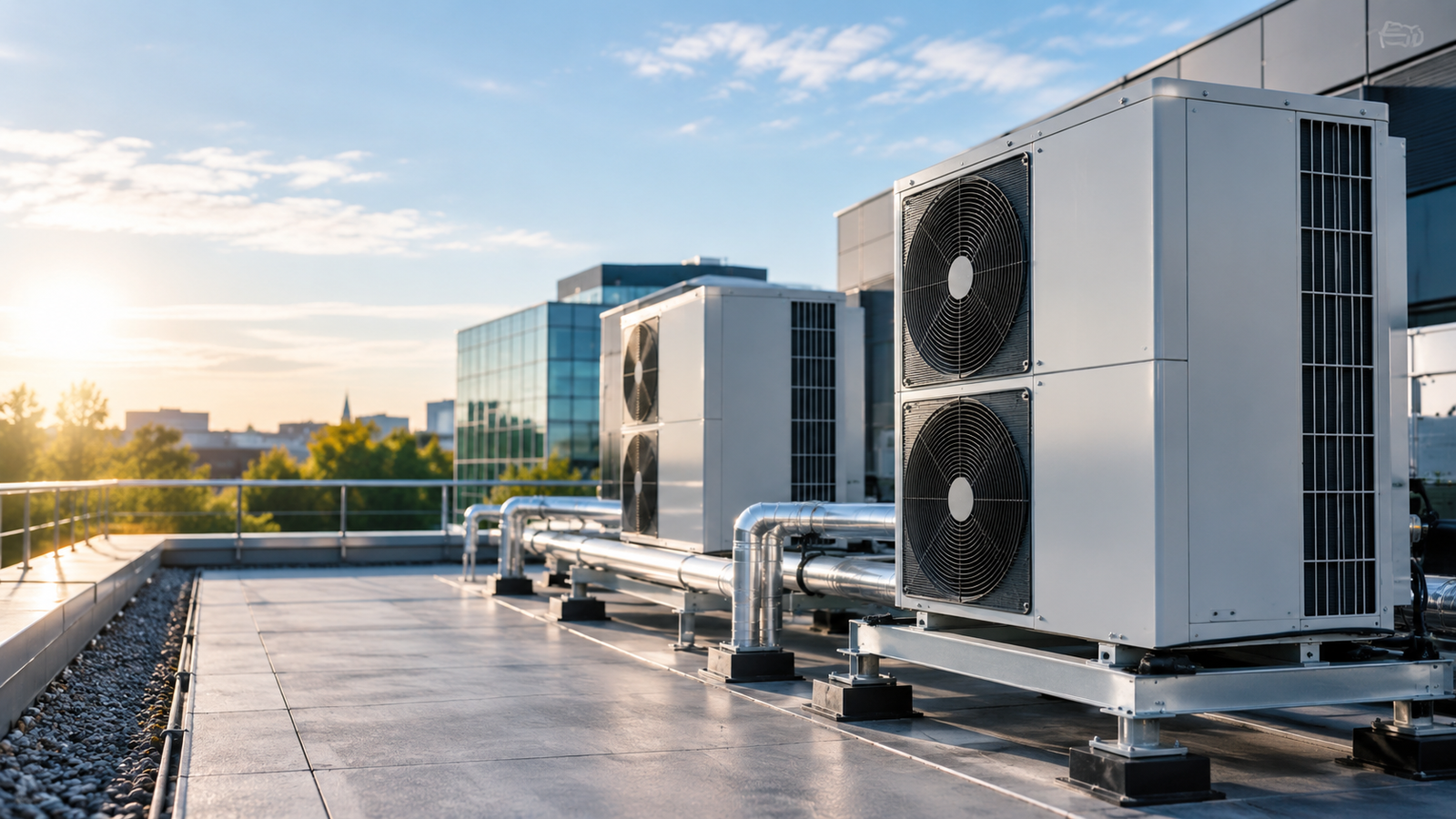
Heating, cooling and hot water for offices, schools, hotels, healthcare and other non-domestic properties.
Commercial Heat Pumps UK →Commercial Air Source
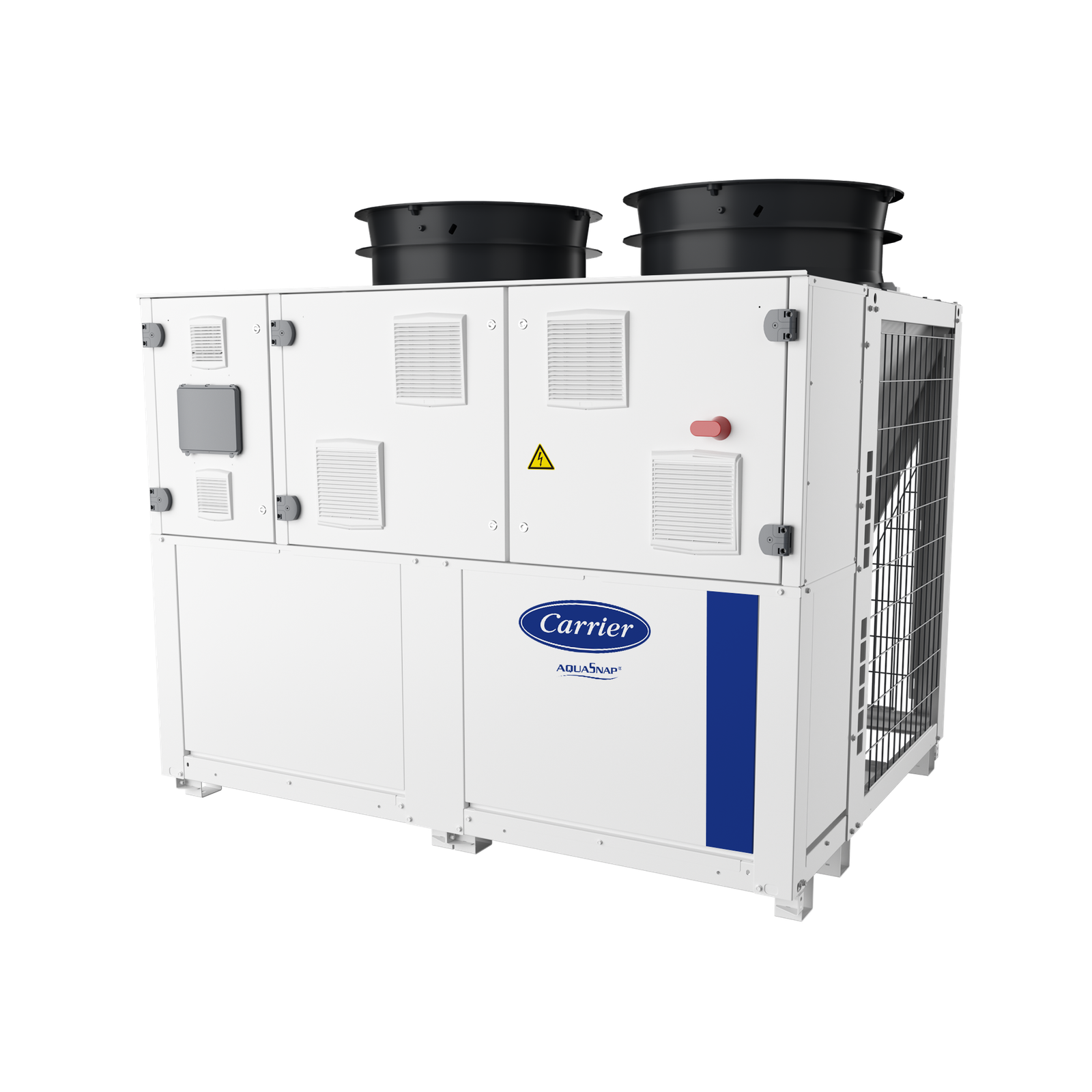
Larger air-to-water systems, cascade configurations, flow temperatures and commercial retrofit.
Commercial ASHP Guide →Commercial Design
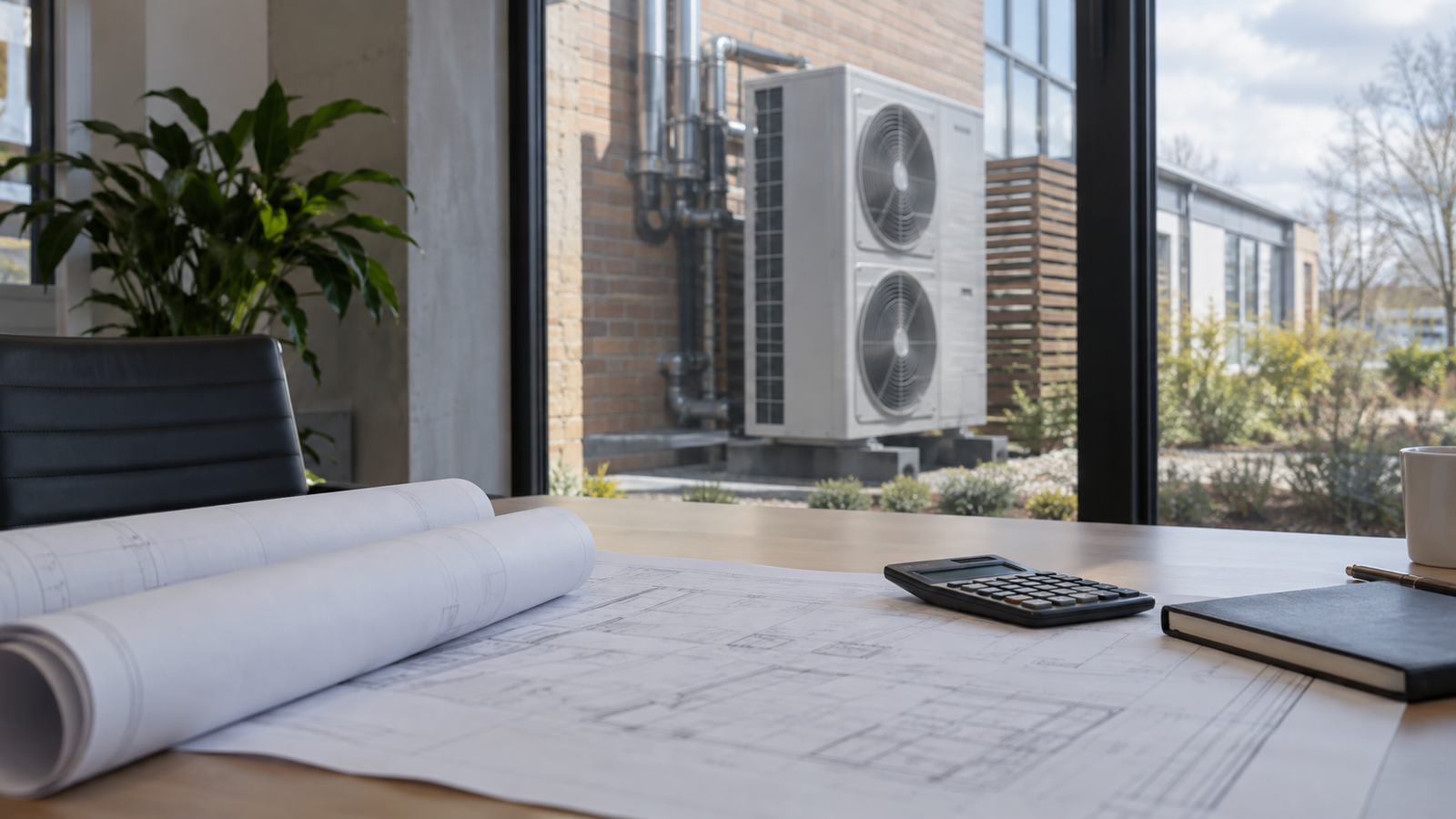
Heat load, hydraulics, electrical capacity, procurement, installation and commissioning.
Commercial Installation Guide →Industrial Process Heat
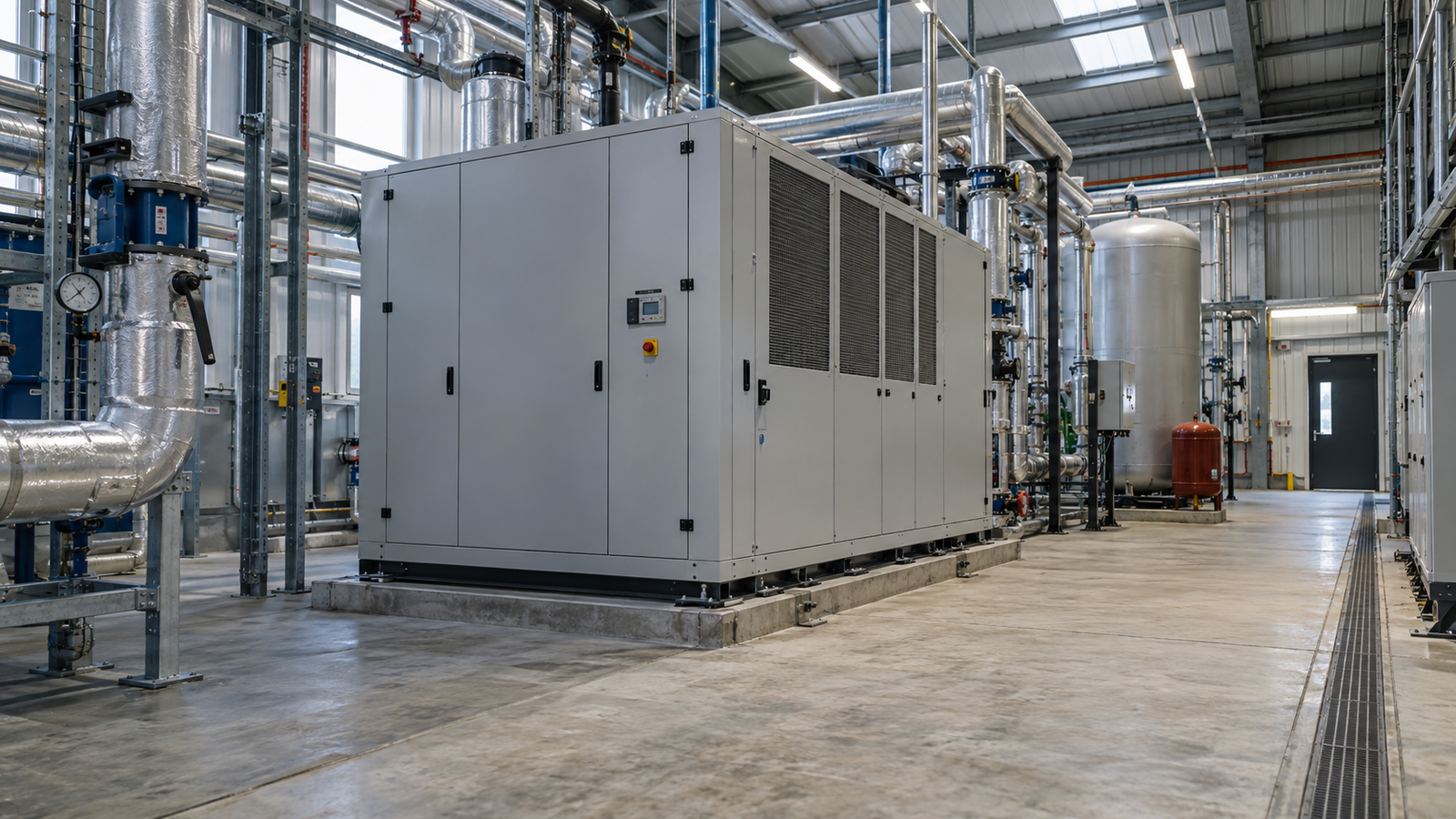
Waste-heat recovery, substantially higher temperatures, manufacturing processes and steam applications.
Industrial Heat Pumps UK →Frequently asked questions
What is a high-temperature heat pump?
A high-temperature heat pump is designed to provide hotter heating water than conventional low-temperature heat-pump systems. CIBSE’s explanation of BS EN 14825:2022 describes a high-temperature application at 65°C leaving-water temperature under specified cold outdoor test conditions.
Can a heat pump produce 70°C water?
Yes. High-temperature heat pumps are available that can operate at 70°C and above. Check the available heating capacity and efficiency at the outdoor and water temperatures your home actually requires.
Can a heat pump reach 80°C?
Some modern high-temperature heat pumps can reach approximately 80°C under specified conditions. This can be towards the upper end of the operating envelope and does not mean the system should normally run at 80°C.
Can a high-temperature heat pump use my existing radiators?
Potentially. Higher water temperatures increase radiator output, which may allow more existing radiators to remain. Each room should still be assessed against its heat loss and radiator output at the proposed water temperatures.
Do high-temperature heat pumps mean I do not need new radiators?
No. They may reduce the number of radiator upgrades required, but some emitters can still be undersized. In some cases changing selected radiators can reduce the required flow temperature and improve efficiency.
Are high-temperature heat pumps less efficient?
Higher flow temperatures generally increase the temperature lift required from the heat pump, which can reduce efficiency. Actual performance depends on the equipment, outdoor temperature, system design and required heating-water temperature.
Are high-temperature heat pumps good for old houses?
They can be useful in older homes with existing radiator systems, but property age alone does not determine suitability. Heat loss, radiator size, insulation and required flow temperature should all be assessed.
Is R290 used in high-temperature heat pumps?
Yes. R290 propane is used in a growing number of high-temperature air-to-water heat pumps. Not every R290 system has the same temperature capability, and refrigerant choice alone does not determine efficiency.
Should I buy the heat pump with the highest maximum temperature?
Not necessarily. Compare output, efficiency, modulation, noise and controls at the temperatures your home will actually use. A higher maximum temperature is useful only when it solves a genuine system-design requirement.
Related home heat pump guides
 Best Air Source Heat Pumps UK
 Do You Need New Radiators for a Heat Pump?
 R290 Heat Pumps UK
 Gas Boiler to Heat Pump UK
 Oil to Heat Pump UK
 LPG Boiler to Heat Pump UK
 Air Source Heat Pump Cost UK
 Air Source Heat Pump Running Costs UK
 Best Heat Pump Temperature Settings UK
 Do Heat Pumps Work in Winter UK?
Commercial & industrial heat pump guides
Researching a non-domestic system instead?


Sources and further reading
This guide uses independent, government and technical sources for heat-pump temperatures, radiator operation, efficiency and current grant support.
- CIBSE Journal: High-Temperature Heat Pump Integration
- CIBSE Journal: Transitioning From Boilers to Air Source Heat Pumps
- Energy Saving Trust: How to Run a Heat Pump Efficiently
- Energy Saving Trust Green Heat Toolkit: Heat Pumps vs Boilers
- Citizens Advice: Deciding if a Heat Pump Is Right for You
- GOV.UK: Heat Pumps Explained
- Ofgem: Boiler Upgrade Scheme Property Owner Guidance