
Air-to-Air Heat Pumps UK: Complete Homeowner Guide
Air-to-air heat pumps can heat your home in winter and provide genuine air conditioning in summer. Understand typical costs, the £2,500 Boiler Upgrade Scheme grant, hot-water options, running costs and which UK homes suit them best.
- Updated for 2026
- £2,500 BUS grant explained
- Heating, cooling and hot water covered

What Is an Air-to-Air Heat Pump?
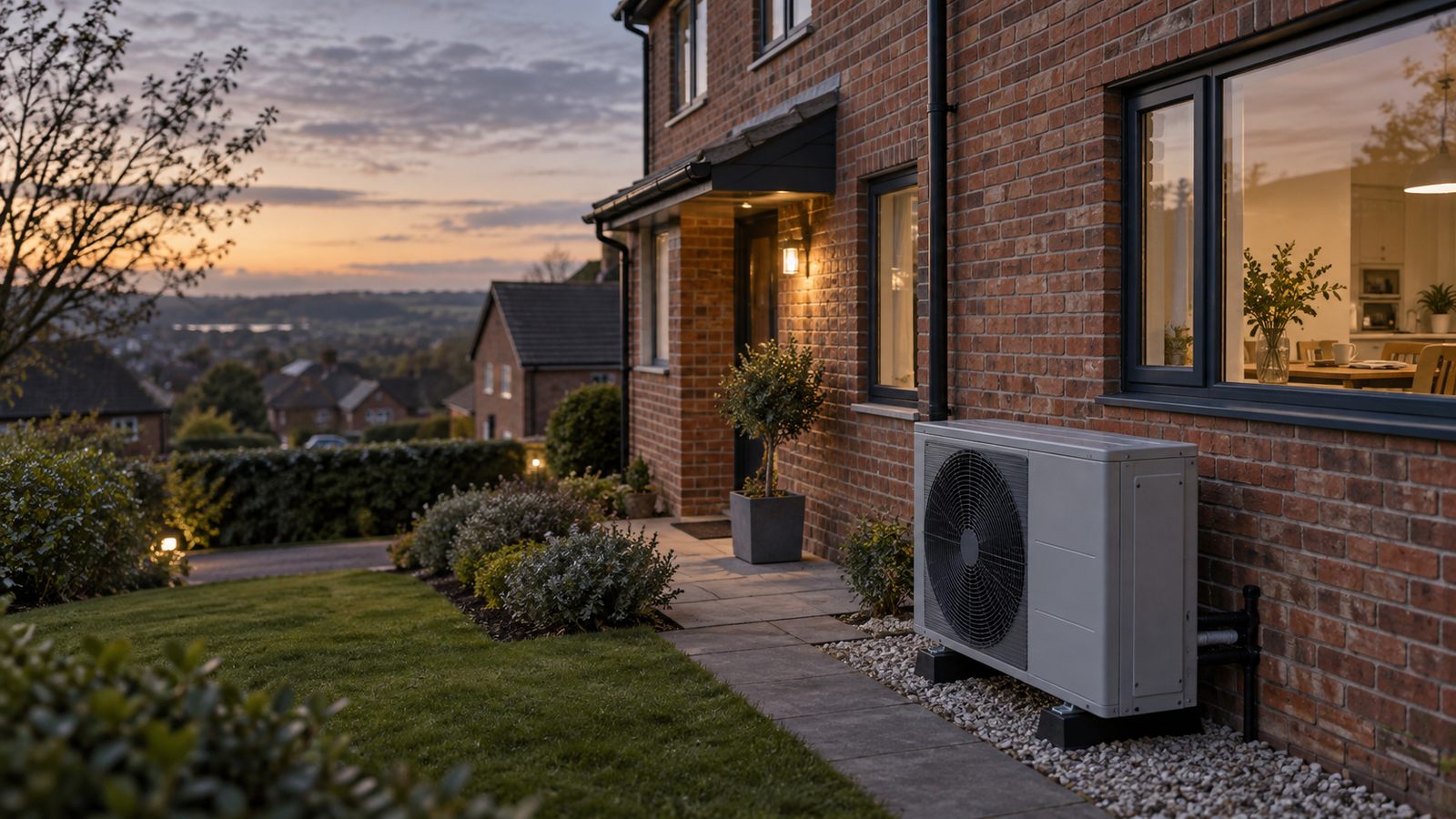
An air-to-air heat pump extracts heat from outside air and transfers it directly into your home through one or more indoor fan units.
Unlike an air-to-water heat pump, it does not normally heat water for radiators. Most domestic systems are reversible, meaning the same equipment can provide heating in winter and air conditioning in summer.
Air-to-air can be particularly interesting for flats, smaller homes, properties with direct-electric heating and households that also want summer cooling.
The biggest difference to a conventional UK central-heating system is that most air-to-air systems do not provide domestic hot water, so showers, baths and taps normally need a separate solution.
Air-to-Air vs Air-to-Water Heat Pumps
| Feature | Air-to-Air | Air-to-Water |
|---|---|---|
| Heat delivery | Warm air through indoor fan units | Water through radiators or underfloor heating |
| Summer cooling | Normally available with reversible systems | Not normally part of a standard UK installation |
| Radiators | Not required | Usually required unless using another water-based emitter |
| Domestic hot water | Usually separate | Normally provided through a cylinder |
| Current standard BUS grant | £2,500 | £7,500 |
Neither technology is universally better. The right choice depends on your property, current heating system, room layout, hot-water requirements, budget and whether cooling has real value to you.
See our full Heat Pump vs Air Conditioning UK comparison for a deeper look at the differences.
How Does an Air-to-Air Heat Pump Work?
An air-to-air heat pump uses a refrigeration cycle to transfer heat rather than producing all of its heat directly from electricity.
Outside
The outdoor unit absorbs heat energy from the outside air and transfers it into a refrigerant circuit.
Inside
An indoor fan unit transfers that heat into the room and circulates the warmed air.
Even when outdoor temperatures are low, the air still contains heat energy that can be extracted.
In summer, a reversible system operates in the opposite direction: heat is removed from inside the home and released outdoors, providing conventional air conditioning.
Is an Air-to-Air Heat Pump Just Air Conditioning?
In many cases, the equipment is essentially a reversible split air-conditioning system.
Heating mode
Heat is extracted from outdoor air and transferred into the rooms being heated.
Cooling mode
Heat is removed from the indoor air and released outside, lowering the room temperature.
The important distinction is how the system has been designed and specified.
A single split unit installed primarily to cool one bedroom is very different from a multi-room system designed to replace a home’s main heating system.
If your priority is primarily summer cooling, see our Home Air Conditioning UK guide.
Single-Split vs Multi-Split Systems
The number of rooms you want to heat and cool has a major effect on the installation design.
Single-split
One outdoor unit connects to one indoor unit.
This can suit:
- Living rooms
- Bedrooms
- Home offices
- Garden rooms
- Small open-plan flats
Multi-split
One outdoor unit connects to several indoor units serving different rooms or zones.
This can reduce the number of outdoor units but usually requires more refrigerant pipework around the property.
Larger homes may be better served by more than one outdoor system rather than trying to connect every room to a single large multi-split installation.
Bedroom count alone is not enough
A three-bedroom home does not automatically need three indoor units. Equally, one unit in a hallway or living room should not be assumed to heat every bedroom successfully.
The design needs to consider room-by-room heat loss, closed doors, layout and where conditioned air can realistically reach.
Can an Air-to-Air Heat Pump Heat a Whole House?
Yes, provided it is designed as a whole-home heating system.
This is different from installing one or two air-conditioning units for occasional cooling and supplementary heating.
A whole-home design should consider:
- Room-by-room heat loss
- Required heating output in each area
- Outdoor winter design conditions
- Indoor-unit positions
- Closed bedrooms and separated rooms
- Bathrooms, halls and landings
- Zoning and controls
- Number and position of outdoor units
- Domestic hot-water provision
This is why a whole-home air-to-air quote can be significantly different from the price of adding air conditioning to one room.
Do Air-to-Air Heat Pumps Work in UK Winters?
Yes. Air-to-air heat pumps can operate when outside temperatures fall below freezing.
However, available heating output and efficiency vary with outdoor conditions. The proposed equipment therefore needs to be checked against the property’s heating requirement at the relevant winter design conditions.
Do not rely on headline maximum kW
Ask the installer to show that the proposed system can meet the calculated heating requirement when outdoor temperatures are low, not just under mild test conditions.
What happens during defrost?
In cold and damp weather, ice can form on the outdoor heat exchanger. The system may periodically enter a defrost cycle to clear it.
This is normal heat-pump behaviour, although heating output can temporarily reduce while defrost is taking place.
How Do You Get Hot Water With an Air-to-Air Heat Pump?
Most conventional air-to-air heat pumps do not heat domestic hot water.
You therefore need to consider space heating and hot water as one complete household energy system rather than comparing the air-to-air installation price in isolation.
Immersion-heated cylinder
A conventional electric immersion element can heat stored water, although direct-electric water heating can be relatively expensive to run.
Heat-pump water heater
A dedicated heat-pump water heater can produce stored domestic hot water more efficiently than direct resistance heating, but adds another appliance and installation cost.
Electric shower
An electric shower heats its own water on demand but does not provide hot water to the rest of the property.
Combined system designs
Some newer equipment can combine air-to-air space conditioning with domestic hot-water capability. Check the exact system configuration rather than assuming every air-to-air product can do this.
Can you keep a gas boiler just for hot water?
You can install conventional air conditioning while retaining a boiler, but that is different from an air-to-air installation being funded through the Boiler Upgrade Scheme.
If BUS eligibility matters, the complete system needs to satisfy the scheme rules. Do not assume that retaining a fossil-fuel boiler as part of the heating arrangement will remain eligible.
How Much Does an Air-to-Air Heat Pump Cost?
Energy Saving Trust currently gives indicative costs of approximately:
| Example installation | Indicative cost |
|---|---|
| Heating one room | Around £1,900 |
| Three-bedroom semi-detached home | Around £3,700 |
These are useful national benchmarks rather than quotations for a specific home.
Your actual price can change according to:
- Number of indoor units
- Number and size of outdoor units
- Property layout
- Pipe-run length
- Electrical work
- Access
- Indoor-unit type
- Concealed ducting
- Condensate drainage
- Making good and redecoration
- Changes to your existing heating system
- The separate hot-water solution
Compare like with like
Do not compare the cost of one air-to-air unit heating a single room with the cost of an air-to-water system designed to heat an entire property and provide domestic hot water.
See our dedicated Air-to-Air Heat Pump Cost UK guide for a fuller breakdown.
Can You Get the £2,500 Air-to-Air Heat Pump Grant?
Yes. Eligible residential air-to-air heat pump installations in England and Wales can currently receive £2,500 through the Boiler Upgrade Scheme.
| Technology | Current standard BUS support |
|---|---|
| Air-to-air heat pump | £2,500 |
| Air-to-water heat pump | £7,500 |
| Ground source heat pump | £7,500 |
The £2,500 support should not be confused with a general discount for adding ordinary air conditioning while leaving your existing heating system unchanged.
The proposed installation must meet the Boiler Upgrade Scheme’s eligibility and technical requirements.
Does air-to-air get the £9,000 off-grid grant?
No. The temporary £9,000 support for qualifying off-gas-grid properties replacing oil or LPG applies to eligible air-to-water and ground source heat pumps.
The current BUS grant value for an eligible air-to-air heat pump remains £2,500.
For the wider scheme rules, see our Heat Pump Grants UK guide.
What Grant and Heating Option Could Apply to Your Home?
The right route depends on your current heating system, property and the type of heat pump you are considering.
Use our calculator to explore the information relevant to your home and compare the likely grant and heating options before requesting quotations.
Check Your Heat Pump Grant & Options →Compare Up to 3 Air-to-Air Heat Pump Installers Near You
Tell us a little about your property to see installer options available in your area.
Free to use with no obligation
How Does the Air-to-Air Grant Work?
The Boiler Upgrade Scheme is installer-led.
- You choose an appropriately certified installer.
- The installer assesses your property and proposed system.
- The installer applies for the BUS voucher on your behalf.
- The full grant value should appear as an upfront discount on the quotation.
- The installer redeems the voucher following the eligible installation.
You do not normally receive the £2,500 into your bank account and then pay it back to the installer.
How Much Does an Air-to-Air Heat Pump Cost to Run?
There is no single reliable annual figure for every home.
Running costs depend on:
- Annual space-heating demand
- The system’s actual seasonal efficiency
- Electricity tariff
- Outdoor temperatures
- Indoor temperature settings
- Which rooms you heat
- Summer cooling use
- How domestic hot water is produced
Basic heating calculation
Annual useful heat demand ÷ seasonal efficiency × electricity price = approximate space-heating electricity cost.
The result is only as reliable as the heat-demand and efficiency assumptions used.
Domestic hot-water energy then needs to be added separately unless your particular system also provides hot water.
See our Heat Pump Running Costs UK guide for the wider methodology.
Could Air-to-Air Save Money?
Potentially, but savings should not be assumed.
The comparison can be particularly interesting for homes currently using direct-electric resistance heating, because a heat pump can move more useful heat into the home for each unit of electricity consumed.
The comparison with a modern mains-gas boiler is different because electricity costs considerably more per unit than gas and the air-to-air system’s actual seasonal performance becomes critical.
Hot-water provision can also materially change the result.
Ask for the assumptions behind any savings estimate
- Annual calculated space-heating demand
- Assumed seasonal efficiency
- Estimated annual electricity consumption
- Electricity unit-rate assumption
- Separate domestic hot-water consumption
- Any assumed summer cooling use
Advantages and Disadvantages of Air-to-Air Heat Pumps
Advantages
- Provides winter heating
- Can provide summer air conditioning
- No radiators required
- Strong room-by-room zoning potential
- Can suit homes without wet central heating
- Often lower upfront cost than a full air-to-water installation
- £2,500 BUS support for eligible installations
- Relatively responsive room heating
Disadvantages
- Most systems do not provide domestic hot water
- Indoor fan units remain visible
- Indoor fans generate some noise
- Air movement may not suit everyone
- Several units may be needed for whole-home coverage
- Refrigerant pipework needs to reach indoor units
- Bathrooms and enclosed rooms require careful planning
- Grant support is lower than for eligible air-to-water systems
Which UK Homes Are Best Suited to Air-to-Air?
Flats
Air-to-air can avoid installing a completely new wet central-heating system where there is a suitable outdoor-unit location and the necessary permissions.
Smaller homes
Fewer rooms can make whole-home coverage easier without requiring a large number of indoor units.
Direct-electric homes
Air-to-air can replace direct-electric room heating without adding radiators and central-heating pipework.
Homes that overheat
One reversible system can address both winter heating and genuine summer cooling.
Open-plan homes
Large connected spaces can sometimes be easier to serve than highly compartmentalised layouts.
Properties facing major radiator work
Air-to-air avoids the need to resize a wet radiator system for lower central-heating flow temperatures.
When Might Air-to-Air Be Less Suitable?
It deserves more careful consideration where:
- The home contains many small enclosed rooms
- There is no practical route for refrigerant pipework
- You strongly dislike visible indoor fan units
- You prefer radiant or underfloor heating
- Indoor fan noise is a major concern
- Domestic hot-water demand is high and there is no clear solution
- Outdoor-unit locations are severely restricted
- Your existing wet heating system is already well suited to air-to-water
If you’re unsure, compare the two approaches in our Air-to-Air vs Air-to-Water guide.
Compare Up to 3 Air-to-Air Heat Pump Installers Near You
Tell us a little about your property to see installer options available in your area.
Free to use with no obligation
What Does Installation Involve?
A fixed split-system installation involves considerably more than mounting an indoor unit on the wall.
Work can include:
- Positioning the outdoor unit
- Installing each indoor unit
- Running insulated refrigerant pipework
- Electrical supplies and controls
- Condensate drainage
- Wall penetrations
- Pipe trunking
- Refrigerant-system commissioning
- Control configuration
- Testing heating and cooling modes
A whole-home multi-room installation can therefore be considerably more involved than fitting one air-conditioning unit to a bedroom.
Where Should Indoor and Outdoor Units Go?
Outdoor unit
The position needs to provide suitable airflow while considering:
- Manufacturer clearances
- Neighbouring properties
- Windows
- Sound
- Service access
- Defrost water
- Pipe-run length
- Planning requirements
Indoor units
The position needs to distribute air effectively while considering:
- Furniture
- Door positions
- Beds and seating
- Direct draughts
- Ceiling height
- Pipe routes
- Condensate drainage
Do Air-to-Air Heat Pumps Need Planning Permission?
Domestic air source heat pumps can benefit from permitted development rights in England where the relevant conditions are met.
Current Planning Portal guidance states that qualifying installations must comply with the applicable MCS 020a planning standard to use those permitted development rights.
Whether your exact installation qualifies depends on the property and configuration, particularly where you are considering:
- Multiple outdoor units
- A flat or leasehold property
- A listed building
- A conservation area
- A prominent external position
Check the rules for your property
Planning rules vary across the UK and permitted development rights are conditional. Your installer should confirm the position for the exact property and proposed installation.
Do You Need an MCS Installer?
If you intend to claim the Boiler Upgrade Scheme grant, your installation needs to satisfy the scheme’s certification and technical requirements and go through the appropriate installer-led process.
Ofgem confirms that air-to-air heat pumps are now an eligible BUS technology for residential properties.
For an ordinary non-BUS air-conditioning installation, other certification and refrigerant-handling requirements may still apply to the work being carried out.
What Should You Ask an Air-to-Air Installer?
If the system is intended to become your primary heating source, the discussion should go well beyond how many air-conditioning units will fit in the property.
Heating design
- What is the calculated property heat loss?
- What output is required in each room?
- Can the equipment meet that load in cold weather?
- Which rooms need their own indoor unit?
- How will bathrooms and hallways be heated?
Installation and cost
- Why have you proposed single-split or multi-split equipment?
- Where will refrigerant pipework run?
- How will condensate be drained?
- What are the indoor sound levels?
- How will hot water be provided?
- Is the installation eligible for BUS?
It is sensible to compare more than one design and quotation rather than assessing installers purely on headline price.
Are Air-to-Air Heat Pumps Worth Considering?
For the right home, air-to-air can be a compelling alternative to a traditional wet heating system.
One installation can provide efficient space heating through winter and genuine air conditioning during hot weather, without requiring radiators or a new wet central-heating circuit.
The introduction of £2,500 Boiler Upgrade Scheme support has made whole-home air-to-air installations more relevant to UK homeowners.
Particularly worth investigating if…
- You currently use direct-electric heating
- You have a smaller property or flat
- You do not have an existing wet central-heating system
- An air-to-water conversion would require significant radiator work
- You genuinely want summer cooling as well as winter heating
If you already have a good wet radiator system and want one main heating system to provide both space heating and stored domestic hot water, air-to-water may still integrate more naturally.
Air-to-air heat pump FAQs
Is an air-to-air heat pump the same as air conditioning?
A reversible split air-conditioning system can operate as an air-to-air heat pump when it is heating. It moves heat into the property during winter and can reverse operation to provide cooling in summer.
Can an air-to-air heat pump heat a whole house?
Yes, provided the installation is designed around the home’s complete space-heating requirement. Whole-home systems can require several indoor units and potentially more than one outdoor unit.
Do air-to-air heat pumps provide hot water?
Most conventional systems do not. A separate domestic hot-water solution is normally required, although some newer system configurations can incorporate hot-water production.
How much does an air-to-air heat pump cost?
Energy Saving Trust currently gives indicative costs of around £1,900 for one room and around £3,700 for a three-bedroom semi-detached property. Actual quotations depend on system size, layout and installation complexity.
Can I get a grant for an air-to-air heat pump?
Eligible residential air-to-air installations in England and Wales can currently receive £2,500 through the Boiler Upgrade Scheme. The installation must meet the scheme’s eligibility requirements.
Does the £9,000 off-grid grant apply to air-to-air?
No. Air-to-air heat pumps currently receive £2,500 for eligible installations. The temporary £9,000 rate applies to qualifying off-gas-grid air-to-water and ground source installations replacing oil or LPG.
Do air-to-air heat pumps work below freezing?
They can operate in sub-zero conditions, but heating capacity and efficiency vary with outdoor temperature. The proposed system should be checked against the home’s heat requirement at the relevant winter design conditions.
Are air-to-air heat pumps noisy?
Both indoor and outdoor equipment produce some sound. Indoor noise varies with fan speed and product design, so bedrooms deserve particular attention when comparing equipment.
Related guides
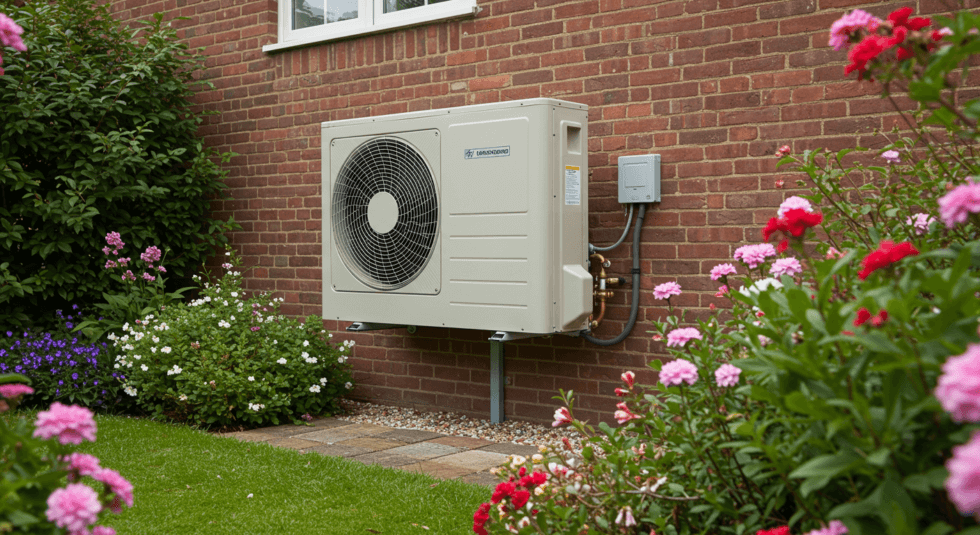 Air-to-Air Heat Pump Cost UKExplore installation costs, multi-room systems, grants and running-cost considerations.
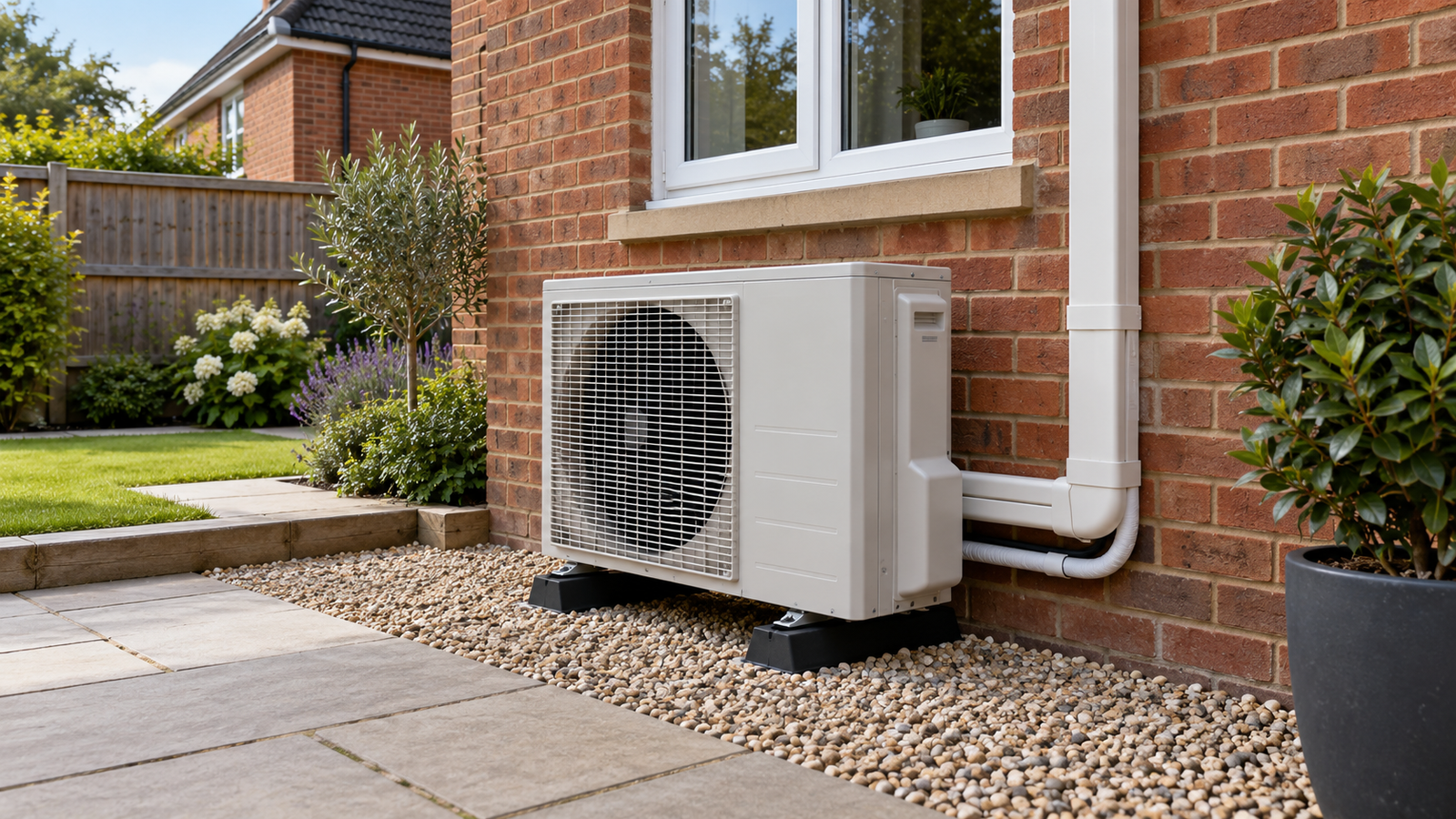 Home Air Conditioning UKCompare fixed, portable, split, multi-split and ducted cooling options.
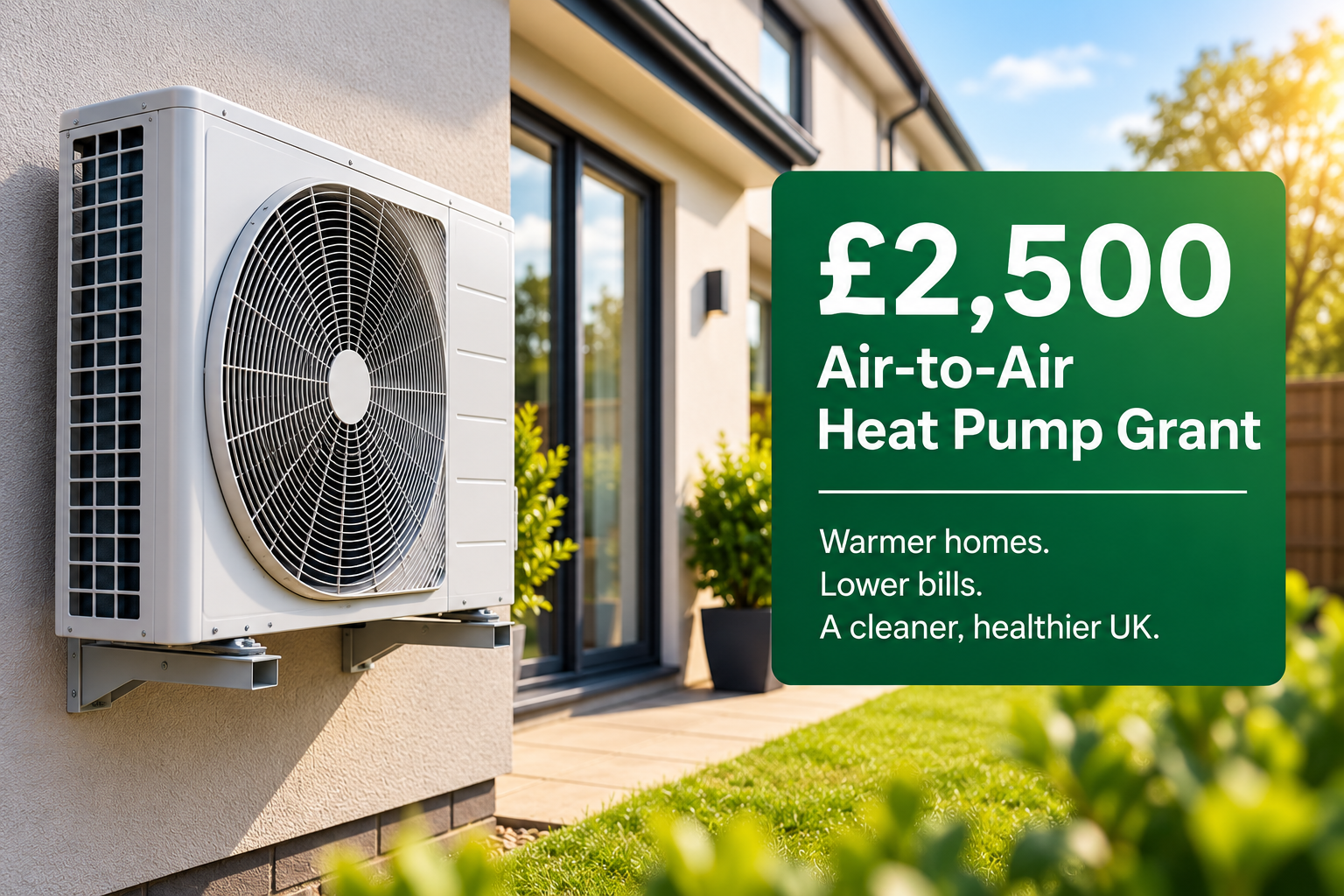 Heat Pump vs Air ConditioningCompare air-to-air systems with conventional UK air-to-water heat pumps.
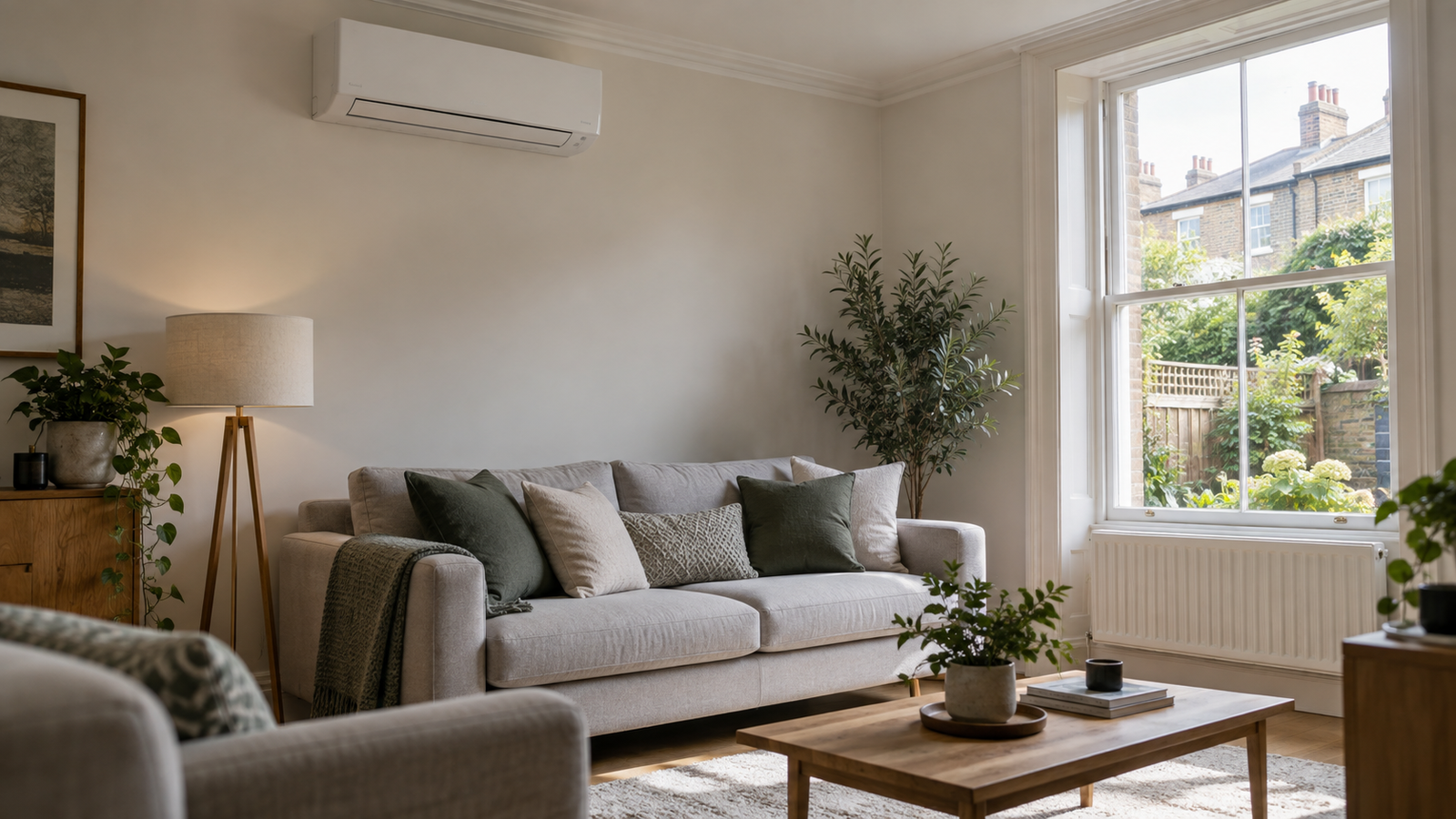 Air Conditioning Cost UKSee typical costs where your main objective is fixed home cooling.
 Heat Pump Grants UKUnderstand current Boiler Upgrade Scheme support across eligible technologies.
 Heat Pump Running CostsUnderstand efficiency, electricity prices and the assumptions behind running-cost estimates.
Sources and verification
This guide uses current government, Ofgem, Energy Saving Trust and Planning Portal information. Grant, certification and planning requirements can change, so check the current position before committing to an installation.