
SINGLE-SPLIT VS MULTI-SPLIT
Single-Split vs Multi-Split Air Conditioning: Which Is Better?
One room may only need a simple single-split system. Several rooms can often be served by a multi-split system using one outdoor unit. Compare the trade-offs before deciding which layout suits your home.
QUICK ANSWER
Single-Split Is Simpler for One Room; Multi-Split Can Make More Sense for Several Rooms
A single-split system normally connects one indoor unit to one outdoor unit. It is often the most straightforward layout when you only need to cool or heat one room.
A multi-split system connects several compatible indoor units to one outdoor unit, allowing multiple rooms to be conditioned without installing a separate condenser outside for every room.
Neither arrangement is automatically better. The right choice depends on the number of rooms, available outdoor space, pipe routes, system design, how independently you want rooms to operate and the equipment available from the manufacturer.
THE BASIC DIFFERENCE
Single-Split and Multi-Split Compared
Single-Split Air Conditioning
One indoor unit + one outdoor unit
Best suited to a single room or where each room is intentionally being treated as a separate system.
- Simple system arrangement
- Each room can have a separate outdoor unit
- Useful when only one room needs conditioning
- Each system can be operated independently
- More outdoor units are needed if several rooms use separate splits
Multi-Split Air Conditioning
One outdoor unit + multiple indoor units
Designed for several rooms where reducing the number of external condensers is a priority.
- Multiple rooms from one outdoor unit
- Indoor units can usually be controlled individually
- Less exterior space used
- More complex system design and pipework
- Exact indoor-unit combinations depend on the chosen outdoor unit
AT A GLANCE
Single-Split vs Multi-Split: Key Differences
| Factor | Single-split | Multi-split |
|---|---|---|
| Indoor units per outdoor unit | Normally one | Multiple compatible indoor units |
| Best suited to | One room or individually separated systems | Several rooms |
| Outdoor units | One for each separate system | One outdoor unit can serve several rooms |
| Room control | Independent system control | Indoor units can generally be controlled individually within system operating limits |
| Pipework | Usually simpler for one room | More branches and routes to coordinate |
| Outdoor appearance | Several rooms can mean several condensers | Fewer outdoor units can produce a cleaner exterior |
| Failure impact | A fault is usually isolated to that individual system | An outdoor-unit fault can affect several connected rooms |
| Future expansion | A new room can receive another independent system | Expansion depends on spare capacity and compatible connections |
ONE ROOM AT A TIME
When Does Single-Split Air Conditioning Make Sense?
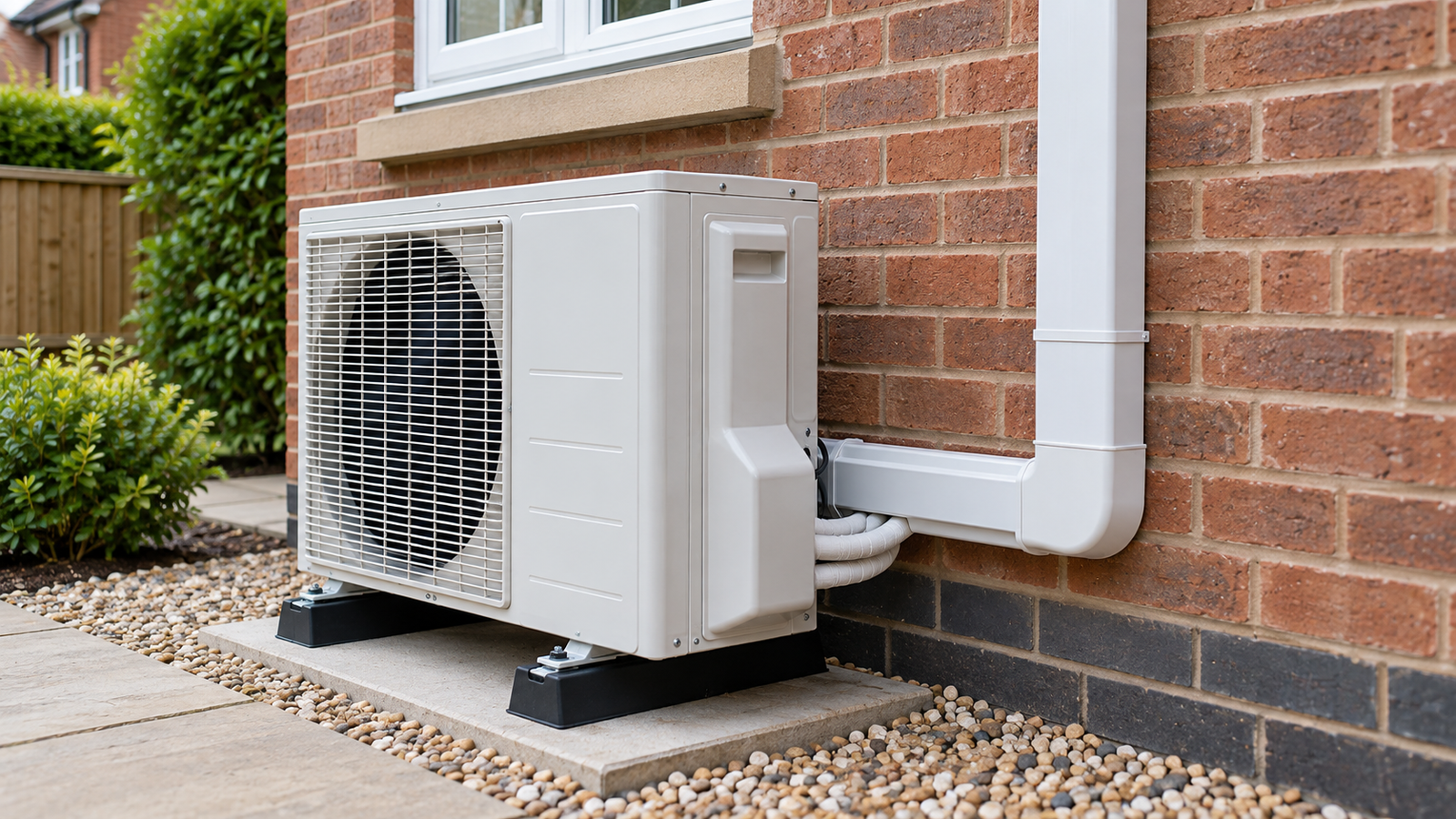
A single-split system is the conventional layout many homeowners picture: one indoor air conditioner connected to one outdoor condenser.
Daikin currently describes its pair system in exactly this way — one outdoor unit connected to one indoor unit for heating and cooling a single room. :chatgpt-content-reference{index=”0″}
This arrangement is particularly attractive where one room causes most of the comfort problem, such as a hot bedroom, loft conversion, living room or home office.
There is one indoor unit, one outdoor unit and one main refrigerant circuit to design around.
A separate system is not dependent on another room’s outdoor unit.
You can start by conditioning the room that needs it most rather than installing a multi-room system immediately.
MULTIPLE ROOMS
When Does Multi-Split Air Conditioning Make Sense?
A multi-split system becomes more relevant when several rooms need heating or cooling but you do not want a separate outdoor condenser for each indoor unit.
Fewer Outdoor Units
The main attraction is exterior space. One multi outdoor unit can support several compatible indoor units rather than installing a condenser for each room.
Different Indoor Units
Compatible multi systems can often mix different indoor-unit sizes and styles to suit different rooms.
Individual Room Control
Connected indoor units can typically be controlled individually, although they remain part of the same outdoor system.
How Many Indoor Units Can One Outdoor Unit Run?
There is no universal number because it depends on the manufacturer and outdoor-unit model.
For example, Daikin’s current UK residential Multi range supports up to five indoor units connected to one outdoor unit. :chatgpt-content-reference{index=”1″}
The exact combination still has to comply with the manufacturer’s permitted indoor-unit capacities and connection rules, so this should be designed rather than assumed.
OUTDOOR SPACE
Multi-Split’s Biggest Advantage: Fewer Condensers Outside
This can matter much more than it first appears, particularly on terraces, flats, smaller gardens or homes with limited suitable external wall space.
Cleaner Exterior
Several indoor units do not necessarily mean several condensers visible on the outside of the property.
Less Space Required
One appropriately selected outdoor unit can be easier to accommodate where usable exterior space is limited.
Fewer External Noise Sources
Reducing the number of outdoor units can reduce the number of separate external sound sources, although actual sound levels still depend on the selected equipment and installation.
Daikin specifically promotes reduced exterior space use and fewer outdoor units as advantages of its current Multi range. :chatgpt-content-reference{index=”2″}
INSTALLATION DESIGN
Multi-Split Uses Fewer Outdoor Units — But the Pipework Can Be More Complex
A multi-split installation still needs refrigerant connections between the outdoor system and the indoor units throughout the house.
That means the installer needs to plan pipe routes carefully, particularly where bedrooms or living spaces are spread across different floors or opposite sides of the property.
So although the outside of the house may look cleaner, the internal installation is not automatically simpler.
Before accepting a quotation, ask where each pipe route and condensate drain will run and where external trunking will be visible.
ASK BEFORE YOU DECIDE
Multi-Split Installation Questions
- Where will the outdoor unit be positioned?
- How will each indoor unit connect back to it?
- How much external or internal trunking will be visible?
- How will each indoor unit drain condensate?
- Is there capacity for another indoor unit later?
- Can all the proposed indoor units operate as required together?
See our Air Conditioning Installation UK guide for the full installation process.
COST
Is Multi-Split Cheaper Than Installing Several Single-Split Systems?
There is no universal answer because equipment, pipe lengths, electrical work, room layout and installation complexity all affect the total.
Outdoor Equipment
Multi-split reduces the number of outdoor units required, which can reduce duplicated external equipment and mounting work.
Pipework Complexity
Connecting several rooms to one condenser can require longer and more involved refrigerant routes.
Compare Complete Quotes
The useful comparison is the installed system price for the same rooms and comfort requirement, not simply the price of the outdoor unit.
Daikin currently describes reduced installation and maintenance costs as potential benefits of using one multi outdoor unit rather than multiple outdoor units, but the actual result for a home still depends on the installation design. :chatgpt-content-reference{index=”3″}
ROOM CONTROL
Can You Set Different Temperatures in Different Rooms?
With a suitable residential multi-split system, individual indoor units can usually be controlled independently.
Different Temperatures
You may want a cooler bedroom and a warmer living room rather than treating the whole home as one zone.
Turn Rooms Off
Individual room control can avoid deliberately conditioning rooms that are not being used.
One System Mode
Check the specific system’s operating rules. Many multi systems require connected indoor units that are operating simultaneously to remain within the same overall heating or cooling mode.
Daikin confirms individual room control for its current Multi range, while its product documentation notes that connected indoor units operate within the same heating or cooling mode. :chatgpt-content-reference{index=”4″}
ONE SYSTEM OR SEVERAL?
Think About What Happens if the Outdoor Unit Stops
This is an important practical difference that is easy to overlook.
With separate single-split systems, a fault affecting one outdoor unit would not normally stop the other independent systems from operating.
With multi-split, several indoor units depend on the same outdoor equipment. A fault affecting that shared outdoor unit can therefore affect heating or cooling in multiple rooms until it is repaired.
That does not make multi-split unreliable. It simply means the system architecture concentrates several rooms onto common equipment.
Single-Split May Suit You Better If:
- Only one or two rooms need AC.
- You have plenty of suitable outdoor-unit space.
- You value maximum independence between rooms.
- You want to add rooms gradually as separate projects.
Multi-Split May Suit You Better If:
- Several rooms need AC.
- Outdoor space is limited.
- You want fewer condensers visible outside.
- You want a coordinated multi-room system.
EFFICIENCY & RUNNING COSTS
Which Is Cheaper to Run?
System type alone does not tell you which installation will have the lowest electricity bill.
Running cost depends on the efficiency of the exact equipment, room cooling loads, system sizing, how many indoor units are operating, target temperatures, outdoor conditions, controls, maintenance and your electricity tariff.
A multi-split system serving three rooms cannot meaningfully be compared with a single-split cooling one room unless both are assessed against the same comfort requirement.
Compare the manufacturer’s seasonal efficiency data for the actual proposed combinations and consider how you expect to operate the rooms.
WHICH SHOULD YOU CHOOSE?
Single-Split or Multi-Split: A Practical Decision Guide
Cooling One Room?
A single-split system is normally the logical place to start unless there is already a firm plan to add several rooms soon.
Cooling Two or Three Rooms?
Compare both layouts. Outdoor space, pipe routes and the installed quotation may determine which arrangement works better.
Cooling Much of the House?
A multi-split or another multi-room solution deserves serious consideration, but whole-house design needs to account for each room rather than treating the home as one large zone.
See our Best Home Air Conditioning Systems UK guide if you are still deciding which overall system type suits the property.
Compare Up to 3 Air Conditioning Installers Near You
Tell us a little about your property to see installer options available in your area.
Free to use with no obligation
THE BOTTOM LINE
There Is No Universal Winner
Single-split is usually the simpler solution when one room needs air conditioning.
Multi-split becomes more attractive when several rooms need conditioning and reducing the number of outdoor units is important.
For two or more rooms, ask installers to explain both the proposed system architecture and why it suits your home’s room layout, outdoor space and expected usage.
Compare the completed installation rather than assuming that one system type is automatically cheaper or more efficient.
CONTINUE YOUR RESEARCH
Multi-Room Air Conditioning Guides
Best Home Air Conditioning Systems
Compare the main fixed AC system types for UK homes.
Air Conditioner Size Guide
Understand how each room’s cooling requirement should be assessed.
Air Conditioning Installation UK
See how pipework, drainage and equipment positions are planned.
Air Conditioning Running Costs
Understand what affects actual electricity consumption.
Air Conditioning Cost UK
See what affects the installed cost of home AC.
Compare Air Conditioning Quotes
Compare different system proposals on a like-for-like basis.
Air Conditioning Installers Near Me
Compare installer options serving your area.
Home Air Conditioning UK
Return to our main UK home cooling guide.
COMMON QUESTIONS
Frequently Asked Questions
What is the difference between single-split and multi-split air conditioning?
Single-split normally connects one indoor unit to one outdoor unit. Multi-split connects several compatible indoor units to one outdoor unit.
How many rooms can one multi-split outdoor unit serve?
It depends on the manufacturer and model. Daikin’s current UK residential Multi range, for example, supports up to five compatible indoor units from one outdoor unit.
Can multi-split air conditioning control each room separately?
Suitable multi-split systems allow individual indoor units to be controlled separately. Check the specific model’s operating limitations, including whether connected units must remain in the same overall heating or cooling mode.
Is multi-split always better for several rooms?
No. Multi-split can reduce the number of outdoor units, but separate single-split systems may offer simpler individual installations and greater independence between rooms. Compare both layouts for your property.
INDEPENDENT GUIDANCE
About the Author

David Tooth
Independent UK heat pump researcher
Heat Pump Guide UK provides independent guidance to help homeowners understand air conditioning, heat pumps, costs, system design and installation decisions.
There is no universal best system layout. Suitability depends on the number of rooms, their cooling and heating loads, outdoor-unit space, pipe routes, equipment compatibility and installation design.
Sources and Further Information
- Daikin UK — Residential air conditioning systems
- Daikin UK — Multi-split air conditioning
- Daikin UK — Heating and cooling multiple rooms
Manufacturer system information checked September 2026. Maximum indoor-unit numbers, permitted capacity combinations and controls vary between models, so check the exact equipment proposed by your installer.