
Heat Pump Not Heating Properly?
Last updated: April 2026
If your heat pump is running but your home still feels cold, the problem is not always the unit itself. Controls, radiator sizing, flow temperature, insulation and commissioning can all affect performance.

Short Answer
A heat pump that is not heating properly does not always mean the unit is faulty. In many UK homes, the real issue is poor setup, incorrect controls, unsuitable radiators, high heat loss, or a system that has not been commissioned properly.
Before assuming the heat pump is broken, check the full system: thermostat settings, flow temperature, weather compensation, radiator output, room sensors, insulation and installer setup.
If you are still comparing systems overall, start with our Best Air Source Heat Pumps UK guide. If the issue is winter comfort, read Do Heat Pumps Work in Winter UK?.
Common Signs Your Heat Pump Is Not Performing Properly
- Rooms never reach the set temperature.
- The system runs for long periods but the house still feels cool.
- Some rooms are warm while others stay cold.
- Radiators feel lukewarm and rooms do not heat evenly.
- Electricity use is high but comfort is poor.
- The heat pump cycles on and off too often.
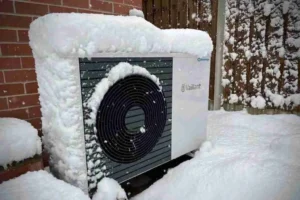
- The outdoor unit freezes up regularly or struggles to recover after defrost cycles.
The key point
Heat pumps are system-dependent. The outdoor unit, radiators, pipework, controls, insulation and commissioning all need to work together.
1. Check the Thermostat and Controls First
Poor controls are one of the most common reasons a heat pump feels like it is underperforming. If the thermostat is in the wrong place, the schedule is too aggressive, or the system is being used like a gas boiler, comfort can suffer.
Heat pumps usually work best with steadier operation. Large temperature swings, frequent on/off heating and short bursts can make the system work harder and recover more slowly.
- Check the heating schedule is not too restrictive.
- Avoid large overnight temperature setbacks unless recommended by your installer.
- Make sure the thermostat is measuring a useful room, not a cold hallway or sunny spot.
- Check whether weather compensation is enabled and configured properly.
2. Your Radiators May Be Too Small
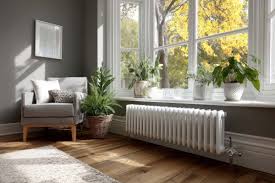
Heat pumps normally work best at lower flow temperatures than boilers. That means existing radiators may not give off enough heat if they were sized for a high-temperature gas boiler system.
If your radiators are too small, the heat pump may need to run at a higher flow temperature to keep the home warm. That can reduce efficiency and increase running costs.
Common signs include:
- Radiators feel warm but rooms stay cold.
- Large rooms struggle more than small rooms.
- Single-panel radiators are fitted in high-demand rooms.
- The system only feels comfortable when flow temperature is increased.
3. The Flow Temperature May Be Wrong
Flow temperature is the temperature of the water sent from the heat pump to your radiators or underfloor heating. If it is too low for your radiators, rooms may not get warm enough. If it is too high, the heat pump may run less efficiently.
The goal is not simply to set the lowest possible temperature. The goal is to use the lowest flow temperature that still keeps the home comfortable.
4. Weather Compensation May Be Poorly Set
Weather compensation adjusts the heating flow temperature based on outdoor temperature. When it is colder outside, the system can increase flow temperature. When it is milder, it can reduce it.
If the heating curve is set too low, the home may feel cold in winter. If it is set too high, running costs may rise. This is why commissioning and fine-tuning matter.
Weather compensation is one of the most important settings to get right, especially for UK winter performance.
5. The Home May Be Losing Heat Too Quickly
If insulation is weak, draughts are significant, or rooms lose heat quickly, even a good heat pump can struggle to maintain comfort efficiently.
This does not automatically mean a heat pump is the wrong choice. It may mean the home needs better insulation, draught-proofing, radiator upgrades or a different control strategy.
- Check loft insulation.
- Look for draughts around doors, windows and floors.
- Check whether older rooms lose heat faster than newer extensions.
- Compare room temperatures throughout the day.
6. The System May Not Be Balanced Properly
System balancing controls how water flows around radiators or underfloor heating loops. If the system is not balanced properly, some rooms may receive too much heat while others receive too little.
This can make it look like the heat pump is underpowered, when the real problem is distribution. A properly balanced system helps heat reach the rooms that need it.
7. Defrost Cycles May Be Affecting Comfort
In cold, damp weather, frost can form on the outdoor unit. Heat pumps are designed to deal with this through defrost cycles. During defrost, the unit may temporarily change sound, produce steam, or drip water.
Occasional defrost cycles are normal. But if the unit is constantly icing up, struggling to recover or leaving the home cold for long periods, the system should be checked.
Possible causes include poor airflow around the outdoor unit, bad positioning, incorrect settings or a fault.
8. Room-by-Room Control Can Help Uneven Heating
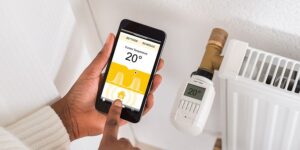
Sometimes the problem is not whole-house heating performance. It is uneven room temperatures. Bedrooms, living rooms, hallways and home offices often behave differently.
Smart radiator valves, room sensors and zoning controls can help improve comfort by giving you better control over individual rooms.
However, smart controls cannot fix undersized radiators or poor system design on their own.
Quick Troubleshooting Table
| Problem | Likely Cause | What to Check |
|---|---|---|
| Whole house feels cold | Flow temperature, heat loss or undersized system | Weather compensation, heat loss calculation, installer setup |
| Only some rooms are cold | Radiator sizing or balancing | Emitter output, room heat loss, system balancing |
| High bills but poor comfort | High flow temperature or poor controls | Settings, schedules, flow temperature, tariff |
| Radiators only lukewarm | May be normal, or flow temperature too low | Room comfort first, radiator size second |
| System runs constantly | Could be normal in cold weather, or poor setup | Indoor temperature, heat demand, efficiency and settings |
What to Check Before Calling an Installer
- Is the thermostat set to a realistic steady temperature?
- Is the schedule too aggressive or too short?
- Are cold rooms fitted with small or older radiators?
- Is weather compensation active?
- Are room sensors in sensible positions?
- Are doors, windows and loft insulation causing heat loss?
- Is the outdoor unit clear of leaves, snow or blocked airflow?
- Are error codes showing on the controller?
If there are error codes, leaks, unusual noises, electrical issues or repeated icing, contact a qualified installer rather than trying to fix the unit yourself.
When You Should Contact Your Installer
Some checks are safe for homeowners, such as looking at thermostat settings and obvious airflow blockages. But technical changes should be handled by a qualified installer.
Contact your installer if:
- The home cannot reach a normal comfort temperature.
- The system repeatedly shows fault codes.
- The outdoor unit freezes excessively.
- Hot water or heating performance has suddenly changed.
- The system is noisy, leaking or behaving unusually.
- Running costs are very high despite normal use.
Frequently Asked Questions
Why is my heat pump running but not heating the house?
The most common causes are incorrect controls, low flow temperature, undersized radiators, poor system balancing, high heat loss or poor commissioning.
Should heat pump radiators feel hot?
Not necessarily. Heat pump radiators often feel cooler than boiler radiators because the system usually works at lower flow temperatures.
Why are some rooms cold with a heat pump?
Cold rooms may have undersized radiators, higher heat loss, poor balancing or weak zoning. The issue is often room-specific rather than the whole heat pump.
Can a smart thermostat fix poor heating?
A smart thermostat can improve schedules and control, but it cannot fix an undersized heat pump, poor radiator sizing or a badly commissioned system.
Is it normal for a heat pump to run constantly in winter?
It can be normal for a heat pump to run for long periods in cold weather. The key question is whether it maintains comfort efficiently.
Sources & Further Reading
This guide uses public information on heat pump efficiency, controls, heat loss, commissioning and emitter design.
Related Guides
Next Step
If your heat pump is not heating properly, the next step is checking the controls, radiators and system settings that most often affect comfort.